Ad Blocker Detected
Our website is made possible by displaying online advertisements to our visitors. Please consider supporting us by disabling your ad blocker.
When choosing between a power station and a generator for camping, we recognize that each offers distinct advantages and limitations driven by capacity, noise, environmental impact, and practicality. Understanding these differences is vital for optimizing your outdoor experience and ensuring your power needs align with your camping style. But to make an informed decision, we need to analyze how these options perform across key factors, which will reveal the most suitable solution for various scenarios.
Key Takeaways
- Power stations are quieter, eco-friendly, and ideal for short trips with moderate power needs, while generators are louder and better for heavy-duty, long-term use.
- Portable and easy to operate, power stations require minimal maintenance; generators are bulkier, fuel-dependent, and need regular upkeep.
- Power stations have limited capacity suitable for low to moderate devices; generators support high wattage for appliances over extended periods.
- Initial costs for power stations are higher but involve lower ongoing expenses; generators are cheaper upfront but incur fuel and maintenance costs.
- Power stations produce no fumes or noise, making them safer and more environmentally friendly for camping in natural settings.
What Are Power Stations and How Do They Work for Camping?
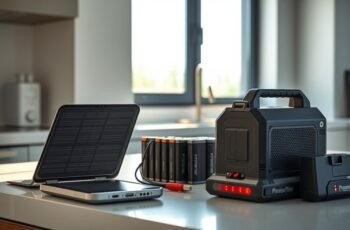
While traditional generators have long been used for portable power, modern power stations offer a compact, efficient alternative for camping. These devices primarily rely on advanced battery technology, such as lithium-ion or lithium-polymer cells, providing high energy density and longevity. They operate by storing electrical energy internally, which can be discharged as needed to power devices. Unlike gas-powered generators, power stations are silent, emission-free, and often integrate renewable energy inputs like solar panels, enhancing sustainability. Their circuitry manages power conversion and guarantees stable output, making them ideal for sensitive electronics. This combination of cutting-edge battery technology and renewable energy integration allows power stations to deliver reliable, eco-friendly energy in a portable form, making them an increasingly popular choice for modern camping enthusiasts.
Comparing Portability and Ease of Use for Camping Adventures
When evaluating power options for camping, portability and ease of use are critical factors that can substantially influence our choice. Power stations excel in compactness and lightweight design, enhancing mobility, while generators tend to be bulkier, affecting transport. Battery efficiency impacts how long a power station can sustain devices without recharging, making it ideal for extended use. Conversely, generators often have higher fuel consumption, requiring frequent refueling during prolonged camping trips. The table below summarizes key differences:
| Aspect | Power Station | Generator |
|---|---|---|
| Portability | Compact, lightweight | Larger, heavier |
| Ease of Use | Simple setup, silent operation | Noise, maintenance required |
| Battery Efficiency | High, rechargeable batteries | Not applicable |
| Fuel Consumption | Minimal, mainly for recharging | Higher, continuous fuel use |
| Ideal for | Short to medium trips | Extended use, high power needs |
Power Capacity: How Much Juice Do You Need for Your Campsite?
Determining the appropriate power capacity for your campsite depends on accurately evaluating your device and appliance energy demands. To do this effectively, consider the total wattage of all devices you’ll operate simultaneously, factoring in startup surges. Battery life becomes critical for power stations, as it directly influences how long your devices can run without recharging. For generators, fuel efficiency determines operational endurance, with consumption rates impacting overall runtime. Precise calculations help avoid underpowering or overloading your setup, ensuring continuous power without unnecessary fuel expenditure or battery drain. By analyzing your energy needs carefully, you can select a power station with adequate capacity or a generator optimized for fuel efficiency, maximizing runtime and reliability during your camping trip.
Noise Levels and Environmental Impact of Power Stations vs Generators
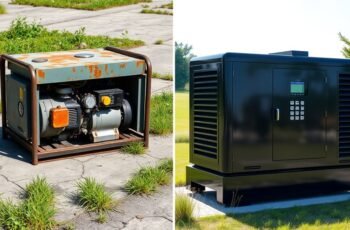
Power stations generally produce markedly less noise than traditional gas-powered generators, making them more suitable for quiet camping environments. This reduction in noise pollution results from their reliance on renewable energy sources like solar and wind, which operate silently compared to combustion engines. Conventional generators emit significant sound levels due to internal combustion, contributing to environmental noise pollution and disrupting natural tranquility. In contrast, power stations harness clean energy, minimizing both noise and environmental impact. Their design emphasizes efficiency and sustainability, reducing emissions and ecological disturbances. The lower noise levels not only enhance campsite serenity but also align with eco-friendly practices. Overall, power stations offer a quieter, more environmentally conscious alternative, making them preferable for campers prioritizing minimal noise pollution and sustainable energy use.
Cost Considerations: Which Option Fits Your Camping Budget?
Evaluating the cost implications of power stations versus traditional generators requires a careful analysis of initial investment, ongoing expenses, and long-term savings. Power stations typically have higher upfront costs due to advanced battery technology and integrated electronics, but they offer superior fuel efficiency and lower operational costs over time. Battery life profoundly influences long-term expenses, with power stations often providing longer-lasting batteries that reduce replacement frequency. Conversely, traditional generators usually have lower initial costs but incur higher fuel costs and maintenance expenses, impacting overall affordability. For budget-conscious campers, understanding these factors helps determine which option offers the best balance of upfront affordability and ongoing savings. Ultimately, selecting the most cost-effective solution hinges on evaluating initial investment against expected longevity, fuel efficiency, and battery life.
Safety and Maintenance: What Should Campers Know?
Safety and proper maintenance are vital considerations for campers using power stations or generators, as neglect can lead to equipment failure or hazardous situations. Battery safety is paramount; avoid overcharging, prevent short circuits, and ensure proper insulation to mitigate fire risks. Regular inspections of battery terminals for corrosion or damage are essential. For fuel-powered generators, safe fuel storage is essential—store fuel in approved containers, in well-ventilated areas away from ignition sources. Routine maintenance includes checking oil levels, inspecting air filters, and guaranteeing exhaust systems are clear. Proper ventilation during operation prevents carbon monoxide buildup. Adhering to manufacturer guidelines for maintenance and safety protocols minimizes hazards, prolongs equipment lifespan, and guarantees safe, reliable energy supply during camping trips.
Suitability for Different Camping Styles and Durations
Choosing between power stations and generators depends heavily on the specific camping style and duration. Power stations excel in scenarios requiring extended battery life, offering consistent power output with minimal fuel dependency, making them ideal for long-term camping trips. They are highly fuel-efficient, with no need for refueling during operation, reducing logistical complexity. Generators, however, are better suited for short-term or heavy-duty campsites where high power output is necessary. While they consume fuel at a higher rate, they can deliver sustained energy for demanding equipment. The choice hinges on balancing battery longevity against fuel efficiency, with power stations favored for extended stays and generators for short-term, high-power applications. Understanding these factors helps optimize energy management tailored to camping duration and style.
Power Station and Generator Compatibility With Camping Equipment
When selecting a power source for camping equipment, understanding the compatibility between power stations, generators, and the devices they support is essential. Power stations typically provide stable, regulated DC or AC outputs suitable for sensitive electronics, with battery life being a critical factor. They generally support a limited wattage, making them ideal for low to moderate power devices. Generators, on the other hand, produce higher wattage and are compatible with larger appliances, but their fuel efficiency varies depending on load and engine type. Compatibility also depends on outlet types and voltage regulation. Proper assessment guarantees that the power source can meet device power requirements without overloading, optimizing battery life for stations and fuel consumption for generators. This precision in compatibility maximizes efficiency and device safety during camping.
Pros and Cons of Using a Power Station for Camping
Using a power station for camping offers several notable advantages, primarily due to its portability and ease of use. Its battery life is typically sufficient for short-term power needs, providing a reliable energy source without the noise or fumes of a generator. Recharge options are versatile, including solar panels, AC outlets, or vehicle adapters, enabling flexible recharging in remote locations. However, limitations exist; battery capacity can restrict continuous use, especially for high-power devices, and frequent recharges may require additional planning. While power stations excel in quiet operation and eco-friendliness, they often come at a higher cost per watt-hour compared to generators. Overall, they present a practical, low-maintenance solution for short camping trips but may fall short for extended or high-demand power requirements.
Pros and Cons of Using a Generator for Camping
Generators provide a reliable source of power for camping, especially when high energy output or extended usage is required. They typically offer greater wattage capacity compared to power stations, making them suitable for heavy-duty appliances. However, their efficiency is heavily dependent on fuel consumption, which impacts overall fuel efficiency and operational costs. Battery life is irrelevant to traditional generators, but maintenance and refueling intervals are critical considerations. While generators can deliver consistent power over long periods, they tend to be noisier and less portable. Additionally, their reliance on fuel introduces logistical concerns, especially in remote areas. Overall, generators are advantageous for high-demand scenarios but require careful management of fuel efficiency and maintenance to optimize performance.
Frequently Asked Questions
Can Power Stations Charge Multiple Devices Simultaneously During Camping?
Yes, power stations can charge multiple devices simultaneously, but device compatibility and charging speed vary. Higher-capacity stations often offer multiple ports, ensuring efficient, rapid charging for smartphones, tablets, and small appliances without sacrificing performance or safety.
Are Power Stations Suitable for Extended Camping Trips?
We believe power stations are suitable for extended camping, provided their battery capacity meets your energy needs, and portability concerns are addressed, ensuring ease of transport without sacrificing power output for longer stays.
Do Generators Require Special Permits or Regulations for Camping Use?
Generators often require regulatory compliance and permit requirements for camping use, depending on local laws. We recommend checking specific regulations beforehand, as permits may be necessary to guarantee legal operation and adherence to environmental and safety standards.
How Do Weather Conditions Affect Power Station and Generator Performance?
Weather resilience critically impacts power station and generator performance; extreme conditions can diminish power efficiency, causing overheating or freezing, thereby compromising reliability. Proper insulation, cooling, and weatherproofing enhance resilience, ensuring consistent power output regardless of environmental fluctuations.
Can Power Stations Be Recharged Using Solar Panels While Camping?
Yes, power stations can be recharged using solar panels, thanks to their solar panel compatibility. Recharge times vary based on panel wattage and sunlight, with solar recharge typically slower than grid charging but sustainable for extended camping trips.
Conclusion
In weighing power stations against generators, it’s like choosing between a whispering wind and a roaring storm—each has its place. For lighter, eco-conscious camping, power stations are our quiet allies, reminiscent of a gentle breeze. For heavy-duty needs, generators stand resilient like a storm’s roar. Understanding your energy demands and camping style guarantees we select the right tool—balancing efficiency, environmental impact, and convenience—so our outdoor adventures remain both sustainable and enjoyable.