Ad Blocker Detected
Our website is made possible by displaying online advertisements to our visitors. Please consider supporting us by disabling your ad blocker.
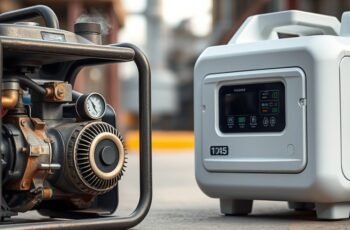
When choosing between generator and inverter battery systems, we must consider their core functionalities, operational costs, and suitability for specific applications. Each offers distinct advantages and limitations that impact performance, efficiency, and environmental footprint. Understanding these nuances is vital for making an informed decision aligned with your power needs and sustainability goals. As we explore their technical differences, you’ll see why selecting the right system requires careful analysis of your operational context.
Key Takeaways
- Generators provide higher power output suitable for heavy-duty, long-duration applications, while inverter systems are ideal for quiet, portable, and lower power needs.
- Inverter batteries have lower operational costs, require less maintenance, and are more environmentally friendly compared to fuel-powered generators.
- Generators consume fuel continuously, leading to higher ongoing expenses, whereas inverter systems rely on stored battery energy, limiting runtime but reducing emissions.
- Inverter systems are best suited for indoor, urban environments due to their quiet operation, while generators are more durable for outdoor, rugged conditions.
- Initial costs are higher for inverter systems, but they offer better energy efficiency and lower long-term operational expenses than traditional generators.
Understanding How Generators and Inverter Battery Systems Work
Although both generators and inverter battery systems serve as backup power solutions, they operate through fundamentally different mechanisms. Generators convert chemical energy, typically from fossil fuels, into electrical power via internal combustion engines, with efficiency influenced by fuel efficiency and engine design. Their power output depends on engine capacity, and they produce a steady sine wave, suitable for heavy loads. Inverter battery systems, on the other hand, rely on stored electrical energy in batteries with specific chemistries such as lithium-ion or lead-acid. These chemistries determine battery performance, lifespan, and rechargeability. Inverter systems convert DC from batteries into AC using high-frequency inverters, offering highly efficient power delivery especially under variable loads. This focus on battery chemistry and fuel efficiency makes them ideal for silent, eco-friendly, and precise backup power solutions.
Comparing Power Capacity and Runtime for Each System
We will now compare the power output capabilities and runtime durations of generators and inverter battery systems, focusing on their maximum load capacities and operational periods. It is crucial to evaluate how efficiency and load demands influence overall performance, as these factors directly impact suitability for specific applications. Understanding these differences enables a precise assessment of each system’s capacity to meet varying power needs.
Power Output Differences
How do the power capacities and runtimes of generator and inverter battery systems compare? Generators typically provide higher continuous power output due to their larger internal components and fuel-based operation, making them suitable for heavy-duty applications. Inverter battery systems, however, rely on battery chemistry, which limits immediate power capacity but offers cleaner, more stable power. Their runtime depends on battery capacity and load, with lithium-ion options providing longer durations per charge. Fuel consumption is a key differentiator; generators consume fuel proportionally to power output, resulting in higher operational costs over time. In contrast, inverter systems operate silently and with minimal maintenance, but their power output is constrained by the battery’s capacity. These distinctions are essential for matching system choice to specific power needs and operational efficiencies.
Runtime Durations Variance
The runtime durations of generator and inverter battery systems are primarily dictated by their respective power capacities and energy storage capabilities. Battery technology plays a vital role in inverter systems, influencing how efficiently energy is stored and discharged, which directly impacts runtime. In contrast, generators rely on fuel efficiency to determine how long they can operate before refueling. Inverter batteries typically offer shorter runtimes but provide rapid response and quiet operation, optimized by advanced battery technology. Generators, especially those with high fuel efficiency, can sustain longer durations but are less flexible in deployment. The key difference lies in how their energy sources—electrical storage versus fuel—affect overall runtime, with each system’s capacity directly shaping its operational duration under varying load conditions.
Efficiency and Load Capacity
When comparing the efficiency and load capacity of generator and inverter battery systems, it becomes evident that their fundamental design differences markedly influence their performance metrics. Generators typically offer higher power capacity, enabling them to handle substantial loads, but they often sacrifice fuel efficiency during prolonged operation. In contrast, inverter batteries excel in delivering stable, clean power with high efficiency, conserving fuel and reducing operational costs. Battery longevity plays an essential role; inverter systems generally have longer lifespans due to fewer moving parts and lower thermal stress. While generators may provide greater immediate power, their efficiency diminishes with increased runtime, impacting overall load capacity. Consequently, selecting between these systems hinges on balancing fuel efficiency, runtime, and long-term battery longevity for specific application demands.
Evaluating Cost, Maintenance, and Long-Term Investment
Evaluating the financial and operational implications of generator versus inverter battery systems requires a detailed comparison of upfront costs, ongoing maintenance expenses, and projected lifespan. In terms of cost optimization, inverter systems typically have higher initial investments but lower maintenance costs due to fewer moving parts. Conversely, generators often require regular servicing, fuel, and parts replacement, impacting long-term expenses. Key considerations include:
- Battery longevity: Inverter systems generally offer longer-lasting batteries, reducing replacement frequency.
- Initial investment: Generators tend to have lower upfront costs but incur higher operational expenses.
- Maintenance requirements: Generators demand continuous upkeep, whereas inverter systems require minimal maintenance over their lifespan.
Assessing these factors helps optimize total cost of ownership while ensuring reliable power supply.
Identifying Ideal Use Cases and Lifestyle Suitability
Choosing the right power backup system depends heavily on specific use cases and lifestyle requirements. For prolonged, consistent power needs, inverter battery systems excel due to their superior battery longevity and efficient charging methods, which extend overall lifespan. They are ideal for residential use, where noise levels and fuel dependency are concerns. Conversely, generators suit scenarios demanding high power output over short durations, such as construction sites, but require regular maintenance and fuel management. Evaluating charging methods is vital; inverter systems often rely on grid or solar charging, offering cleaner, more sustainable options. By carefully analyzing these factors—battery longevity and charging methods—we can determine which system aligns best with a user’s operational demands, budget constraints, and environmental considerations.
Assessing Noise Levels, Portability, and Ease of Use
Evaluating noise levels, portability, and ease of use is essential when selecting between generator and inverter battery systems. Conducting a noise comparison helps determine suitability for noise-sensitive environments:
- Generators typically produce substantial noise, often exceeding 60 dB, which can be disruptive.
- Inverter systems operate quietly, generally below 40 dB, making them ideal for residential or outdoor use.
- Portability considerations favor inverter batteries, which are compact and lighter, compared to bulkier, heavier generators.
Ease of use also varies; inverter systems often feature straightforward operation with minimal maintenance, whereas generators may require manual fueling and routine servicing. By analyzing these factors, we can better match system choice to specific application needs, balancing noise, portability, and user convenience.
Considering Environmental Impact and Energy Efficiency
Considering environmental impact and energy efficiency is essential when selecting between generator and inverter battery systems. Inverter systems typically have a lower carbon footprint due to higher energy efficiency and reduced fuel consumption, making them more suitable for renewable integration efforts. They optimize power conversion, minimizing energy loss and supporting cleaner energy sources like solar or wind. Conversely, traditional generators often operate less efficiently, emitting higher greenhouse gases and contributing more markedly to environmental degradation. Energy efficiency in inverter systems results in less waste and better resource utilization, aligning with sustainable practices. When evaluating impact, it’s important to consider long-term operational costs and ecological effects, as inverter batteries offer a more environmentally responsible choice by reducing emissions and enhancing energy conservation strategies.
Making the Right Choice: Which System Fits Your Needs?
To select the appropriate system, we must first evaluate your power demands, ensuring the chosen solution can reliably meet your operational requirements. Budget constraints and total cost of ownership play vital roles in narrowing options, while the environmental and usage conditions determine compatibility and system performance. By systematically analyzing these points, we can identify the most effective and sustainable choice for your specific needs.
Power Needs Assessment
How do you determine the appropriate battery system for your specific power requirements? First, assess your total energy consumption, considering the load duration and peak power needs. Second, evaluate the system’s Battery lifespan and how it aligns with expected operational periods, guaranteeing longevity. Third, analyze fuel consumption implications—generators typically consume more fuel under higher loads, impacting operational costs and environmental footprint. For inverter systems, focus on their efficiency in delivering clean power for sensitive electronics, which can influence overall power needs. Precise calculations of load profiles, battery capacity, and fuel efficiency enable a tailored choice. This assessment ensures you select a system that balances capacity, longevity, and operational costs, avoiding inefficiencies or premature equipment failure.
Budget and Cost Factors
Choosing the right battery system ultimately hinges on a clear understanding of budget constraints and total cost of ownership. In evaluating options, brand reputation plays a fundamental role, as established brands often provide more reliable products and better long-term support. Cost considerations extend beyond initial purchase price to include warranty coverage, which directly impacts future expenses and maintenance costs. Systems with extensive warranties may have higher upfront costs but reduce total ownership costs by covering repairs and replacements. Conversely, cheaper options lacking robust warranty coverage can lead to unexpected expenses. Thus, balancing upfront investment with the assurance of dependable performance and support is essential. A precise assessment of these financial factors ensures informed decision-making aligned with both short-term affordability and long-term reliability.
Usage Environment Compatibility
Understanding the specific environmental conditions where the battery system will operate is essential for selecting the appropriate technology. Urban compatibility and outdoor usability are key factors influencing this choice. For urban environments, considerations include limited space, noise restrictions, and power stability. Outdoor settings demand resilience against weather, temperature fluctuations, and dust exposure. Specifically,:
- Indoor, urban use favors inverter batteries due to their quiet operation and compact design.
- Outdoor applications require robust systems with weatherproofing and thermal management.
- High ambient temperatures or humidity levels call for systems with enhanced thermal regulation to prevent degradation.
Matching these conditions guarantees reliable performance, whether in densely populated areas or remote outdoor locations, guiding the selection of the most compatible generator or inverter battery system.
Frequently Asked Questions
How Do Weather Conditions Affect Generator and Inverter Battery System Performance?
Weather conditions greatly impact both systems; extreme cold reduces battery lifespan and power efficiency, while heat accelerates degradation. We observe that ideal temperatures are vital for maintaining performance and extending the durability of generator and inverter batteries.
Can These Systems Be Integrated With Renewable Energy Sources?
Yes, these systems can be integrated with renewable energy sources, enhancing renewable integration and energy storage capabilities. We carefully analyze system compatibility, ensuring seamless operation, ideal efficiency, and reliable energy management within diverse renewable and storage configurations.
What Safety Precautions Are Necessary When Using Each System?
We prioritize battery maintenance and control noise levels for safety, ensuring proper ventilation and regular inspections. Handling batteries carefully prevents leaks, and using sound barriers reduces noise exposure, maintaining a safe environment during system operation.
How Do Startup and Shutdown Procedures Differ Between Systems?
While startup procedures for generators involve fuel activation and warm-up, inverter systems require powering on the device and ensuring proper battery connection; shutdown procedures involve turning off the inverter with minimal emissions, contrasting with generator cooling and fuel shutoff protocols.
Are There Warranty or Service Plan Differences Between the Two?
We find that warranty coverage and service plan options differ markedly; generators often include extended warranties and extensive service plans, while inverter battery systems typically offer limited coverage, emphasizing routine maintenance and manufacturer-specific support tailored to their technology.
Conclusion
Ultimately, choosing between a generator and an inverter system hinges on balancing power demands against environmental impact. While generators excel in high-capacity, long-term applications, they compromise noise levels and efficiency. Conversely, inverter systems prioritize sustainability and portability, suitable for lighter, more frequent use. By analyzing these trade-offs, we can align our selection with specific operational needs and ecological considerations, ensuring a best , cost-effective, and environmentally conscious energy solution.