Ad Blocker Detected
Our website is made possible by displaying online advertisements to our visitors. Please consider supporting us by disabling your ad blocker.
Disclosure: As an Amazon Associate, I earn from qualifying purchases.
Have we ever wished our LiFePO4 battery system could practically manage itself while keeping us fully informed in real time?
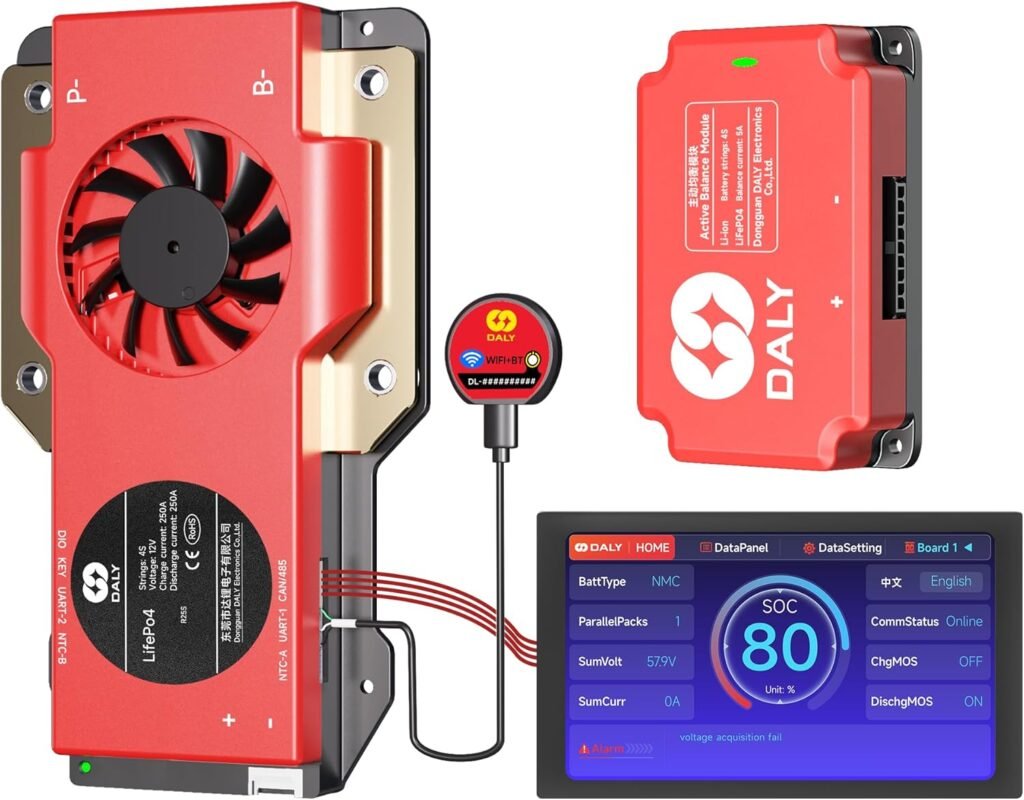

What Is the DALY BMS Balance 12V 250A Display?
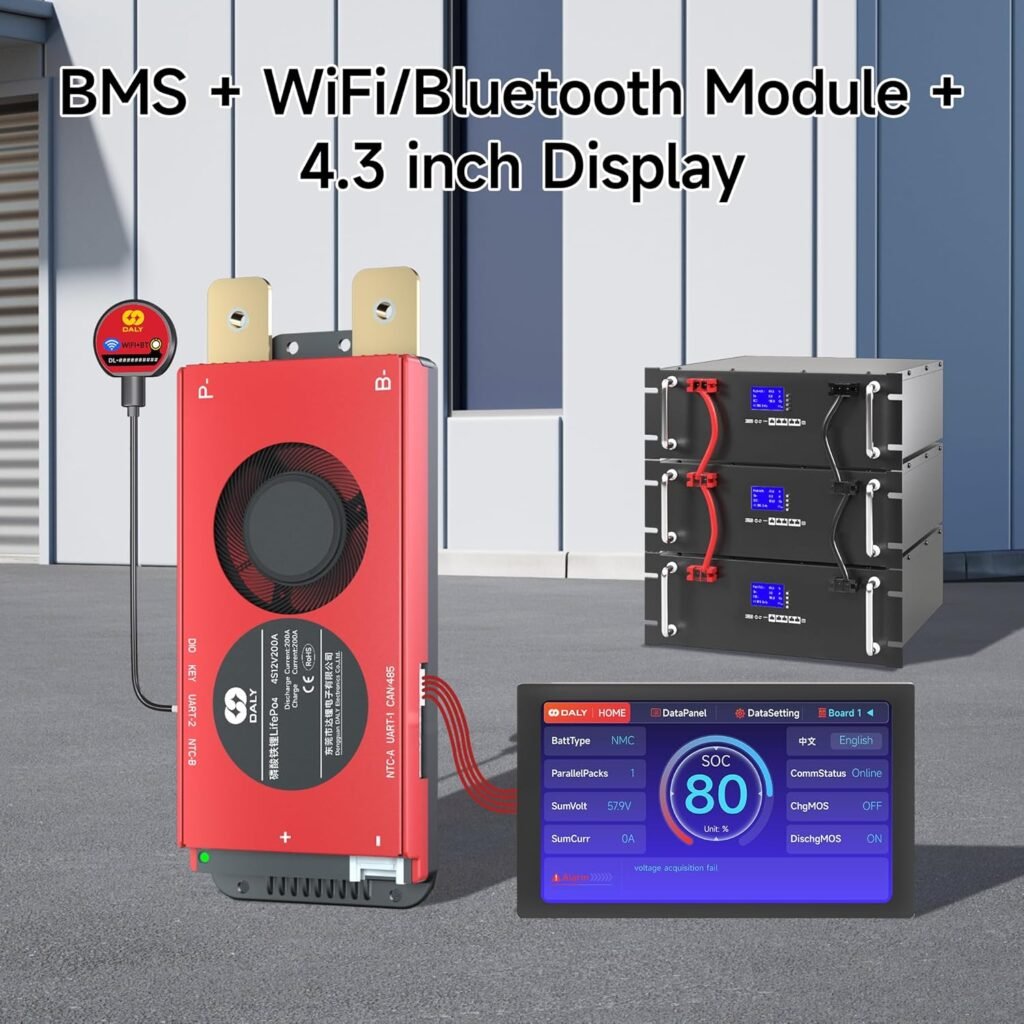
This DALY BMS is a 4S (4-cell) 12V, 250A battery management system designed for LiFePO4 packs, especially in RVs, boats, portable power stations, and DIY energy projects. It combines protection, monitoring, active balancing, and on-device control through a 4.3-inch touchscreen, Bluetooth, WiFi, RS485, and CAN.
In other words, we are not just getting a basic BMS that quietly sits in the background. We are getting a control hub for our 12V system that lets us see, tweak, and protect our battery pack in real time, whether we are standing next to it or checking in remotely.
Key Features at a Glance
Before we go deeper into how it performs in real-world use, it helps to see the main features grouped in one place. This BMS packs quite a bit into a single system.
| Feature Category | Details |
|---|---|
| Battery Type & Cells | LiFePO4, 4S (4 cells in series), 12V nominal |
| Current Rating | 250A continuous (suitable for high-demand 12V systems) |
| Balancing Type | 5A Active Balancer (fast, efficient cell balancing) |
| Display | 4.3-inch LCD touchscreen |
| Connectivity | 2-in-1 Bluetooth/WiFi module, supports remote monitoring |
| Communication Protocols | RS485, CAN (integration with other systems/BMS/controls) |
| Protections | Cell balancing, undervoltage, surge/overvoltage, short circuit, temperature protection |
| App Support | Smart BMS mobile app with real-time warnings and customizable parameters |
| Use Cases | RV, marine, portable power station, DIY solar systems, backup power |
| Warranty | 5-year warranty |
| Included in Package | BMS, 4.3″ display, 5A active balancer, B-P output line, Bluetooth/WiFi module, cables, NTC, manual |
This package is more than just a circuit board with wires. It is designed as a complete kit, giving us hardware, monitoring, and configuration tools all in one.
Build Quality and Design
The first thing that stands out is that DALY treats this as a serious, long-term piece of hardware rather than a disposable add-on. The components feel robust, and the design is clearly aimed at higher-current DIY and off-grid setups.
We notice that the terminals, connectors, and heat dissipation considerations are built around a 250A continuous rating. That matters if we are running inverters, large DC loads, or powerful chargers. We are not dealing with a fragile, low-amp BMS that will become the weak link in our system.
Physical Layout and Components
DALY splits the system into a few key modules, which makes installation and maintenance easier:
- The main BMS unit that handles current, protections, and communication
- The external 5A active balancer module
- The 4.3-inch LCD touchscreen display
- The Bluetooth/WiFi communication module
- Cables (sampling cable, NTC temperature probe, B-P output line)
This modular approach has a real benefit: if we want to mount the display in a convenient, visible location and keep the high-current hardware tucked away near the battery bank, we can do that comfortably.
Build Quality Impression
From a practical standpoint, we want:
- Solid mounting options
- Sturdy connectors that don’t feel flimsy
- Clear labels for easier wiring
DALY tends to do pretty well here. The kit is aimed at DIY folks and RV owners, so it is not meant to be ultra-delicate lab equipment. Still, as with any BMS, we should treat it as an electronic device: protect it from moisture, excessive vibrations, and dust as much as possible.
5A Active Balancer: Why It Matters
The headline feature here is the integrated 5A active balancer. Many BMS units only use passive balancing, which bleeds off extra charge from high cells as heat. Active balancing is far more efficient and faster.
With a 5A active balancer, we are:
- Moving energy from higher-voltage cells to lower-voltage cells
- Minimizing wasted energy as heat
- Reducing balancing time, particularly on large-capacity banks
- Extending the usable life and health of the pack
Benefits for Large Capacity Packs
If we are running something like a 12V 200Ah, 280Ah, or even higher-capacity LiFePO4 pack, balancing can become a bottleneck when using passive-only systems. Cells can drift out of sync over repeated cycles, and it can take a long time to bring them back into alignment.
A 5A active balancer can:
- Correct imbalances more quickly
- Keep cell voltages closer together on a day-to-day basis
- Reduce stress on individual cells that might otherwise be overworked
For users running off-grid solar, RV house batteries, or portable power stations, this translates into more consistent performance and fewer headaches.
Lower Heat and Higher Efficiency
Because the balancer is moving charge rather than wasting it as heat, we are improving overall system efficiency. That is especially important in closed compartments or small spaces like RV cabinets, where heat build-up can be an issue.
Less heat not only saves energy but can also help our cells stay within a healthier temperature range, further improving long-term battery life.

Protection Features and Safety
We use a BMS primarily to protect our battery and our investment. This DALY BMS offers a range of protections that align well with the needs of LiFePO4 chemistries.
Core Protection Functions
Here is a breakdown of the main protections we are getting:
| Protection Type | What It Does |
|---|---|
| Undervoltage Shutdown | Prevents cells from being over-discharged, which can permanently damage them |
| Overvoltage/Surge Shutdown | Stops charging if cell or pack voltage goes too high |
| Short Circuit Protection | Cuts power in the event of a short, protecting the pack and wiring |
| Overcurrent Protection | Limits load/charge current beyond safe levels |
| Temperature Protection | Monitors temperature via NTC sensor, shutting down if too hot or too cold |
| Cell Balancing | Keeps all cells at similar voltage to prevent chronic imbalance |
Having all of these in one system gives us confidence that if something goes wrong—miswired loads, unexpected shorts, charger malfunction—the BMS is there as a final line of defense.
Practical Impact on Day-to-Day Use
In practice, we can:
- Set and adjust certain parameters (like cut-off voltages) via the touchscreen or app
- See why the system has tripped, instead of guessing blindly
- Avoid the kind of deep discharge damage that silently destroys packs over time
For anyone using their battery bank heavily—charging from solar all day, discharging with inverters at night—these protections are the difference between a pack that lasts years and one that fails prematurely.
Touchscreen Display: Control Without a Laptop
One of the nicest parts of this DALY BMS kit is the 4.3-inch LCD touchscreen. Rather than forcing us to connect a PC or only use a smartphone, we can manage parameters and monitoring directly from the display.
What We Can See on the Screen
The display typically shows:
- Individual cell voltages for all 4 cells
- Total pack voltage
- Real-time current (charge or discharge)
- State of key BMS settings (protection states, alarms, etc.)
- Status icons or indicators for temperature, communications, and other functions
Having cell voltages on screen is particularly useful. If we ever suspect one cell is drifting or underperforming, we can see that quickly without additional meters or tools.
On-the-Go Parameter Adjustments
Another strength of the touchscreen is the ability to:
- Adjust basic parameters like over/under-voltage thresholds
- Change some protection limits
- Toggle certain features on or off (depending on firmware and configuration)
This is especially convenient when we are on the road in an RV or at a campsite. We might not want to pull out a laptop or rely on a phone connection just to tweak a setting. The display becomes our quick control panel.
Bluetooth and WiFi: App-Based Monitoring
The 2-in-1 Bluetooth/WiFi module transforms this BMS from a “black box” into a smart, connected unit. We can monitor our system locally via Bluetooth or remotely over WiFi (depending on how we set it up).
Local Monitoring via Bluetooth
Using the Smart BMS mobile app, we can:
- See pack voltage, cell voltages, current, and state
- Check error codes or active protections
- View historical or real-time trends (depending on app and firmware)
- Adjust some parameters from our phone
Bluetooth is perfect when we are near the battery system—like when we are inside our RV or standing next to our power station.
Remote Access via WiFi
The WiFi feature opens up options like:
- Monitoring our system from another room or, depending on the network, from anywhere with internet
- Checking on our off-grid system or backup batteries when we are away
While the exact remote capabilities can vary depending on our network setup and app updates, the key benefit is not being tied physically to the battery location just to verify that everything is functioning properly.
RS485 and CAN: Integration with Larger Systems
For more advanced setups, the inclusion of RS485 and CAN support is a strong plus. These communication protocols make it easier to interface with:
- Inverter/chargers
- Solar charge controllers
- Custom monitoring systems (like Raspberry Pi or industrial controllers)
- Existing RV or marine networked systems
Why This Matters for DIY and Professional Builds
If we are building a more sophisticated off-grid system or upgrading an RV/marine power system, we might want:
- Data logging and dashboards beyond the phone app
- Centralized control that coordinates the BMS with other components
- Remote alerts, web dashboards, or integration into home automation
With RS485 and CAN, we have the building blocks for all of that. We might need additional hardware and software on our side, but the BMS does its part by sharing the data through standard interfaces.
Installation Experience
DALY positions this kit as “easy to install,” and for many users familiar with DC systems, that will be true. Still, BMS wiring is not beginner-level electronics; we want to treat installation carefully and methodically.
What Comes in the Box
We can expect the kit to include:
- 1 x 4S 12V 250A Smart BMS
- 1 x 4.3-inch LCD touchscreen display
- 1 x 5A 4S active balancer module
- 1 x B-P output line (for main connections)
- 1 x 2-in-1 Bluetooth/WiFi module
- 1 x Sampling cable (for cell voltage sensing)
- 1 x NTC temperature sensor
- 1 x Manual (with language limitations noted)
This is close to a complete system for a new 4S LiFePO4 pack. We still need our own busbars, main fuses, wiring, terminals, and of course the battery cells themselves.
Wiring Considerations
During installation, we should:
- Carefully route and connect the sampling (balance) wires to each cell in order
- Secure all high-current connections with appropriate lugs and torque
- Mount the BMS where it has decent ventilation and is protected from moisture
- Place the NTC temperature sensor where it reflects the battery pack’s actual temperature (often attached to one of the middle cells)
Even though DALY aims for simplicity, we should plan at least a few hours for careful layout, wiring, and testing—especially if this is our first time working with a 250A BMS.
Potential Setup Challenges
A few things that might require some patience:
- Interpreting the manual if our preferred language is not fully supported
- Getting our first app connection working (pairing Bluetooth/WiFi, etc.)
- Understanding which settings are safe to adjust, especially for those new to LiFePO4
Once everything is wired correctly, ongoing use is much easier. The initial learning curve is mainly about respecting the high current and ensuring proper connections.
Everyday Use and Real-World Scenarios
Where this DALY BMS really shines is in daily operation: it helps us forget about micromanaging our battery system, yet it keeps us informed when it matters.
RV and Motorhome Use
In an RV, we might be:
- Running an inverter for AC loads
- Charging from solar, alternator, or shore power
- Cycling the pack daily on trips
The DALY BMS here will:
- Guard against over-discharge when we accidentally run too many loads
- Protect against overcharging when parked with strong solar input
- Keep our four cells balanced even under frequent cycling
- Inform us (via display or app) if the system is nearing any limit
Being able to walk inside, look at the touchscreen, and instantly know the status of our battery pack is a huge comfort when boondocking or staying off-grid for several days.
Portable Power Stations and DIY Power Banks
For DIY portable power stations, this BMS:
- Handles the foundational protections for a 12V LiFePO4 core
- Offers detailed state information through the LCD
- Gives advanced users integration options (RS485/CAN) to build custom front panels or smart boxes
We might pair this with:
- A DC-DC charger
- A 12V inverter
- USB-C and DC output modules
The BMS becomes the reliable backbone of the system.
Marine and Boat Applications
On a boat, power reliability and safety are critical. With this DALY BMS, we get:
- Real-time information about pack voltage and balance while at anchor or underway
- Temperature protection to ensure packs are not charged in unsafe conditions
- Remote checking via WiFi if our system is networked, so we can monitor while on shore or in the cabin
Combined with a robust enclosure and proper marine-grade wiring, this BMS can be a solid partner for trolling motors, house batteries, or navigation systems.
Performance: Current Handling and Stability
While we do not have lab instruments here, we can judge performance by the specifications and typical use cases.
250A Continuous Rating
At 250A, we are looking at:
- Compatibility with inverters up to roughly 3000W at 12V (depending on surge conditions and wiring)
- Support for large DC loads such as winches, high-output chargers, and powerful 12V appliances
- Headroom for future expansion if we grow our system around a single, robust BMS
We still need to size wiring, fuses, and busbars appropriately, but knowing that the BMS itself is rated at this level helps us design confidently.
Balancing and Voltage Consistency
Over time, one of the best ways to judge a BMS is:
- Do cell voltages remain close together after many cycles?
- Does the pack stay in balance during high charge/discharge events?
With a 5A active balancer, we can reasonably expect:
- Faster recovery from cells that drift out of range
- Improved consistency during rapid charging or heavy loads
As long as our initial cell matching is decent and we wired the system correctly, this BMS should keep cells in tight alignment compared to passive-balancing-only models.
Usability: LCD, App, and Alerts
Ease of use can make the difference between a system we check regularly and one we ignore until something goes wrong. DALY’s approach is to make data easily visible from multiple points.
LCD Touchscreen Daily Workflow
We might use the display in routines like:
- Quick morning check: Are we fully charged from solar? Any cell out of line?
- Pre-departure RV scan: Is the pack healthy before driving or boondocking?
- Troubleshooting: If a device shuts off, we can quickly identify if it was due to low voltage, overcurrent, or temperature.
The touchscreen lets us:
- Scroll through screens
- Tap into additional details or menus
- Adjust some settings without switching devices
Mobile App Alerts and Logging
With the Smart BMS mobile app, our workflow can include:
- Checking from bed or inside the cabin if we really need to go out and start the generator
- Seeing real-time current to understand how much our loads are actually drawing
- Looking at trends across the day (depending on app functionality and updates)
Alerts in the app, like warnings about cell imbalance or temperatures, can prevent surprises. It is much easier to react to a warning notification than to discover a shut-down system when we urgently need power.
Warranty and Long-Term Confidence
DALY backs this BMS with a 5-year warranty, which is substantial for an electronic device in the battery management category. That speaks to some confidence in hardware durability and design longevity.
Why Warranty Matters for BMS Purchases
A BMS is integral to our battery’s life. If it fails:
- We risk losing expensive cells
- We face system downtime
- We may have to rebuild wiring or reconfigure our setup
A strong warranty gives us reassurance that DALY stands behind the product, at least for typical faults or failures. We still need to install and use the BMS correctly, but the long coverage period is a meaningful plus.
Who Is This BMS Best For?
Not every system needs a 250A smart BMS with active balancing and touch controls, but for certain users, this DALY unit hits a sweet spot.
Ideal Users
We think this BMS is particularly suitable if we are:
- RV owners who rely heavily on a 12V LiFePO4 house bank
- DIYers building a medium-to-large 12V power station with inverters
- Marine users wanting reliable monitoring and protection
- Off-grid cabin owners with a 12V LiFePO4 bank integrated with solar
- Tech enthusiasts who want RS485/CAN integration and serious monitoring
Possibly Overkill for Smaller Systems
If we only have a small 12V 50Ah LiFePO4 pack for light camping use and never exceed modest current draws, this BMS might be more than we need. We could still benefit from the features, but the 250A capability and advanced communications might be unnecessary for very small setups.
Strengths and Weaknesses
Summarizing our impressions helps us see if this fits our particular project.
What We Really Like
- High 250A current rating – suitable for serious 12V systems with ample headroom
- 5A active balancer – faster, more efficient balancing, especially important for high-capacity packs
- 4.3-inch touchscreen display – on-device programming and real-time data without a laptop
- Bluetooth/WiFi module included – local and remote monitoring via mobile app
- Comprehensive protections – undervoltage, overvoltage, short circuit, temperature, and more
- RS485 and CAN support – excellent for integration into broader systems or custom monitoring
- 5-year warranty – strong long-term backing
Possible Limitations
- Installation requires some technical comfort – not ideal for someone with zero DC or wiring experience
- Manual language may not be perfect – we may need to rely on diagrams, online resources, or community knowledge
- Feature set may be more than casual users need – some might not use RS485/CAN or active balancing fully
For most serious DIYers and off-grid/RV enthusiasts, these trade-offs are acceptable and even expected when stepping into a more advanced BMS platform.
Tips for Getting the Most Out of This BMS
To really benefit from the DALY BMS Balance 12V 250A Display system, we can follow a few practical guidelines.
Proper Battery Setup and Configuration
Start with:
- Well-matched LiFePO4 cells (same capacity, brand, and batch when possible)
- Correct initial balancing before connecting the BMS
- Reasonable voltage thresholds aligned with LiFePO4 best practices (for example, conservative upper/lower cut-offs to prolong life)
We can then use the touchscreen and app to fine-tune settings based on our specific pack and usage patterns.
Safe Wiring and Protection
To protect our system:
- Use appropriately sized cables for 250A (and any surge currents)
- Add a main fuse or breaker on the battery positive line
- Ensure proper crimps and secure mechanical connections
- Avoid routing signal wires (like the sampling harness) alongside high-current cables where possible
A solid physical install sets the foundation for long-term reliability and safety.
Ongoing Monitoring Habits
Even though the BMS automates protection, we can develop habits such as:
- Checking cell voltages occasionally, especially after heavy usage
- Watching how our system responds to large loads or fast charging
- Reviewing any unexpected shut-offs via the app or display to understand the cause
This helps us catch early signs of cell degradation, wiring problems, or misconfigured settings.
Comparison to More Basic BMS Units
Many budget LiFePO4 BMS units only offer:
- Passive balancing (often very low current)
- Basic over/under voltage protection
- No screen, and sometimes no connectivity
The DALY BMS stands out because it combines:
- High current capacity
- Active balancing at 5A
- Full-color touchscreen control
- Bluetooth and WiFi with a mobile app
- RS485/CAN support
If we are deciding whether to spend more on this DALY unit instead of a simple, cheaper BMS, we can ask ourselves:
- Do we want to see individual cell voltages easily?
- Do we value app monitoring and alerts?
- Are we building a system that might grow or integrate with other smart components?
If the answer to these questions is yes, the extra cost of a unit like this usually pays off in convenience, safety, and system insight.
Final Thoughts: Is the DALY BMS Balance 12V 250A Display Worth It?
For a 4S LiFePO4 pack that we depend on—whether in an RV, boat, portable power station, or off-grid installation—this DALY BMS offers a highly capable feature set that goes beyond simple protection.
We are getting:
- Robust 250A current handling
- Efficient 5A active balancing for healthier cells and better performance
- A 4.3-inch touchscreen that empowers us to manage parameters directly on-site
- A 2-in-1 Bluetooth/WiFi module for flexible monitoring through a mobile app
- Integration options with RS485 and CAN for more advanced systems
- A 5-year warranty that supports long-term use
It demands careful installation and some technical literacy, but in return, it gives us a powerful, confidence-inspiring core for our 12V LiFePO4 system. If we take our energy setup seriously and want both protection and insight, the DALY BMS Balance 12V 250A Display is a strong candidate to sit at the heart of our battery pack.