Ad Blocker Detected
Our website is made possible by displaying online advertisements to our visitors. Please consider supporting us by disabling your ad blocker.
Disclosure: As an Amazon Associate, I earn from qualifying purchases.
Are we ready to see whether the AFERIY P280 2800W Portable Power Station with 200W Solar Panel is the right choice for our home, camping, RV, or emergency backup needs?

First impressions
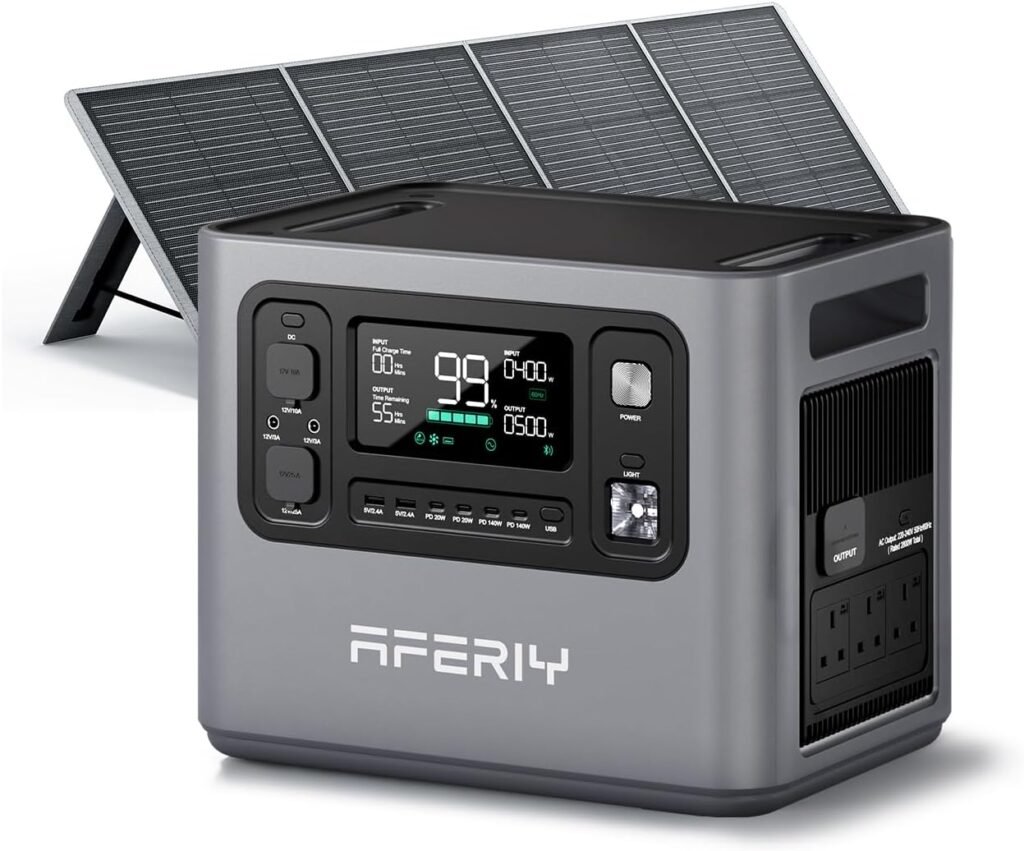
We like a power station that looks purposeful and thought-out, and the AFERIY P280 gives that impression on first glance. The package includes the generator and a 200W portable solar panel, plus related accessories, and the station’s features — from LiFePO4 chemistry to MPPT solar input and app control — suggest this is meant for someone who wants a serious, flexible power solution rather than a tiny, occasional-use unit.
Key specifications at a glance
We prefer to keep the headline specs front and center so we can compare quickly. Below we list the main advertised features and the details provided by the manufacturer so we have a single place to reference performance claims, inputs, outputs, certifications, and portability items.
| Feature | Specification / Notes |
|---|---|
| Product name | AFERIY P280 2800W Portable Power Station with 200W Solar Panel |
| Battery chemistry | LiFePO4 |
| Nominal battery capacity | 2048 Wh (advertised) |
| Expandable capacity | Up to 10 kWh (advertised) |
| Inverter (advertised) | 2800W output (name); check specific continuous and surge ratings with vendor |
| AC charging input (advertised) | 1800W AC charging |
| Maximum solar input | 500W–1200W (supports 2 x XT90 inputs at 600W each) |
| Solar panel included | 200W foldable panel, 23% efficiency, 53 x 60 x 3.5 cm folded, 5.3 kg folded |
| Solar connectors | 80 cm MC4 to XT90 cable included |
| App control | AFERIY mobile app: real-time battery status and remote operation |
| Certifications | PSE, CE, FCC, RoHS |
| Safety features | Silent, emission-free operation (vs. fuel generators), UPS capability |
| Package contents | 1x 2800W portable generator (with accessories), 1x 200W portable solar panel (with accessories) |
| Return note | Must be returned in original packaging (keep packaging during return period) |
Battery and expandability
We’re pleased to see LiFePO4 chemistry at the heart of this system — that’s a more durable, safer chemistry compared to older lithium-ion types. The 2048 Wh nominal capacity gives us a solid baseline for runtime calculations, and the advertised expandability to 10 kWh suggests that this unit can be part of a larger energy solution for longer outages or off-grid living.
When we consider expandability, we want to know what that actually means: whether AFERIY sells dedicated expansion battery packs, whether expansion requires parallel units, and which cables or controllers are necessary. The product description states the device is expandable to 10kWh, but we recommend contacting the seller or checking the manual to confirm the supported expansion components and the safest way to add capacity.
Inverter, AC charging, and UPS capability
We appreciate the dual role of a power station as both inverter and charger. The product name advertises 2800W and also calls out 1800W AC charging in the title; this suggests a robust inverter and a fast AC input for recharging. In practice, a high AC charging rate shortens downtime when mains power is available.
The unit also advertises UPS functionality, which is invaluable for protecting sensitive electronics in the event of a grid failure. While specific switchover times aren’t provided in the details we have, modern UPS-capable power stations usually have very short switch times. We recommend running a quick test with non-critical equipment to confirm the switchover behavior before relying on it for life-sustaining devices.

Solar capability and the included 200W panel
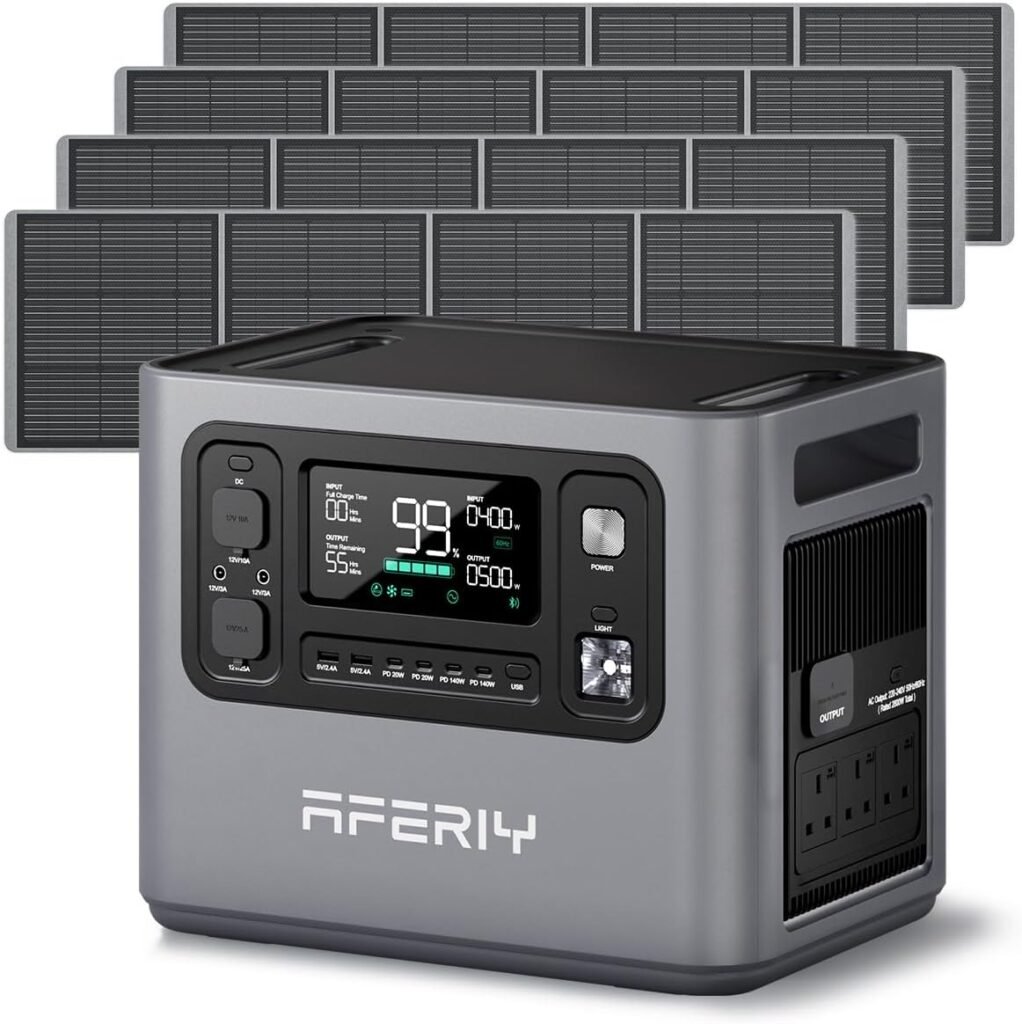
Solar support is one of the most compelling features here. The P280 supports up to 1200W solar input via two XT90 ports rated at 600W each, and it retains MPPT functionality for efficient energy capture. Practically, that means the unit can accept a substantial amount of solar power — far more than what the included 200W panel can deliver — allowing us to scale solar input as needed.
The included 200W portable panel is compact, foldable, and relatively lightweight at 5.3 kg folded, with 23% efficiency — a solid performer for a portable panel. It’s ideal for top-up charging on trips or as part of a multi-panel field array. A key convenience is the 80 cm MC4-to-XT90 cable that comes with the package, which speeds up connecting the panel directly to the generator without needing extra adapters.
Ports, outputs, and connectivity
We want a variety of ports for modern devices, and while the detailed port list isn’t exhaustively given in the product text we received, the presence of app control indicates that the P280 is designed with connectivity in mind. The AFERIY app lets us monitor battery status and operate the unit remotely, which is handy when the generator is tucked away in a garage or trunk.
From the solar input description, we know it has two XT90 solar inputs. For AC outputs and DC outputs, we suggest confirming the exact number and type of AC sockets, USB-C PD ports, USB-A ports, 12V outputs, and any specialized ports in the full manual or vendor listing to make sure the unit meets our device compatibility needs.
Noise, emissions, and safety certifications
We like the quiet operation and zero-emission profile compared to petrol or diesel generators, which makes the P280 suitable for indoor use, campsites, and places with noise restrictions. That quiet operation also makes it more pleasant to use in RVs and near sleeping areas during outages.
Certifications such as PSE, CE, FCC, and RoHS are listed, which gives us confidence that the unit has passed certain safety, electromagnetic, and environmental tests. We still recommend using the unit according to the manual and ensuring adequate ventilation whenever charging or discharging at high rates.
What the P280 is like in real-world scenarios
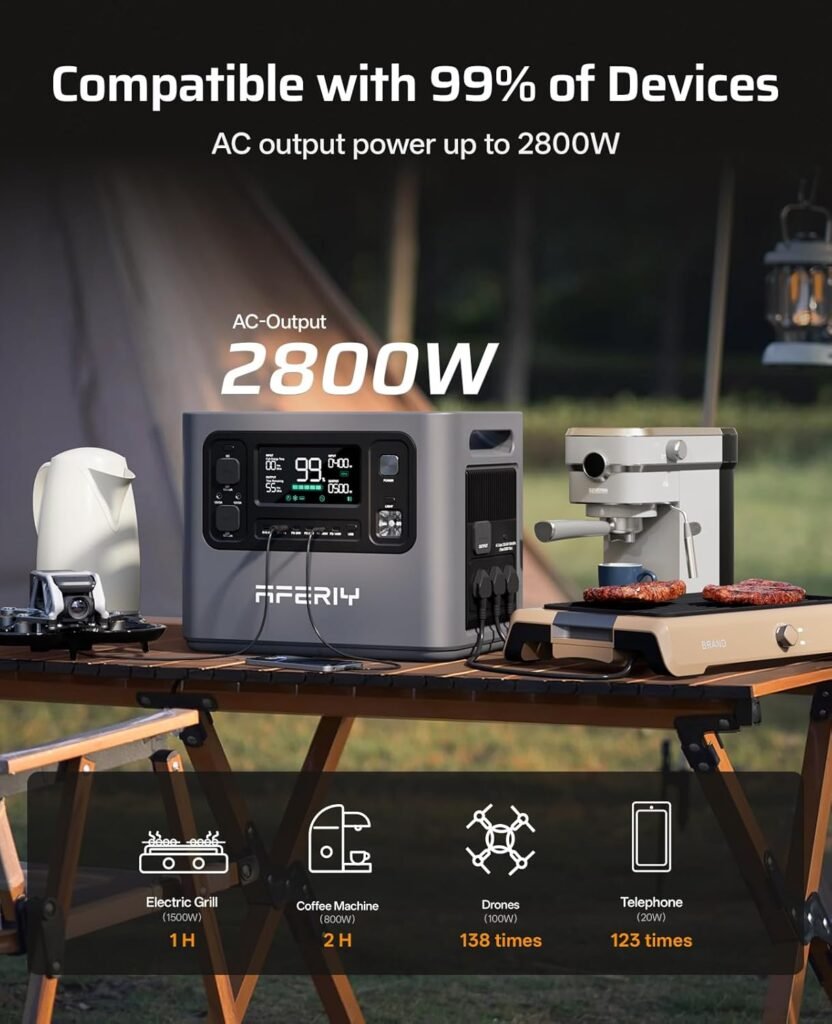
We often find it useful to translate battery capacity into expected runtimes for typical devices. The following estimates are simplified calculations using the 2048 Wh nominal capacity and straightforward math — actual runtime will vary depending on device draw, inverter efficiency, battery state of charge, and environmental factors. We present conservative numbers and note assumptions beneath the table.
| Device / Load | Typical Power Draw | Estimated Runtime (approx.) |
|---|---|---|
| Smartphone (5–10 W while charging) | 10 W | ~200–400 hours |
| Laptop (45–65 W) | 60 W | ~34 hours |
| Router & Modem (10–20 W) | 15 W | ~136 hours |
| LED lights (10 W total) | 10 W | ~204 hours |
| Portable fridge (50–70 W average) | 60 W | ~34 hours |
| CPAP (40–60 W average) | 50 W | ~41 hours |
| Electric kettle (1500 W intermittent) | 1500 W | ~1.2 hours (continuous) |
| Microwave (1000 W) | 1000 W | ~2 hours (continuous) |
| Electric stove/hotplate (1200–1800W) | 1500 W | ~1.4 hours |
| Desktop PC + monitor (200–400 W) | 300 W | ~6.8 hours |
| Small chest freezer (80–150 W avg) | 120 W | ~17 hours |
Notes on the table: These runtimes assume we use the theoretical full 2048 Wh capacity for simple division. In practice, usable energy might be slightly lower due to inverter losses (commonly 85–95% efficiency) and to avoid deep discharge for longevity; however, LiFePO4 batteries typically allow for higher usable depth of discharge than many other chemistries. For high-power draws (like kettles or stoves) the inverter’s continuous and surge capacities are important; the model name suggests up to 2800W capability, but we recommend confirming continuous vs peak inverter ratings in the official documentation.
Charging times — AC, solar, and combined methods
We value fast recharge capability because downtime matters. The advertised 1800W AC charging is impressive on paper: theoretically, charging a 2048 Wh battery at 1800W could take just over an hour, but real-world charging will be longer due to conversion losses and battery management charging curves. Expect something closer to 1.2–1.6 hours from a low state to full using the AC fast charge, but confirm exact times with AFERIY specifications.
Using solar, the device supports up to 1200W of solar input. At 1200W and ideal solar conditions, a full recharge could take around 1.7–2.5 hours in perfect, continuous sunlight, but real solar conditions vary throughout the day and rarely provide maximum rated power continuously. With just the included 200W panel, expect much longer recharge times — perhaps 8–12 hours depending on sun quality — so the included panel is more suited for supplemental charging or for use when combined with additional panels.
One advantage here is the capacity to combine AC and solar inputs for faster recharging if the unit and firmware allow simultaneous input sources. We recommend checking the manual to know whether the P280 supports combined charging and how the charge management prioritizes sources.
Portability, build, and travel suitability
The included solar panel is genuinely portable: foldable, 53 x 60 x 3.5 cm when folded, and 5.3 kg. For car camping and RV trips, that’s a manageable size for transporting and deploying. The power station itself, being a higher-capacity model, will be heavier than smaller consumer units; the listing doesn’t provide a station weight in the excerpt we have, so we suggest confirming that value if we plan backcountry-hiking use.
We like that the panel has a flexible handle for carrying and that it folds relatively compactly. For RVs and caravans, having a compact, high-efficiency panel plus a sizeable battery lets us top up throughout the day while using the stored energy at night.
App control and monitoring
Remote monitoring via an app is an increasingly important feature for us, and the AFERIY app is advertised to provide real-time battery status and remote operation. That’s especially useful for systems installed in garages, basements, or outbuildings, since it means we can check charge level, input/output data, and potentially start or stop charging or set operation modes without physically accessing the unit.
When we rely on app control, we also look for reliable firmware updates, secure pairing, and straightforward UI. We recommend keeping the app updated and reading the manual on pairing and permissions so we can maintain both convenience and security.
Safety, maintenance, and handling tips
We always treat powerful batteries with respect, and LiFePO4 is a safer chemistry but not immune to mishandling. Follow basic good practices: charge and store the unit in a cool, dry place, avoid exposure to extreme heat, and don’t leave it unattended while charging for extended periods without checking on it periodically.
The product listing notes we should keep the original packaging because returns must be made in that packaging. We find this a practical tip: keeping packaging for a defined return window saves hassle later if we need to return or transport the unit for service.
What we like most
- LiFePO4 battery chemistry for longevity and safety; 2048 Wh is a compelling capacity for portable systems.
- High solar input (up to 1200W) and MPPT for efficient solar recharging — useful for off-grid or long-duration use.
- Included 200W foldable, relatively high-efficiency panel that’s easy to carry.
- App control for remote monitoring and operation, which adds convenience.
- Certifications (PSE/CE/FCC/RoHS) that boost our confidence in safety and regulatory compliance.
- UPS capability for protecting critical electronics during outages.
Areas for clarification or improvement
- The product title lists “2800W” and “1800W AC charging”; we’d like explicit confirmation of continuous vs surge inverter rating and exact AC charge rate in the specification sheet.
- The station weight isn’t provided in the details we have; knowing the physical weight helps evaluate portability.
- The exact set of output ports isn’t exhaustively described in our excerpt, so verifying the number and type of AC sockets, USB-C PD power levels, and DC outputs is essential before purchase.
- Expandability to 10kWh is attractive but requires clear instructions and compatible expansion packs; check compatibility and manufacturer guidance.
Comparing the P280 to other options in this class
We often compare similar-capacity models on criteria like battery chemistry, expandability, solar input, inverter capability, and accessory ecosystem. The P280’s LiFePO4 chemistry and high solar input make it competitive with other high-end portable stations. Expandability to 10 kWh and UPS functionality set it apart from many consumer-level units that are not designed for large-scale home backup or long-term off-grid systems.
If we were prioritizing ultra-lightweight backpacking gear, we’d choose something smaller. If we want a solution for multi-day outages, RVs, or feed-in with larger solar arrays, the P280 is positioned well — provided expansion options are straightforward to implement.
Setup checklist and first steps after unboxing
We find it helpful to follow a short checklist to make setup smooth:
- Keep the packaging until we are sure the unit and accessories are satisfactory.
- Read the quick start and safety sections in the manual before first use.
- Fully charge the station via AC before first extended deployment (unless immediate use requires battery).
- Pair the device with the AFERIY app and confirm firmware updates if applicable.
- Test UPS operation with a non-critical device to confirm switchover behavior and timing.
- Mount or place the solar panel where it can get maximum sun; connect with the included MC4-XT90 cable.
- If planning expansion, verify expansion components and follow manufacturer guidance for safe parallel/series connections.
Practical use cases and scenarios
We like to imagine how a system will function in real life. Here are a few scenarios where the P280 could be especially useful for us:
- Home backup during storms: We can keep refrigeration, lights, charging, and communications running for many hours, and expand capacity if we need multiple days of autonomy.
- RV and caravan travel: The foldable solar panel and robust charge inputs let us maintain battery levels while parked or boondocking.
- Worksite or temporary workshops: The inverter capability and UPS function can keep tools and sensitive electronics powered without noisy fuel generators.
- Camping and outdoor events: Silent, emission-free power for lights, a small fridge, and charging multiple devices.
- Emergency and disaster prep: Fast AC and solar charging plus expandability make this a potentially central unit for a home emergency kit.
Long-term ownership considerations
We care about cycle life and long-term cost. LiFePO4 batteries generally deliver many more cycles than traditional lithium-ion options, which translates into better long-term value. Still, we would take steps to maximize life: avoid full-depth discharges whenever feasible, store the unit at moderate states of charge if not used for long periods, and avoid extreme temperatures.
Firmware updates, customer support, and available replacement parts all affect long-term satisfaction. Confirming warranty terms and the support process before purchase is a wise move.
Troubleshooting tips
If we run into issues, some practical steps help solve common problems:
- If the unit won’t charge from solar, confirm panel connections and polarity, then check the MC4-XT90 cable and any inline fuses or disconnects.
- If app pairing fails, check Bluetooth/Wi-Fi permissions, try power-cycling the unit, and verify the app version.
- If the inverter trips when starting a heavy load, verify the continuous and peak inverter ratings, and consider staggering appliance startups or using soft-start options for motors.
- If charging seems much slower than expected from solar, monitor the app for MPPT tracking and shade issues on panels.
Pros and cons summary
We find short summaries helpful for quick decisions.
Pros:
- Large LiFePO4 2048 Wh battery for extended use.
- MPPT and high solar input (up to 1200W) for rapid solar recharging.
- Portable 200W foldable panel included with 23% efficiency.
- App control for remote monitoring.
- UPS capability and safety certifications.
Cons:
- Some specification points (exact inverter continuous/surge ratings, station weight, port list) need confirmation from the manufacturer.
- The included 200W panel alone is modest relative to the unit’s max solar input — additional panels are needed for fast solar recharge.
- Return policy requires original packaging, so we must store that packaging during the return period.
Purchasing and compatibility reminders
Before we buy, we recommend checking:
- Exact continuous and surge inverter ratings and whether the 2800W label is continuous or peak.
- The full list of output ports and power ratings (especially for USB-C PD and AC socket configurations).
- The expandability path to 10 kWh — what accessories are required, how many expansion modules are supported, and whether AFERIY provides those modules or third-party compatibility.
- Warranty length, service steps, and spare part availability.
Final thoughts and recommendation
We find the AFERIY P280 2800W Portable Power Station with 200W Solar Panel an attractive option for those who want a robust, expandable power solution with safe, long-life LiFePO4 chemistry, strong solar input capability, and modern conveniences like app control and UPS functionality. It’s well-suited to homeowners preparing for outages, RVers wanting reliable off-grid power, and anyone needing quiet, emission-free energy for workshops or events.
If our priorities are long runtime, modular expansion, and solar-first operation, this unit is worth strong consideration. We advise verifying the specific technical details and expansion options with the manufacturer or retailer before purchasing, and we recommend planning any additional solar panels if we want to take full advantage of the P280’s high solar input capacity.
If we have specific questions about runtime for our devices, how to expand to 10 kWh in practice, or how many extra solar panels we should buy, we’re happy to run custom calculations and make a tailored recommendation based on our exact needs.