Ad Blocker Detected
Our website is made possible by displaying online advertisements to our visitors. Please consider supporting us by disabling your ad blocker.
We approach buying portable power stations with measured care, balancing capacity (Wh), continuous and peak wattage, inverter efficiency, and battery chemistry, then cross-checking real-world runtimes from independent tests. We’ll compare input/output versatility, charging options, protection features, and build quality, all while weighing portability and warranty support. Hidden fees and shipment reliability matter too, so we’ll document assumptions and verify return policies before committing—a disciplined approach that keeps deployment safe and cost-effective, with decisions that won’t surprise us later.
Key Takeaways
- Compare capacity, inverter efficiency, and peak vs continuous watts to match real device power needs online.
- Check charging options, input voltage ranges, and recharge times to fit your usage profile.
- Review independent test results and warranty/support reliability before purchase.
- Assess safety features (surge protection, venting, isolation) and build quality for durability.
- Consider total cost of ownership, including shipping, fees, warranty terms, and after-sales service.
What a Portable Power Station Is and Why It Matters
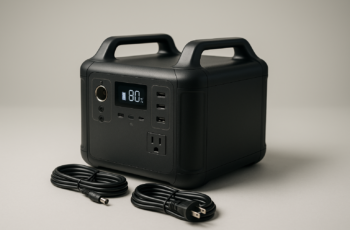
A portable power station is a compact, rechargeable energy source that stores electricity for use off-grid or during outages, delivering multiple output options (AC, DC, USB) to power devices safely. We view these devices as modular energy hubs, combining battery chemistry, inverter efficiency, and protection circuits to deliver reliable power with measurable performance. Our focus is on practical reliability: peak wattage, continuous output, and thermal management under load. We emphasize charging safety, including proper input qualifications, temperature limits, and cord integrity to prevent overheating. Warranty terms matter for long-term assurance, covering defects and performance degradation with transparent service paths. By examining specs, we compare cycle life, efficiency, and safety certifications, ensuring informed choices that align with real-world usage and risk awareness.
Estimate Your Power Needs: Capacity, In/Out, and Run Time
We’ve covered what a portable power station is and why it matters; now we estimate real-world needs by sizing capacity, input/output, and run time. We approach estimating with precise metrics to avoid overbuying or underperforming, prioritizing safety and reliability. We quantify capacity in watt-hours, evaluate recharge options and max input, and project runtimes under typical loads. Our method blends power budgeting with real-use scenarios, ensuring margins for efficiency and peak draw. We also benchmark inverter efficiency and series/parallel cell behavior to refine expectations, avoiding misfires on surge-sensitive devices. By documenting consistent assumptions, we empower informed comparisons and responsible purchases. This framework supports durable, data-driven decisions and transparent, safe operation over time.
- Capacity-focused planning for real loads
- In/Out efficiency and surge handling
- Runtime estimates under representative use
Beyond Battery Size: Key Specs That Matter
We’ll look beyond battery size to the key specs that influence real-world use, like peak power output and sustained output for load demands. We’ll weigh portability versus durability to balance handling, construction, and long-term reliability under travel and weather. We’ll use data-driven checks to compare inverter efficiency, protection features, and input/output versatility so you can choose with confidence.
Power Output Essentials
Power output matters just as much as battery capacity when selecting a portable power station, because sustained and peak current determine what you can run and for how long. We focus on measurable metrics that impact performance, safety, and reliability, including continuous watts, peak surge, and AC/DC inversion efficiency. Understanding these data points helps us compare models on real load profiles, not just capacity. We discuss ideas around wiring, protection, and thermal behavior to ensure safe operation under expected surges. Our goal is to match power output to user demands with confidence, avoiding overloading circuits and minimizing voltage drop. By prioritizing precision, we deliver clear, actionable guidance for responsible choices.
- Continuous vs. peak watts and their practical implications
- Inverter efficiency and thermal management under load
- Protection features that safeguard devices and users
discussion ideas, power output
Portability vs Durability
Is portability truly worth sacrificing durability? We evaluate between a portable design and rugged build to guide practical choices. Our data compares weight, handle ergonomics, and case rigidity against impact resistance, vibration tolerance, and thermal resilience. Ultra-light units often trade chassis thickness for insulation and protection, increasing risk under job-site drops or exposure to dust. Conversely, heavier models with reinforced enclosures deliver longer lifespans but reduce mobility. We quantify: IP ratings, drop-test results, and temperature operating windows correlate with reliability during prolonged use. For most users, optimal units balance weight with solid external protection and secure cable networking. We recommend prioritizing a portable design that maintains a rugged build, ensuring safe, dependable performance in diverse environments without unnecessary bulk.
Charging Options for Your Lifestyle
Charging options aren’t one-size-fits-all; your lifestyle determines the best mix of ports, efficiency, and reliability. We match chargers to usage profiles, quantify input/output efficiency, and prioritize safe operation across devices. By evaluating different charging portals, we optimize recharge time, cycle life, and compatibility with typical power stations. Our approach includes standardized testing data, thermal margins, and real-world load scenarios to inform responsible selection. We also perform brand comparison to illuminate build quality, warranty coverage, and ripple management, ensuring predictable performance under varied conditions. Pairing power needs with port availability minimizes downtime and battery stress. Transparent specs and conservative safety margins help us protect investments and maximize uptime.
Charging options vary by lifestyle; we optimize ports, efficiency, and safety for reliable, rapid, long-term charging.
- Assess port variety and charging speeds for common devices
- Compare brands for reliability, warranties, and support
- Analyze thermal and surge protections under load
Safety Features to Look For in Online Purchases
When buying portable power stations online, we start by outlining safety features that protect both users and equipment, building on our earlier focus on charging options. We prioritize robust safety protocols that mitigate overheat, short-circuit, and thermal runaway risks, and we verify certified battery chemistry and internal isolation. Our assessment emphasizes material quality, secure enclosure integrity, and reliable overcurrent protection, with explicit attention to surge handling and venting design. We scrutinize labeling, instruction clarity, and accessibility of emergency shutoffs. We address chemical hazards by confirming proper containment, minimal leakage pathways, and adherence to applicable safety standards. Data-driven testing results, independent lab certifications, and traceable serials enhance trust. We avoid ambiguous claims, focusing on verifiable, reproducible safety criteria for online purchases.
Pricing, Warranties, and the Total Cost of Ownership
Pricing, warranties, and the total cost of ownership demand a data-driven approach: we compare up-front prices, shipping, and after-sales support to deliver a transparent total cost picture. We quantify pricing pitfalls, including hidden fees, battery degradation risk, and bundle discrepancies, to prevent surprises. Warranties matter because leverage varies by manufacturer, coverage length, and serviceability; we assess eligibility, claim ease, and conditional clauses to protect value over time. We model total cost by factoring maintenance, replacement cycles, and potential downtime, then compare scenarios across brands. Our stance is safety-conscious and precise, ensuring you understand the long-term financial and reliability trade-offs before buying.
- Transparent total cost modeling across brands
- Warranty leverage: coverage depth and claim practicality
- Hidden-fee awareness and lifecycle planning
Real User Experiences: What Buyers Say
Real user experiences consistently illuminate the practical trade-offs behind portable power stations, revealing how performance, reliability, and service quality translate into daily utility. We aggregate real user experiences to identify common patterns in charging efficiency, cycle life, and temperature resilience. Our assessment relies on verifiable data: capacity in watt-hours, inverter efficiency, MPPT input ranges, and real-world runtime under typical loads. Online shopping anecdotes highlight warranty responsiveness, parts availability, and customer support timeliness, informing risk assessment alongside specs. We caution readers to verify burn-in behavior, indicator accuracy, and battery management system protections. By contrasting user-reported outcomes with manufacturer claims, we expose gaps without sensationalism. Real user experiences guide cautious selection, ensuring compatibility with intended use cases while prioritizing safety, durability, and predictable performance.
How to Validate a Model Before You Buy Online
We validate a model by examining validated metrics and independent test results to gauge performance accuracy. We compare metrics from multiple reputable sources to ensure consistency and reliability before purchase. We’ll highlight where independent tests align with manufacturer claims to support safe, informed buying decisions.
Validate Model Metrics
How can we reliably validate a model’s performance before buying online? We approach this with a data-driven method, focusing on objective metrics that translate to real-world reliability. We evaluate validate metrics such as error rates, confidence intervals, and calibration curves, ensuring measurements reflect typical usage. We document test accuracy across representative scenarios, and we stress-test for edge cases to prevent overfitting to ideal conditions. Transparent reporting of sample sizes, variance, and failure modes is essential for safety-conscious decisions. We prioritize reproducibility, maintain versioned datasets, and audit any deviations from preregistered protocols. This disciplined approach reduces bias and supports informed purchasing choices.
- Define clear success criteria and thresholds for test accuracy
- Track metric drift under varying load and temperature
- Require complete methodological disclosure for auditability
Compare Independent Tests
Can independent tests reliably validate a model before you buy online, or do conflicting results require closer scrutiny? We compare test setups, metrics, and repeatability to judge consistency across independent datasets. We look for standardized discharge profiles, thermal conditions, and real-world load patterns to quantify performance, safety margins, and degradation. When tests diverge, we analyze test method transparency, equipment calibration, sample diversity, and ambient conditions, prioritizing reproducibility over anecdote. Indoor usage scenarios demand robust thermal management and short-circuit protection metrics, while online reliability hinges on documented failure modes and firmware updates. We emphasize measurable outcomes, such as peak wattage, runtime under common loads, and drift in capacity. Ultimately, cross-checked results help confirm reliability, enabling informed purchasing decisions without overreliance on a single source.
Quick Start Guide: Cart to Ready for Home or Outdoors
Before you start, consider what it takes to move from cart to ready—whether at home or off the grid—so you can maximize safety and uptime. We approach the quick start process with data-driven checks, verifying compatibility, weight limits, and port configuration to ensure cart readiness. Our protocol minimizes downtime by aligning battery chemistry, inverter efficiency, and cooling performance with your use case. We document shipping reliability, inspect packaging, and confirm firmware versions to curb longevity concerns before deployment. By standardizing pre-use tests and load sequencing, we reduce risk and extend life cycle. This guide anchors safe operation, predictable runtime, and rapid mobilization.
- Confirm compatibility and port readiness before checkout
- Validate packaging, firmware, and initial load sequencing
- Run a standardized pre-use test to monitor performance
Frequently Asked Questions
How Long Do Portable Power Stations Last on a Full Charge?
We typically see about 500–1500 full-charge cycles, maintaining 80% capacity; portable longevity varies by chemistry. We monitor charge cycles and warranty terms, compare price transparency, and ensure safe use as we evaluate duration and care routines.
Can I Replace a Battery Myself After Purchase?
We can’t recommend replacing a battery ourselves; rely on manufacturer guidance for battery safety and warranty coverage. Our team emphasizes professional service, certified parts, and documented procedures to protect performance, safety, and your warranty throughout the repair process.
Do Online Reviews Reveal Hidden Performance Issues?
Online reviews can reveal hidden issues, but beware reviewer bias; we verify online reliability with cross-sourced data, manufacturer specs, and safety records, ensuring our assessment remains data-driven, precise, and safety-conscious for you, the reader, every step.
Are There Hidden Fees for Shipping or Returns?
Yes, there can be hidden fees and shipping costs; we quantify them upfront, disclose terms clearly, and verify return policies, ensuring data-driven comparisons and safety-focused reasoning before you buy. We document every fee for transparency.
How Do I Compare Inverter Efficiency Across Models?
We compare inverter efficiency by listing peak vs continuous output, then calculating true efficiency ratios across models; we’ll use standardized loads and data sheets. Inverter efficiency, model comparison, data-driven, safety-conscious, precise, and clearly documented for you.
Conclusion
We’ve laid out the data, verified specs, and weighed real-world tests so you can buy with confidence. We’ll consider capacity, efficiency, charging versatility, and protections—then cross-check warranties and service. You’ll see burn-in indicators, firmware updates, and transparent pricing as standard. Are you ready to select a model that meets your runtime needs without compromising safety or cost? Together, we’ll choose a portable power station that performs reliably in home or outdoors and stands up to daily use.