Ad Blocker Detected
Our website is made possible by displaying online advertisements to our visitors. Please consider supporting us by disabling your ad blocker.
Disclosure: As an Amazon Associate, I earn from qualifying purchases.
Have we ever wished our off-grid setup could be lighter, simpler, and faster to set up without sacrificing power?

Why We Think the Renogy 400W Portable Solar Panel Blanket Stands Out
When we first look at the Renogy 400W Portable Solar Panel Blanket, we immediately notice how different it is from traditional rigid panels. Instead of lugging around heavy, bulky hardware, we are suddenly dealing with a lightweight, ultra-compact blanket that still promises a full 400 watts. That combination of portability, high efficiency, and flexibility is what makes this product worth a close look for serious travelers and off-grid users.
We are not just talking about a camping gadget here. We are talking about something that can power an RV, support a marine setup, live in the back of a pickup, and even serve as emergency backup at home—all while packing down to something close to backpack size.
Key Specifications at a Glance
Before we go deeper into our impressions, it helps to see how the numbers stack up. These specs give us a quick snapshot of what we are working with and how this blanket compares to typical portable solar panels.
| Feature | Details |
|---|---|
| Product Name | Renogy 400W Portable Solar Panel Blanket |
| Panel Type | Foldable solar blanket (16-fold design) |
| Rated Power | 400 watts |
| Cell Type | N-Type solar cells with 16BB technology |
| Efficiency | Up to 25% |
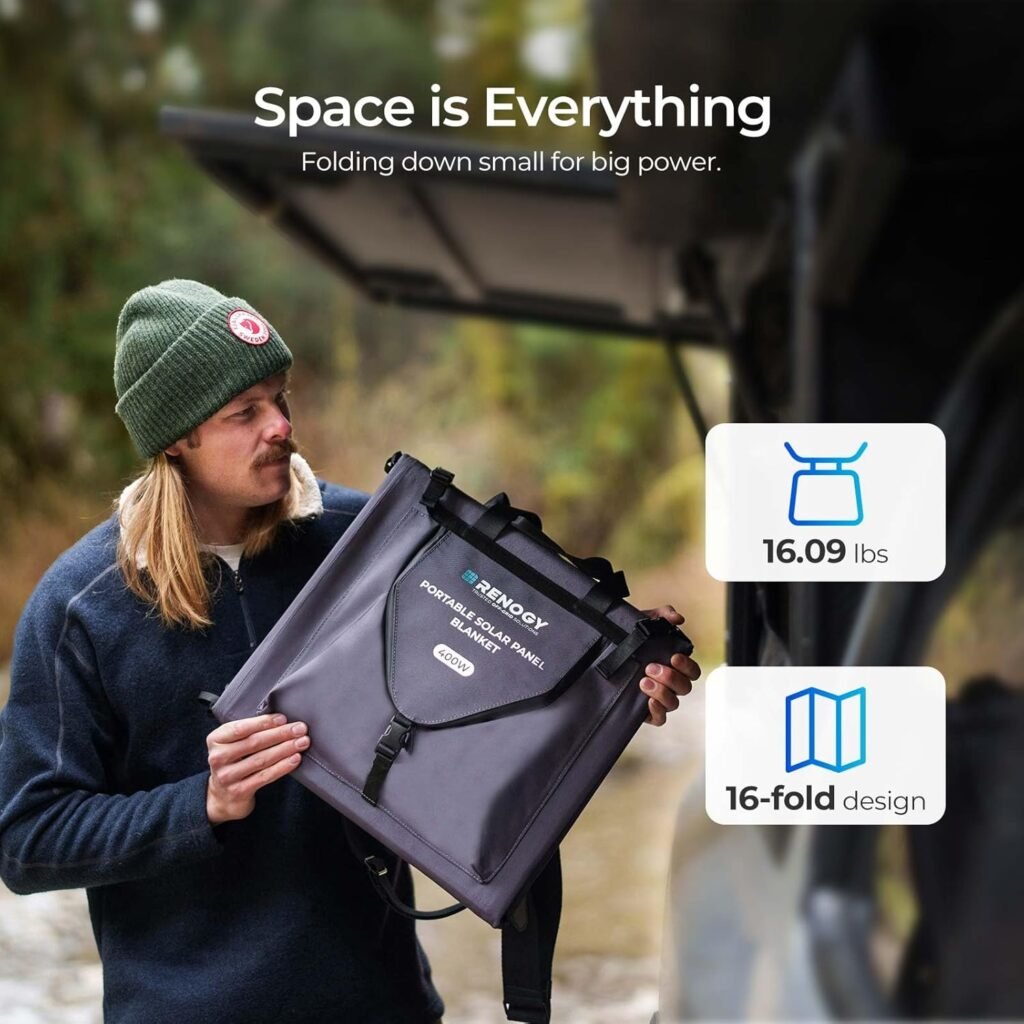
| Weight | 16.09 lbs (approx. 7.3 kg) |
| Folded Size | 16.54 x 15.83 x 4.13 inches |
| Ingress Protection Rating | IP65 (panel section) |
| Operating Temperature Range | -10°C to 65°C |
| Cable Length | 10 ft (3 m) |
| Compatibility | Power stations, 12V/24V AGM, LiFePO4, and deep-cycle batteries |
| Material | Military-grade ETFE lamination, reinforced stitching |
| Warranty | 2-year material and workmanship |
| Certifications | UL 61730, CE, RoHS, FCC, ISO 9001 facility, CA65, PSE |
We appreciate having these core specs upfront, because they show us the balance between portability and performance that Renogy is aiming for with this model.
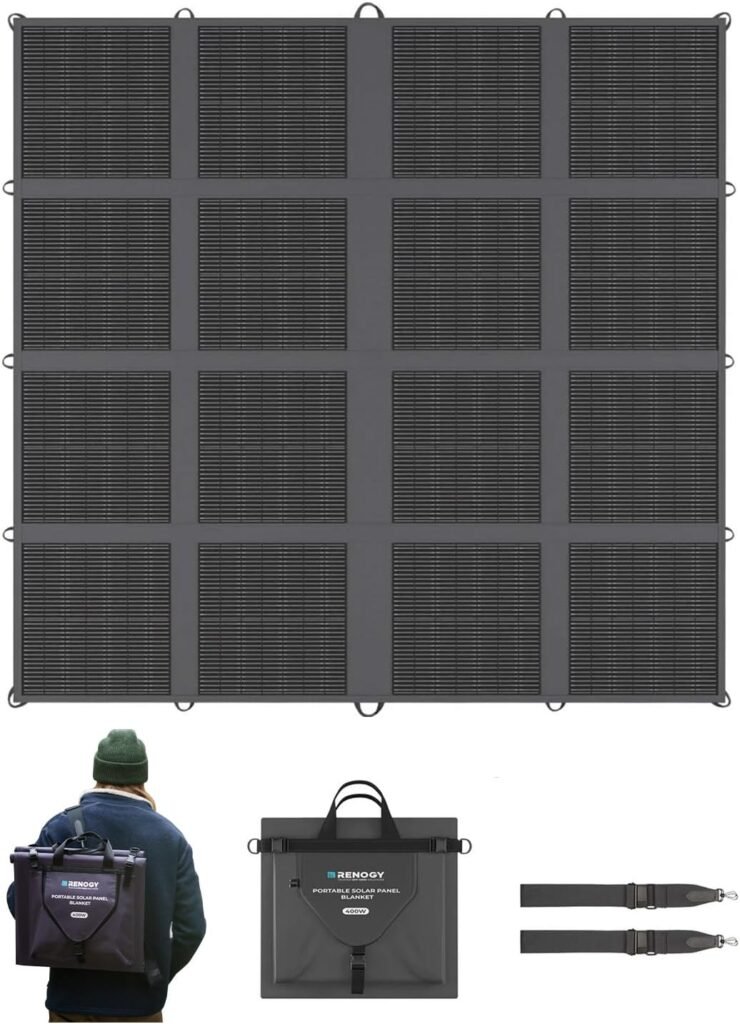

Ultra-Lightweight Design: What 16.09 Pounds Feels Like in Real Life
When we read that a 400W solar panel blanket weighs just over 16 pounds, our first thought is how that compares to the old-school rigid panels many of us have hauled around. Traditional 400W portable setups often run two to three times that weight once we factor in frames and stands.
In practice, 16.09 pounds means most of us can carry this in one hand without strain, or sling it over a shoulder using the included straps. It is noticeably lighter when we are loading it in and out of a vehicle or moving camp every day. For those of us who camp in remote spots or hike short distances from the car, saving that weight is a genuine quality-of-life improvement.
The 16-Fold Form Factor and Packability
The 16-fold design is one of the main reasons this blanket is so compact. When folded, it is roughly the size of a medium backpack, which is impressive for something that produces 400 watts at full output. Renogy claims it is 75% smaller than typical camping solar panels in this wattage range, and based on typical rigid or large tri-fold panels, that feels believable.
In real use, this means we can:
- Slide it behind the seat in a pickup or SUV
- Tuck it under a bed platform in a van or RV
- Store it in a gear closet without needing a full shelf
For anyone running a smaller rig or a tightly packed overland setup, the ability to compress a full 400W array into such a small footprint is a practical benefit, not just a marketing line.
Multiple Setup Methods: Flexible Deployment in Real Campsites
One of our favorite aspects of this solar blanket is how adaptable it is to different camp layouts and sun angles. Most of us know that the perfect sunny clearing does not always line up with where we actually want to park or pitch a tent. The flexible nature of a blanket-style panel gives us more options.
Using the Blanket Over a Windshield or Roof
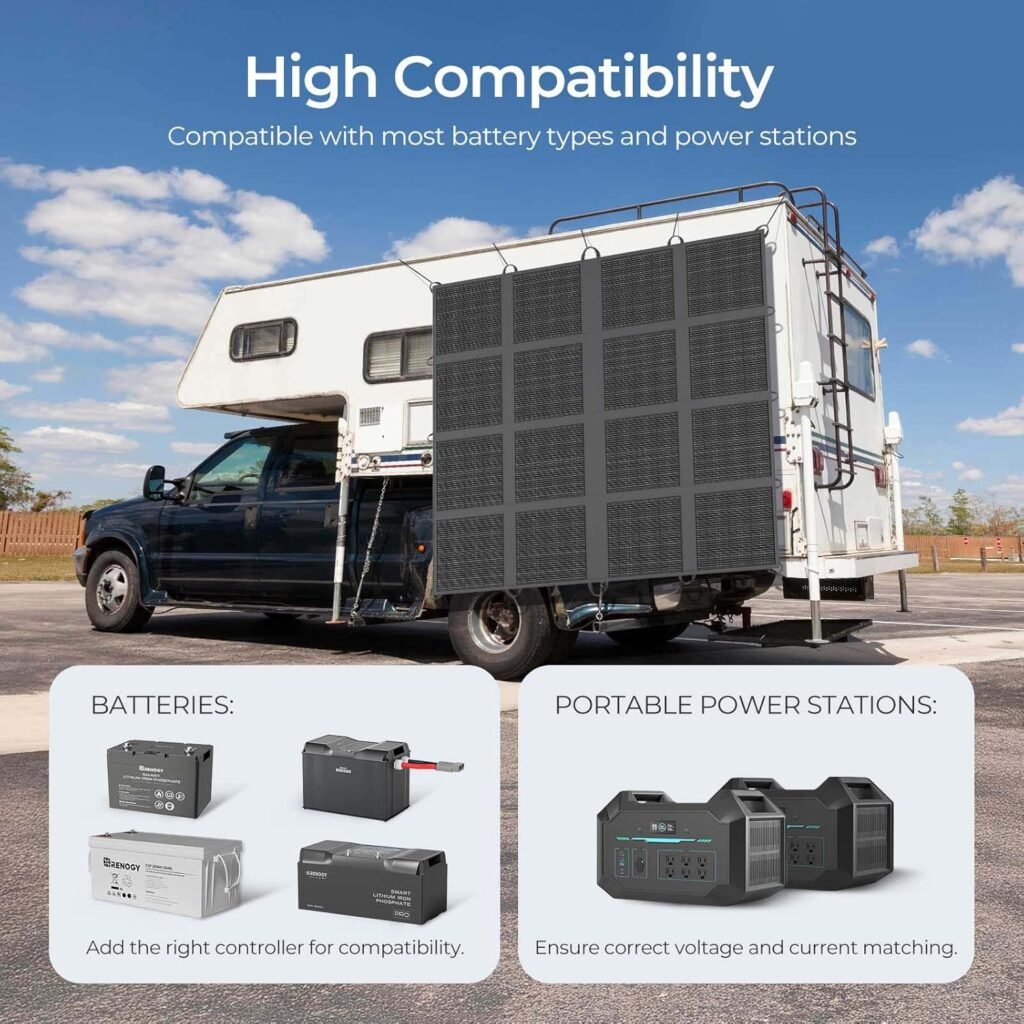
Laying the blanket across an SUV or pickup windshield is one of the most efficient and convenient setups. We can:
- Shade the interior, keeping the vehicle cooler
- Use the windshield angle to roughly orient toward the sun
- Keep the blanket up and out of the dirt and dust
For truck campers and SUV campers, this is particularly appealing. While the angle might not always be perfect, Renogy’s design aims to maintain solid output even without an ideal tilt, especially in strong sunlight.
We can also drape it across a roof or roof rack, securing it with straps or bungees. This is useful when we are stationary for a full day and want a simple setup that continues to produce power while we go about our activities.
Setting It on the Ground or Hanging It Vertically
Sometimes our vehicle is in the shade and the sun is 20 feet away over a clearing. The 10-foot cable lets us spread the blanket out on the ground in a sunnier spot while keeping our battery or power station in the cool shade. We simply unfold, angle it toward the sun as best we can, and start charging.
Hanging the blanket vertically between trees, racks, or a fence is another clever option. This can be useful when:
- The ground is muddy, rocky, or cluttered
- We want to avoid people walking across or tripping on it
- The sun is lower in the sky and side-lighting a vertical surface works well
The key strength here is flexibility: we are not stuck with a single rigid orientation. Instead, we adjust depending on the environment, which matters a lot in wooded campsites, tight parking spots, and odd angles.
Efficiency and Power Output: Making the Most of Limited Sun
The Renogy 400W Solar Panel Blanket uses N-Type solar cells with 16 busbars (16BB) and boasts a 25% efficiency rating. In practical terms, this puts it ahead of many standard RV or camping panels that sit closer to the 21–22.5% range.
What 25% Efficiency Actually Means for Us
Higher efficiency does not mean the blanket magically generates more than 400 watts. It means it can reach that power rating with a smaller physical area and can generally perform better in suboptimal conditions. For us as users, that translates into:
- More energy from the same footprint compared to lower-efficiency panels
- Better performance on hazy or partly cloudy days
- An advantage when panel placement is restricted (like a small roof or cramped campsite)
When the sun is strong and we have good alignment, we can expect the blanket to get close to its rated output. Real-world solar conditions always fluctuate, but starting with high-efficiency cells helps us harvest more energy across a typical day.
Faster Daily Energy Generation
Because we are working with a full 400W rating combined with efficient cells, we can potentially:
- Charge portable power stations significantly faster
- Top up 12V/24V battery banks more reliably between uses
- Run more demanding appliances (like fridges, lights, small inverters) using stored energy
For those of us running an electric cooler, fans, lights, and device charging while off-grid, having 400W available in portable form can make the difference between just scraping by and comfortably staying powered day after day.
Versatile Off-Grid Use Cases
One of the things we like about this product is that it is not pigeonholed into a single type of user. It is just as appropriate for an RV owner as it is for a truck camper, sailor, or homeowner wanting a compact emergency power source.
Pairing with Portable Power Stations
Many of us now carry power stations for camping, tailgating, or backup power. This 400W blanket is designed to be a natural partner for those units. Thanks to the 10-foot cable and compatibility with common systems, we can:
- Place the power station safely in shade or inside a vehicle
- Run the blanket out into the sun for efficient charging
- Use one setup for a range of scenarios: camping trips, job sites, backyard use, and power outages
Charging times will vary depending on the specific station’s capacity and input limits, but having 400 watts available in portable form greatly shortens the time it takes to refill a typical battery.
Integrating with 12V and 24V Battery Systems
For those of us running traditional deep-cycle batteries, AGM batteries, or LiFePO4 packs, this blanket works as a mobile charging source. It is compatible with both 12V and 24V systems, which suits:
- Camper vans and Class B RVs
- 4×4 overland vehicles with auxiliary battery setups
- Marine batteries on yachts, fishing boats, or liveaboard vessels
We still need an appropriate charge controller (especially for standalone battery banks), but once integrated, this blanket becomes the “fuel” that keeps our batteries ready without a generator.
Ideal Situations and Environments
Some scenarios where this solar blanket really shines include:
- RVs and trailers where roof space is already packed with vents, fans, and fixed panels
- Pickup truck campers that need powerful but stowable solar rather than permanent mounts
- SUV and car campers who want to keep things simple yet powerful
- Marine use where weight, corrosion resistance, and limited deck space matter
- Emergency backup power for blackouts or grid outages
We can think of this product as a power tool rather than a static installation. We bring it out when needed, pack it away when we are moving, and redeploy it at the next stop.
Build Quality and Durability
We always pay attention to build quality when we invest in gear that will be used outside, often in rough conditions. The Renogy 400W blanket is designed to handle that reality.
Materials: Military-Grade ETFE and Reinforced Stitching
The use of ETFE (ethylene tetrafluoroethylene) lamination is a strong point in this design. ETFE is known for:
- High resistance to UV degradation
- Strong weather and temperature tolerance
- Good light transmission, which supports efficiency
Combined with reinforced stitching, this suggests the blanket is meant to be folded and unfolded repeatedly without falling apart at the seams. In outdoor gear, these details add up to long-term reliability.
Weather Resistance and Temperature Range
With an IP65 rating, the panel portion is protected against dust and low-pressure water jets from any direction. That does not mean we should immerse it, but it does mean we can:
- Use it in light rain or wet conditions
- Brush off dust, sand, or mud after use
- Feel more comfortable leaving it deployed for a full day outdoors
The operating range from -10°C to 65°C covers nearly all typical camping and travel environments. Whether we are out in cold mornings in the mountains or hot afternoons in the desert, the blanket remains within its intended range.
Hidden Crack Mitigation
Solar panels can develop micro-cracks over time due to flex, thermal expansion, or impact. Renogy notes that this blanket adopts flexible solutions to reduce hidden crack issues, which can extend lifespan and maintain output.
In long-term use, this matters because micro-cracks can degrade performance in ways that are not immediately visible. Designing around that risk shows the product is meant for repetitive field use, not just occasional backyard deployment.
Portability and Usability in Daily Use
Portability is not just about weight; it is about how easily we can carry, store, and deploy the gear. On this front, the Renogy 400W blanket does well overall.
Carry Handle and Shoulder Straps
The padded carry handle lets us grab the blanket like a small suitcase, while the adjustable shoulder straps allow us to carry it like a bag. This is useful when:
- We are moving it from vehicle to campsite
- We are carrying other gear at the same time
- We need to transport it over uneven ground
We appreciate these small usability touches, because they make us more likely to actually use the product rather than leaving it stowed away.
Fast Setup and Takedown
With a rigid panel system, setup can involve stands, brackets, and more careful handling. With this blanket, we simply unfold it, orient it toward the sun, and plug it in. Once we get used to it, we can have it working in a few minutes.
Takedown is just as quick: unplug, fold along the structured seams, secure it, and store it. For those of us who prefer to move camp daily or use solar intermittently, this quick workflow matters a lot.
Safety and Certification: Peace of Mind for Long-Term Use
Renogy emphasizes safety and regulatory compliance in this product, which we find reassuring, especially when dealing with high-output equipment.
UL 61730 and Other Certifications
The blanket is certified to UL 61730 standards, which cover safety requirements for photovoltaic modules. Additionally, it meets:
- CE and RoHS compliance
- FCC requirements
- Manufacturing in an ISO 9001 certified facility
- CA65 and PSE standards
For us as users, these certifications mean the product has been subjected to electrical, chemical, and environmental testing. We are not just taking the manufacturer’s word for it; there is third-party validation behind the design.
Why Safety Matters in Portable Solar
Portable solar gear sees lots of handling, plugging and unplugging, and exposure to dust and moisture. Proper insulation, wiring, and shielding are essential to avoid issues such as shorts, overheating, or degradation.
Knowing that this blanket is built to recognized safety standards makes us more comfortable using it around our vehicles, families, and campsites.
Real-World Advantages Compared to Traditional Panels
When we think about how this solar blanket fits into our gear collection, we naturally compare it to conventional rigid or semi-rigid panels.
Space and Weight Savings
Typical 400W camping setups often involve two 200W rigid panels or even four 100W panels. Each panel needs space, mounting or stands, and protective storage. The total weight and volume usually add up quickly.
By contrast, this blanket:
- Consolidates 400W into one compact, foldable unit
- Weighs significantly less than equivalent rigid arrays
- Takes up minimal room when not in use
For those of us who prioritize packing efficiency, this is one of the most compelling reasons to use a solar blanket over a rigid solution.
Flexibility vs. Permanence
Rigid panels excel when we want a permanent, always-ready system—like rooftop arrays on RVs or cabins. The Renogy blanket excels when we:
- Want to move it between vehicles or locations
- Do not want to drill holes or permanently alter our roof
- Prefer a system we can pack away for part of the year
We see this as a flexible tool that can supplement existing rooftop panels or serve as the main off-grid power source for smaller setups.
Ease of Use for Different Levels of Experience
Not all of us are electrical experts, and one concern with solar gear can be complexity. The Renogy blanket is designed to be approachable.
For Beginners
If we are new to off-grid power, pairing this blanket with a compatible power station is a straightforward starting point. Typically, we only need to:
- Unfold the blanket and place it in the sun
- Connect the included cable to the power station input (possibly using an adapter)
- Confirm that the power station is receiving a charge
From there, we simply use the power station as a central hub for lights, devices, and small appliances.
For Advanced Users
More experienced users can integrate this blanket into:
- Multi-source systems with alternator, shore power, and solar inputs
- Custom 12V or 24V battery banks with dedicated charge controllers
- Hybrid setups where the blanket supplements rooftop or ground-mounted panels
In these cases, the blanket acts as a versatile, portable “extra” that can be deployed when we need more wattage than our fixed array provides.
Situations Where This Solar Blanket Truly Shines
As we think through when and where we would reach for this product, several scenarios stand out as especially well-suited to its design.
Overlanding and 4×4 Expeditions
For overland rigs and 4×4 setups where every pound and every cubic inch matters, a full 400 watts that folds away into a compact package is a game changer. We can keep the vehicle minimally cluttered while still having serious charging capability once we stop.
This kind of gear fits nicely with the ethos of efficient, self-contained travel: we bring exactly what we need, nothing more, nothing less.
Seasonal or Occasional RV Users
If we only use our trailer or RV occasionally, we might not want to invest in a permanent roof array. A portable blanket like this lets us keep things simple:
- Store it at home during the off-season
- Bring it along for trips and deploy it when parked
- Move it to a different RV or vehicle in the future
We are not locked into one configuration or one vehicle, which keeps our investment flexible.
Boondocking and Dispersed Camping
When we camp without hookups and far from crowded campgrounds, reliable solar becomes essential. This blanket supports that style of travel by providing:
- Enough power to sustain fridges, lights, fans, and device charging
- Quick deployment for short stops or overnight stays
- The ability to orient the blanket optimally, unlike roof-only arrays
For boondockers who change locations frequently, having a powerful yet portable solar solution can extend our stays significantly.
Potential Limitations and Considerations
No product is perfect for every user, and this solar blanket is no exception. It helps to be aware of a few considerations before we decide if it fits our needs.
Size When Deployed
Although it folds down very small, a 400W blanket still occupies a notable area when fully unfolded. We need enough open ground, roof, or hanging space to use it effectively. In extremely tight or heavily wooded campsites, positioning the blanket may take some creativity.
If we are often in cramped urban parking or dense forests, we should consider how easily we can find a patch of sun big enough for the blanket.
Manual Handling and Positioning
Because this is not a fixed rooftop system, we need to:
- Set it up and take it down manually
- Adjust it occasionally to follow the sun if we want peak performance
- Protect it from being stepped on, driven over, or mishandled
Some of us will see this as a minor trade-off for the power and flexibility we gain. Others might prefer a “set it and forget it” rooftop array, even if it is less portable.
Dependence on Compatible Connectors and Controllers
While the blanket is broadly compatible with power stations and battery systems, we may need:
- The right adapters for our specific power station brand
- A suitable solar charge controller for direct battery charging
Most experienced users will expect this, but if we are brand-new to solar, it is smart to check compatibility with our existing gear or planned purchases beforehand.
Who This Product Is Best Suited For
Based on its design and capabilities, we see the Renogy 400W Portable Solar Panel Blanket as an excellent fit for several groups.
Ideal Users
- Active campers and overlanders who move locations often and need a powerful yet compact solar source
- RV and van owners who want supplemental or primary portable solar without permanent installation
- Boat and marine users looking for lightweight, corrosion-resistant off-grid power
- Homeowners and renters who want a robust but stowable backup power option for outages
For those of us who value flexibility and portability as much as total wattage, this blanket hits a very attractive balance.
Users Who Might Prefer Other Options
- Full-time RVers who want a permanent rooftop array and minimal daily setup may prioritize fixed panels instead
- Cabin or home users with plenty of roof space might choose traditional panels for long-term, stationary use
- Minimalist backpackers are likely to find 400W and 16 pounds excessive; smaller panels may suit them better
In other words, if we mostly stay in one place and do not mind permanent installations, a rooftop system could serve us better. If we demand true pack-on-foot portability, we might opt for a much smaller panel. The sweet spot for this Renogy blanket is vehicle-based, flexible, moderate-to-heavy off-grid power use.
Warranty and Support
The 2-year material and workmanship warranty gives us a baseline of confidence in the product’s quality. It is not the longest warranty in the solar industry, but it is respectable for a portable, often-handled blanket.
Given Renogy’s established presence in the solar market, we can also expect:
- Access to documentation and user guides
- Customer service for troubleshooting or questions
- Replacement or repair options within the warranty period
We always recommend keeping proof of purchase and registering the product if required, so we are fully covered if issues arise.
Our Overall Take on the Renogy 400W Portable Solar Panel Blanket
When we put all the pieces together—light weight, high efficiency, flexible deployment, rugged construction, and strong certifications—we see a product designed for real-world field use rather than just spec-sheet bragging rights.
We appreciate that this blanket:
- Compresses a full 400 watts into a compact, 16.09-pound package
- Uses 25% efficiency N-Type cells for strong performance even in less-than-ideal conditions
- Offers multiple mounting and placement options for creative campsite layouts
- Handles harsh temperatures and outdoor exposure with ETFE and IP65 protection
- Plays nicely with both modern power stations and traditional 12V/24V battery setups
We also recognize that it asks a bit from us: we need to handle it, position it, and think about where the sun is. For those of us who enjoy hands-on camp setups and appreciate the flexibility of portability, that tradeoff is more than acceptable.
In our view, the Renogy 400W Portable Solar Panel Blanket is a powerful, thoughtfully designed solution for anyone who wants serious off-grid capacity without committing to heavy, permanent panels. If our goal is to keep our batteries full, our devices powered, and our freedom of movement intact, this blanket deserves a place near the top of our shortlist.