Ad Blocker Detected
Our website is made possible by displaying online advertisements to our visitors. Please consider supporting us by disabling your ad blocker.
Disclosure: As an Amazon Associate, I earn from qualifying purchases.
Have we ever wished we could plug in our favorite devices far from any wall outlet and still feel confident we won’t run out of power?

What Is This Portable Power Station and Outdoor Solar Generator?
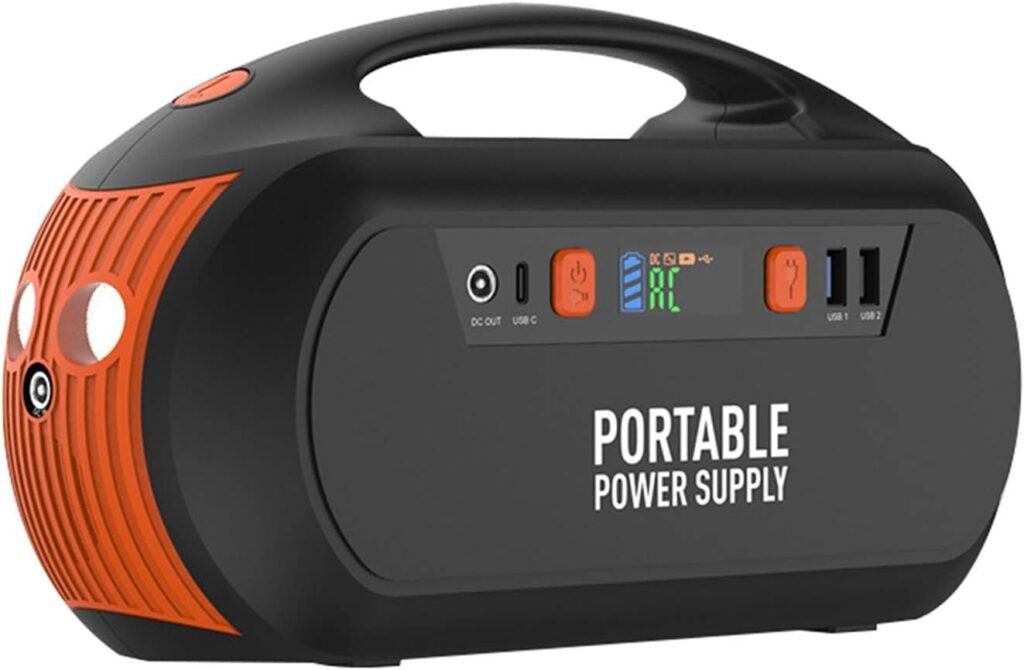
This portable power station and outdoor solar generator, rated at 100 watts with 150 peak watts and a 60,000 mAh lithium-ion battery, is designed to be our compact energy hub. It is built for camping, road trips, emergencies at home, and everyday backup power, with an orange housing and 220V output.
Even though the name mentions solar, the solar panel is not included, so we need to plan either to buy a compatible panel or rely on wall charging. As a small-capacity power station, it targets light to medium power needs rather than heavy-duty tools and appliances.
Key Specifications at a Glance
To get a feel for what this device can handle, it helps to look at the core specs in a simple table. This gives us a better way to compare it with other power options we might be considering.
| Feature | Specification |
|---|---|
| Battery Capacity | 60,000 mAh lithium-ion |
| Rated Output Power | 100 watts |
| Peak Output Power | 150 watts |
| Output Voltage | 220V AC (plus DC, USB, and Type-C outputs) |
| AC Outputs | Standard AC port(s) for small appliances and electronics |
| DC Outputs | 1 DC interface |
| USB Outputs | 2 USB ports (1 standard, 1 fast-charge) |
| Type-C Output | 1 Type-C port |
| Charging Inputs | Solar: 16.6V–25V (panel not included); DC adapter: 19V/2A |
| LED Display | Battery level plus indicators for AC, USB, DC, Type-C |
| Lighting | 32 SMD LED reading lamp + 2 high-brightness white LED flashlights |
| Operating Temperature Range | -10°C to 40°C |
| Safety Features | Overload, over-voltage, over-current, over-temp, short circuit protection |
| Auto Shutoff | 20 seconds without load: automatic shutdown |
| Color | Orange |
This summary shows us that the station is very much a compact 100W class power unit aimed at consistent light duty use, not a powerhouse for large appliances.
Design, Build, and Portability
Compact Form Factor and Color
This power station comes in a bright orange color, which makes it easy to spot in a tent, vehicle, or cluttered garage. The design is functional, leaning more towards practicality than premium aesthetics.
We can expect a fairly compact footprint since it houses a 60,000 mAh battery and a modest 100W inverter. That makes it easier to carry or stash in the trunk, RV, or even near our home emergency kit.
Portability and Everyday Use
As a “portable” power station, weight and handle design matter. While we do not have the exact weight from the product text, units in this capacity range are generally light enough to carry with one hand.
We can carry it between rooms during a power outage, bring it along on a short camping trip, or keep it in the car as a backup without it feeling cumbersome. For anyone who values grab-and-go practicality, this form factor is a real plus.

LED Display and Interface
Clear LED Display for Battery and Modes
The built-in LED display shows a battery column, which gives us a visual sense of remaining power. It also uses symbols to show which output modes are active: AC, USB, DC, and Type-C.
This kind of display is much easier to live with compared to single blinking LEDs. We can tell at a glance how much charge we have left and whether we have turned on the right ports for our devices.
Ease of Use and Visual Feedback
Because each output type has a symbol, we are less likely to get confused about what is currently powered. This helps avoid leaving an output on by accident, which could slowly drain the battery.
For anyone in our household who is not tech-savvy, the simple visual feedback reduces the learning curve. That makes the device more practical as a family emergency backup, not just a gadget for enthusiasts.
Charging Options: Solar and DC Adapter
DC Adapter Charging (Wall Charging)
The station supports DC adapter charging at 19V/2A. This is the typical way we will recharge it at home before a trip or in between uses. Plugging it into a wall outlet (using the included or recommended adapter) should recharge the battery at a moderate pace.
We can plan to top it up overnight or during the day while we go about our routine. For consistent emergency readiness, we might want to build a habit of recharging it every few weeks if we are not using it often.
Solar Charging for Off-Grid Use
Solar panel charging is supported in the 16.6V–25V range, but we need to remember that the panel is not included. We will have to choose a compatible solar panel separately if we want that functionality.
For camping or off-grid setups, solar capability is a major advantage. We can recharge the power station during the day and then use it for lighting, phones, and light electronics at night. We should match the panel’s voltage and connector to the given input spec.
Lighting Features: Reading Lamp and Flashlights
Built-In Reading Lamp
The station incorporates an SMD LED reading lamp with 32 lamp beads. These are 2835 warm white LEDs with a color temperature of 2900–3100K. According to the specs, each LED runs at about 3.2–3.5V / 0.2W / 24 lumens, which creates a warm, comfortable light.
Warm white lighting is gentler on our eyes in the evening, especially in a tent or small room. The reading lamp feature makes the power station more than just a battery pack; it becomes part of our lighting setup.
Two High-Brightness LED White Flashlights
In addition to the reading lamp, we also get two high-brightness white LED flashlights built in. These are useful for walking around a campsite, checking on our vehicle at night, or navigating the house during a blackout.
Having the lights integrated into the unit means we have one less thing to remember to pack or charge separately. It also maximizes the value we get from the battery, since it can handle both powering gadgets and providing illumination.
Outputs and Connectivity
AC Output: What Can We Actually Power?
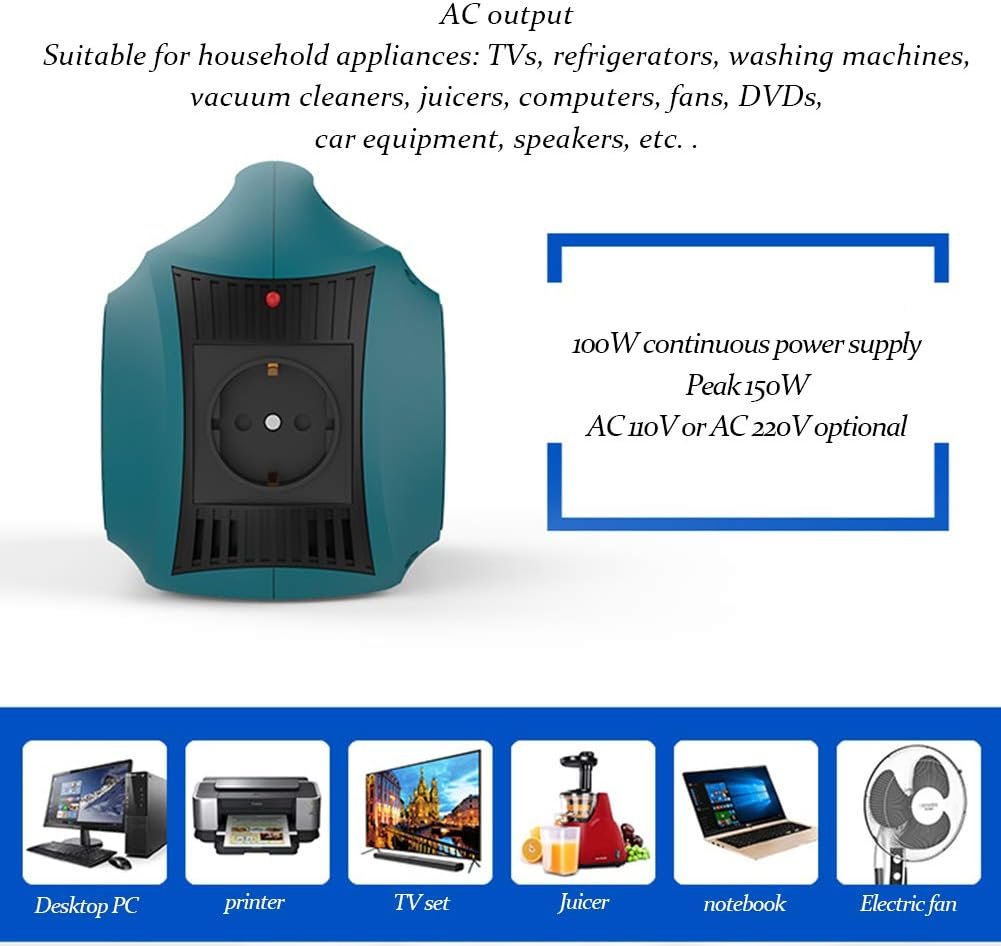
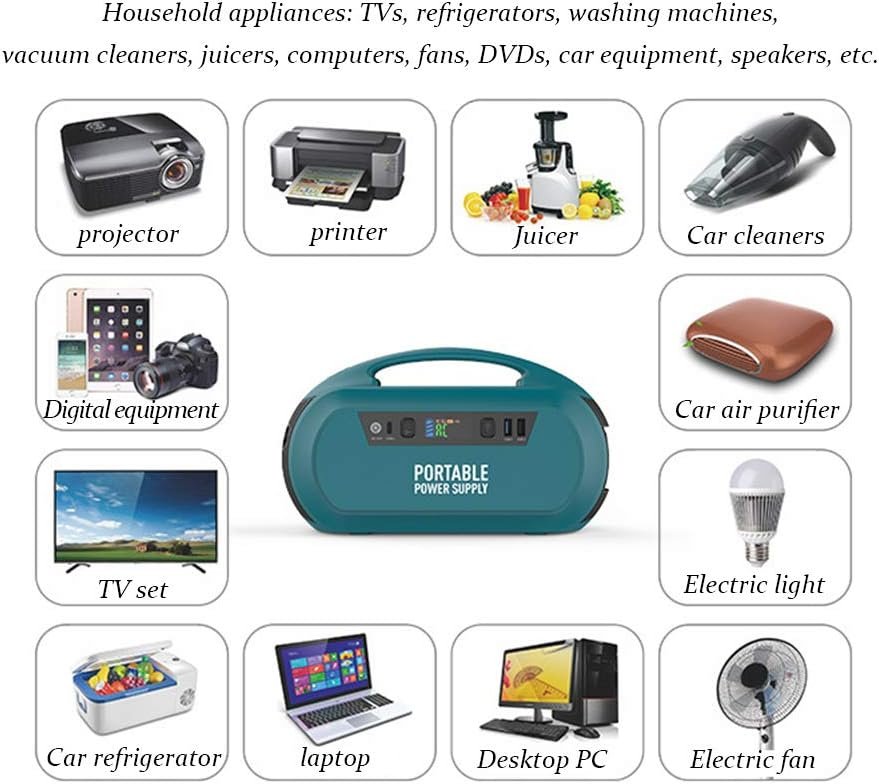
The product description lists AC suitability for household appliances like TVs, refrigerators, washing machines, vacuum cleaners, juicers, computers, fans, DVDs, car equipment, and speakers. But we have to reconcile that with the actual rated power: 100 watts with 150 watts peak.
In realistic terms, we can safely power small AC loads up to 100 watts, with short bursts up to 150 watts. That means:
- Small fans, small LED TVs, and some routers or modems can work.
- Low-wattage laptops and chargers can be fine.
- Larger appliances like full-size refrigerators, washing machines, and vacuum cleaners will usually exceed that rating.
We need to treat that long list as an example of categories, not a promise that it can run every appliance in our home. Checking the wattage label on each device is essential before plugging it in.
DC, USB, and Type-C Outputs
The station offers several DC-based outputs:
- 2 USB interfaces – one standard USB and one fast-charge output.
- 1 Type-C interface – useful for modern phones, tablets, and some laptops.
- 1 DC interface – good for DC-powered devices like some LED strips, small pumps, or certain cameras.
These ports allow us to charge multiple devices at once without relying on the AC output. Using DC and USB is more efficient since we avoid the power loss that comes with AC inversion.
For everyday use, this combination of ports is enough to keep our phones, e-readers, small tablets, Bluetooth speakers, and similar gadgets charged during trips or outages.
Battery Capacity and Real-World Performance
Understanding the 60,000 mAh Rating
The battery capacity is listed as 60,000 mAh, which is often measured at the cell voltage (typically around 3.7V for lithium-ion). Converting to watt-hours (Wh) provides a clearer idea of actual usable energy:
- 60,000 mAh at 3.7V is roughly 222 Wh (60 Ah × 3.7V).
In real conditions, we will not get 100% of that due to conversion losses. But we can roughly estimate runtimes:
- A 10W LED light might run for around 15–18 hours.
- A 20W device could run for about 8–9 hours.
- Charging a typical smartphone (around 10–15Wh per charge) might be possible 10–15 times, depending on efficiency and how much we use other ports.
These are approximate figures, but they give us a sense of what we can expect in practice.
Rated Watts vs. Peak Watts
The rated output of 100 watts means that is the continuous power level the unit is designed to handle. The 150-watt peak rating is for short surges—like when a device first turns on and briefly draws extra current.
To avoid overload shutdowns, we should size our loads so that we stay under 100W most of the time. Occasional peaks that brush against 150W might be fine, but constant use near that peak is not what the unit is built for.
Safety and Protection Features
Intelligent Protection Circuitry
The station is equipped with a smart power IC and an intelligent chip that handle a range of protection functions, including:
- Overload protection
- Over-voltage protection
- Over-current protection
- Over-temperature protection
- Short circuit protection
On the battery side, we also get:
- Overcharge protection
- Under-voltage (deep discharge) protection
- Battery over-current protection
- Battery short circuit protection
These features guard both the power station and our connected devices. They help ensure that if something goes wrong—like a shorted cable or an overloaded appliance—the system shuts down rather than damaging itself or our equipment.
Auto Shutoff for Power Saving
The unit also features an automatic shutdown after 20 seconds without load. This means that if nothing is drawing current, the power station turns itself off to save battery.
In practice, this can be very helpful in preventing the battery from draining due to idle operation. For some very low-power devices, it is worth checking that they actually draw enough current to keep the station “awake,” but most typical loads like phones, lights, and small fans will be fine.
Environmental Adaptability
Operating Temperature Range
The station is designed to operate in environments from -10°C to 40°C. That range covers a good portion of common outdoor and indoor conditions, making it suitable for:
- Cool camping trips
- Mild winter emergencies
- Typical spring and summer use
We should still avoid leaving it in extreme direct heat (like a closed car in full summer sun) or in freezing temperatures for extended periods when not in use. Lithium-ion batteries last longer when treated gently.
Durability and Use in Real Situations
While the text does not mention waterproofing or rugged drop protection, the strong environmental adaptability refers mainly to battery and electronics performance. For us, that translates to a portable power station we can use in a variety of climates, as long as we store and handle it sensibly.
For wet or dusty conditions, we may still want to give it some extra protection, such as keeping it under a canopy or in the tent rather than out in the open.
Everyday Use Cases
Camping and Outdoor Adventures
For camping, this station can:
- Run small LED lights and the built-in reading lamp for the tent.
- Charge our phones, cameras, and portable speakers.
- Power a small fan in warm conditions.
- Support a tablet or small laptop for offline movies or work.
If we pair it with a compatible solar panel, we can recharge during the day and rely less on bringing extra power banks or disposable batteries.
Road Trips and Vehicle Use
On road trips, we can use the station to:
- Keep everyone’s phones charged without fighting over the car charger.
- Power a small 12V DC device or a portable fridge only if the wattage stays within limits.
- Provide lighting at roadside stops or in cabins without easy outlets.
Because we are working with a 100W-rated station, we still need to be careful not to exceed its limits, especially with fridges or inverters for multiple device chargers.
Home Backup and Emergencies
During a power outage, this unit can:
- Keep our phones, power banks, and some small electronics topped up.
- Power a Wi-Fi router and modem for a while (as long as total draw stays modest).
- Run some LED lights or the reading lamp.
It will not replace a full home generator, but as a compact emergency backup, it gives us some vital comfort and communication capability.
Strengths of This Portable Power Station
Versatile Outputs in a Small Package
The combination of AC, DC, USB, and Type-C outputs gives us flexibility with a variety of devices. We do not need multiple adapters for many everyday gadgets; we can plug directly into the right port.
The fast-charge USB interface is especially helpful if we want to boost phone batteries quickly while managing limited capacity during an outage or short trip.
Integrated Lighting as a Major Plus
The reading lamp and flashlights mean we are carrying both power and light in one unit. This can be a big advantage in emergency kits or minimalist camping setups, simplifying our gear list.
Warm white lighting for reading and general comfort plus bright white spot lighting covers both gentle ambient and focused illumination.
Safety and Smart Management
The robust protection system, both on the inverter and battery side, helps extend the life of the unit and protects our devices. The auto-shutoff after 20 seconds without load helps prevent accidental drain.
For long-term ownership, those protective layers are more than just marketing—they are what allow the unit to handle repeated charge/discharge cycles without premature wear.
Limitations We Should Keep in Mind
Power Rating Constraints
The most important limitation is the 100W rated / 150W peak power output. Despite the product description referencing large appliances such as washing machines and refrigerators, the numbers simply do not support those loads.
We need to treat this device as a small-scale power solution. Heavy-duty items, power-hungry heaters, most microwaves, large fridges, and big vacuum cleaners are off the table.
Solar Panel Not Included
While we can recharge through solar, we must buy a compatible panel separately. That adds to the overall cost and requires some attention to connector type and voltage range.
If we are counting on solar as our main charging method, we should plan for the extra purchase and possibly get a panel in the 30–60W range (or higher, within the voltage range) for reasonable recharge times.
Single AC Port and Modest AC Capacity
We are likely working with a single AC outlet and modest capacity, so powering multiple AC devices at once is limited. We can plug in a small fan or TV, but not both plus a laptop at full power if that exceeds 100W total.
DC and USB ports can still run in parallel, but the more we add, the faster we deplete the battery.
Usage Tips and Best Practices
Matching Devices to Capacity
We should check the wattage of each device before connecting it. Some quick guidelines:
- If the device label shows more than 100W, we should not run it on this station.
- For devices with motors or compressors (like some fans and mini-fridges), remember that startup wattage can spike beyond rated wattage.
- Use AC for items that really need it and keep everything else on USB, Type-C, or DC when possible.
This approach helps keep our total load in check and prolongs the unit’s life.
Charging Strategy for Longer Trips
For camping and longer outings:
- We can charge the station to full before leaving.
- We can consider topping it up when we stop at places with wall outlets.
- If we have a solar panel, we should position it to catch maximum sunlight during the day, making sure its voltage falls within the 16.6V–25V range.
Balancing our power consumption with our charging opportunities helps us avoid running empty at crucial moments.
Care and Storage for Longevity
To keep the lithium-ion battery healthy:
- Store the unit in a cool, dry place away from direct sun.
- Avoid leaving it fully discharged for long periods.
- Top it up every couple of months if we are not using it regularly.
Treating it well extends the lifespan of the battery cells and keeps the station more reliable for emergencies.
Who Is This Product Best For?
Ideal Users and Scenarios
This portable power station and outdoor solar generator suits:
- Campers and weekend adventurers who want simple, light-duty portable power.
- Families who want a modest emergency backup for phones, lights, and connectivity.
- People in apartments or small homes without space or budget for large generators.
- Anyone who values integrated lighting and USB/Type-C charging in one compact unit.
It is particularly appealing if we mostly use low-wattage devices and want something easy to carry and store.
Who Might Need a Different Solution?
We might want a higher-capacity or higher-wattage unit if:
- We need to run larger appliances like full-size fridges, microwaves, or power tools.
- We depend on medical equipment with higher power needs.
- We want a backup solution for extended multi-day outages with many devices running at once.
In those cases, a power station with higher watt-hour capacity and a stronger inverter (300–1,000W or more) would be a better fit.
Comparison to Typical Alternatives
Compared to Simple Power Banks
Versus a basic power bank, this station offers:
- AC output for small appliances and non-USB devices.
- A much larger capacity, suitable for more than just phones and tablets.
- Integrated lighting that turns it into a mini power and light hub.
Power banks are easier to carry in a pocket, but they cannot run 220V devices, and they rarely have the same level of flexibility as a full power station.
Compared to Larger Power Stations
Compared to bigger stations, this unit:
- Is easier to carry and store.
- Costs less upfront.
- Has more modest power and energy capacity.
If we only need low-power backup and occasional off-grid usage, going for a huge station might be unnecessary. This compact model hits a nice balance for minimalists and budget-conscious buyers.
Pros and Cons Summary
To make the decision easier, we can sum up our impressions in a quick reference table.
| Pros | Cons |
|---|---|
| Compact and portable, easy to carry | 100W rated output, 150W peak limits the types of devices we can run |
| Clear LED display with battery and output mode indicators | Solar panel not included; must buy separately |
| Multiple output options: AC, USB (incl. fast-charge), Type-C, DC | Likely only one AC outlet with modest total AC capacity |
| Integrated warm white reading lamp and two high-brightness flashlights | Not suitable for running high-power appliances like most fridges or washing machines |
| Good safety features: overload, over-voltage, over-current, etc. | No explicit mention of waterproofing or rugged shock protection |
| Auto shutoff after 20 seconds without load saves battery | Real-world capacity slightly lower than raw 60,000 mAh once conversion losses apply |
| Operates in -10°C to 40°C environments | Requires some power management awareness to avoid overloads |
This quick overview helps us see how well the station aligns with our particular needs and expectations.
Final Thoughts on the Portable Power Station and Outdoor Solar Generator
Overall, this “Portable Power Station and Outdoor Solar Generator, 100 Rated Watts and 150 Peak Watts, 60000 mAh Lithium-Ion Battery (Solar Panel Not Included), Orange, 220V” offers a practical mix of portability, versatility, and safety for light-duty power needs.
We get a clear LED display, multiple output types, integrated lighting, solar and DC charging options, and a robust safety suite in a compact device. As long as we respect its 100W continuous rating and treat it as a small power hub rather than a whole-house solution, it can be a very useful companion for camping, road trips, and basic emergency backup at home.
If our priority is reliable, portable power for phones, small electronics, modest AC loads, and lighting, this unit gives us a friendly, straightforward way to bring electricity with us wherever we go.