Ad Blocker Detected
Our website is made possible by displaying online advertisements to our visitors. Please consider supporting us by disabling your ad blocker.
Have we ever wished our home, RV, or campsite could run like normal even when the grid goes down or an outlet is nowhere in sight?
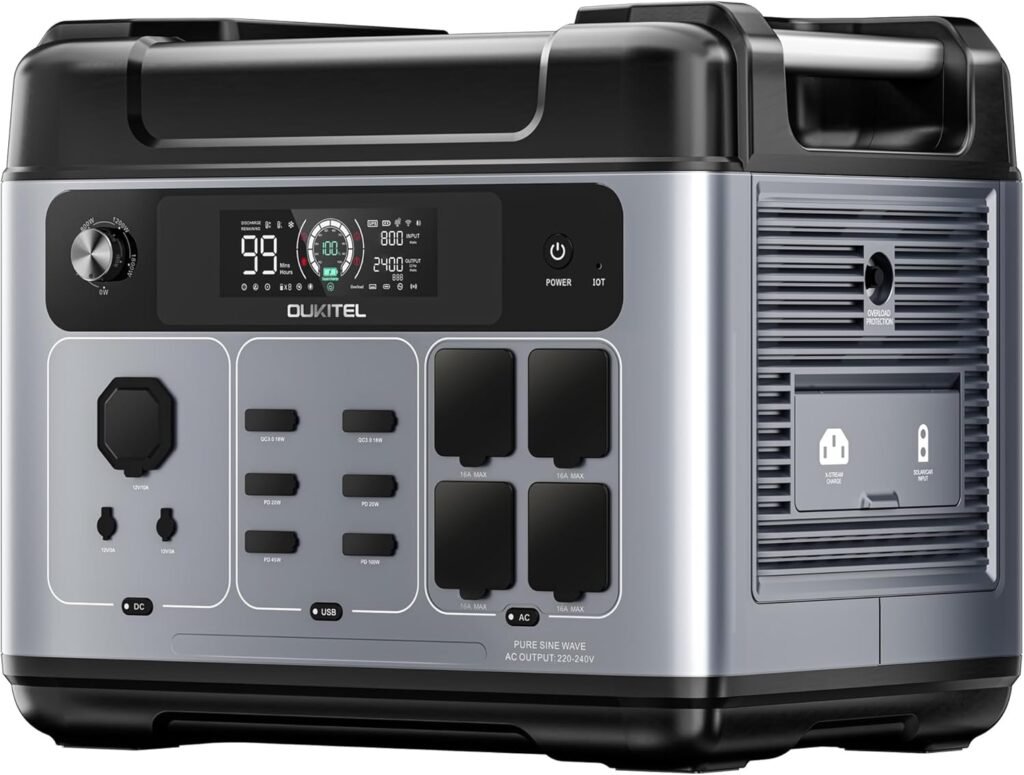

What Is the OUKITEL P2001 Plus and Who Is It For?
The OUKITEL P2001 Plus Portable Power Station 2048Wh is a high-capacity, solar‑ready, LiFePO₄ battery generator designed to keep our essential devices and appliances running at home, on the road, and outdoors. With 2400W continuous output and 4800W peak, it sits in that sweet spot between compact portability and serious backup power.
This unit makes the most sense for us if we:
- Want reliable home backup power for fridges, routers, lights, and electronics
- Travel in an RV or camper van and need a flexible off‑grid setup
- Go camping or overlanding and still want to run induction cookers, laptops, cameras, or CPAP machines
- Prefer the safety and long life of LiFePO₄ batteries over traditional lithium‑ion options
It aims to replace noisy fuel generators with a quieter, cleaner, and easier power solution we can use indoors.
Key Features at a Glance
When we look at the P2001 Plus on paper, a few main specs stand out that define what this power station can actually do for us in real life.
Core Specs Overview
This model gives us a powerful combo of capacity, output, and charging flexibility. To keep everything clear, here is a simple table with the main points.
| Feature | Specification / Detail |
|---|---|
| Battery Type | LiFePO₄ (Lithium Iron Phosphate) |
| Battery Capacity | 2048Wh |
| AC Output (Continuous) | 2400W |
| AC Output (Peak) | 4800W |
| AC Outputs | 4 x AC outlets |
| AC Charging Power Levels | 400W / 800W / 1200W / 1800W (selectable via rotary knob) |
| Fast Charge 0–80% | About 1 hour (high AC input) |
| Full Charge (AC Only) | About 1.5 hours |
| Full Charge (AC + Solar Combo) | About 1.35 hours (1800W AC + 500W solar) |
| UPS Switch Time | 0.01 seconds |
| Solar Input | Up to 500W (panel‑dependent) |
| Ports Total | 13 ports (AC, USB-A, USB-C PD, DC, car/cigarette lighter) |
| Battery Life Cycle | 3500+ cycles at 80% capacity |
| Estimated Service Life | >10 years |
| Protection System | BMS (Battery Management System) for voltage, current, and temperature |
| Control App | Yes – monitor and control via smartphone app |
| Warranty | 2 years (refunds and repairs via local technical support network) |
We can already see this is more than a small camping battery pack. It is built more like a compact, mobile power hub for serious home and travel use.
Design and Build Quality
We always care about how a device feels and functions in daily handling, not just the numbers. The P2001 Plus is designed as a rugged yet home‑friendly unit we can move around without babying it.
Form Factor and Port Layout
The P2001 Plus follows the classic “Portable Power Station” box shape with top handles and a front interface. While it is far from pocket‑sized, it is still manageable for most adults to carry from room to room or in and out of a vehicle.
The ports are thoughtfully grouped on the front, which helps us see everything at a glance:
- AC outlets clearly labeled and spaced enough for larger plugs
- USB-A and USB-C ports easy to access for everyday devices
- DC and car/cigarette lighter port placed so we can plug in fridges or pumps without wrestling cables
We are not dealing with cluttered surfaces or ports hidden on multiple sides, which makes setup faster when we are already stressed by a power cut or just arriving at a campsite.
Ruggedness and Build
The casing feels purpose-built for both indoor and outdoor use. It is not a flimsy plastic shell; it is meant to handle:
- Frequent moving between rooms
- Loading into cars, vans, and RVs
- Use in workshops, garages, or campsites
It is not a hardcore waterproof toolbox, so we still want to keep it dry and away from heavy impacts, but the overall feel gives us confidence for regular real-world use.

Battery Technology: Why LiFePO₄ Matters
The P2001 Plus uses LiFePO₄ (Lithium Iron Phosphate) cells instead of standard NMC lithium‑ion. This choice affects safety, lifespan, and overall peace of mind.
Longer Life and Higher Cycle Count
We get 3500+ charge cycles at 80% capacity, which means:
- Charging from 0–100% once a day: roughly 9–10 years before dropping to 80% capacity
- Occasional or partial use: practical lifespan can be even longer
For us, that translates to a power station we can rely on year after year without worrying it will “feel old” after only a couple of seasons of camping or a few power outages.
Safer Chemistry and Better Stability
LiFePO₄ is known for:
- Greater thermal stability
- Lower risk of fire or explosion
- Better tolerance to high temperatures (within recommended limits)
Combined with the built‑in BMS (Battery Management System), which watches over voltage, current, and temperature, this gives us a much more reassuring safety profile. We can use it indoors around our family, pets, and sensitive electronics and feel more comfortable than we would with many older battery chemistries.
Capacity and Real‑World Runtime
On paper, we have 2048Wh (watt‑hours). In practice, the actual runtime depends on the device’s power draw, but we can estimate usage quite reliably.
Example Runtimes for Common Devices
Here are some rough runtime estimates that help us picture how the P2001 Plus might fit into our daily life. We are assuming around 85–90% real‑world efficiency, which is typical once we factor in inverters and minor losses.
| Device / Appliance | Approx. Power Draw | Approx. Runtime (from 2048Wh) |
|---|---|---|
| Wi‑Fi router + modem | 20W | 80–90 hours |
| Laptop (workload, charging) | 60W | 28–30 hours |
| LED TV (medium size) | 100W | 17–18 hours |
| Mini fridge / small compressor fridge | 60–80W (average) | 20–28 hours (varies with cycling and conditions) |
| Full‑size energy‑efficient fridge | 120–150W (average) | 12–16 hours (cycling and temperature dependent) |
| CPAP machine (without humidifier) | 40W | 40–45 hours |
| CPAP machine (with humidifier) | 70–90W | 18–28 hours |
| Smartphone charging | ~10Wh per charge | 150–180 full charges |
| Portable fan | 20–40W | 45–90 hours |
| Microwave (medium, in use) | 800–1200W | ~1.5–2 hours of actual heating time |
| Electric kettle (short use) | 1200–1500W | Enough for many boils but not continuous use |
These are ballpark figures, but they give us a realistic sense: the P2001 Plus is well suited for extended outages for essentials, especially when we combine it with solar input during the day.
Power Output: 2400W Continuous, 4800W Peak
One of the biggest selling points here is the 2400W continuous AC output with a 4800W peak rating. That means we can power multiple heavy‑duty devices at the same time, as long as we stay within the output limits.
What 2400W Lets Us Run
To see what that means in daily use, let us think of typical appliances we might want to use:
-
Kitchen and cooking
- Small coffee maker: 600–900W
- Microwave: 800–1200W
- Portable induction cooktop: 1200–1800W (often adjustable)
-
Home and office essentials
- Desktop PC + monitor: 200–400W
- Large TV: 100–200W
- Router + modem: 20–30W
-
Comfort and tools
- Portable heater (low/eco mode): 800–1200W (we must be careful, heaters can be very power hungry)
- Power tools like drills or saws: 600–1500W (depending on model)
We could, for example, run:
- A fridge (150W average), a TV (120W), internet router (20W), and charge some laptops and phones at the same time, without pushing the limits.
- A microwave for short bursts while a fridge runs in the background.
The 4800W peak capacity is particularly useful when appliances have a high startup surge, such as fridges, pumps, or power tools. That means they can “kick on” without instantly tripping the system.
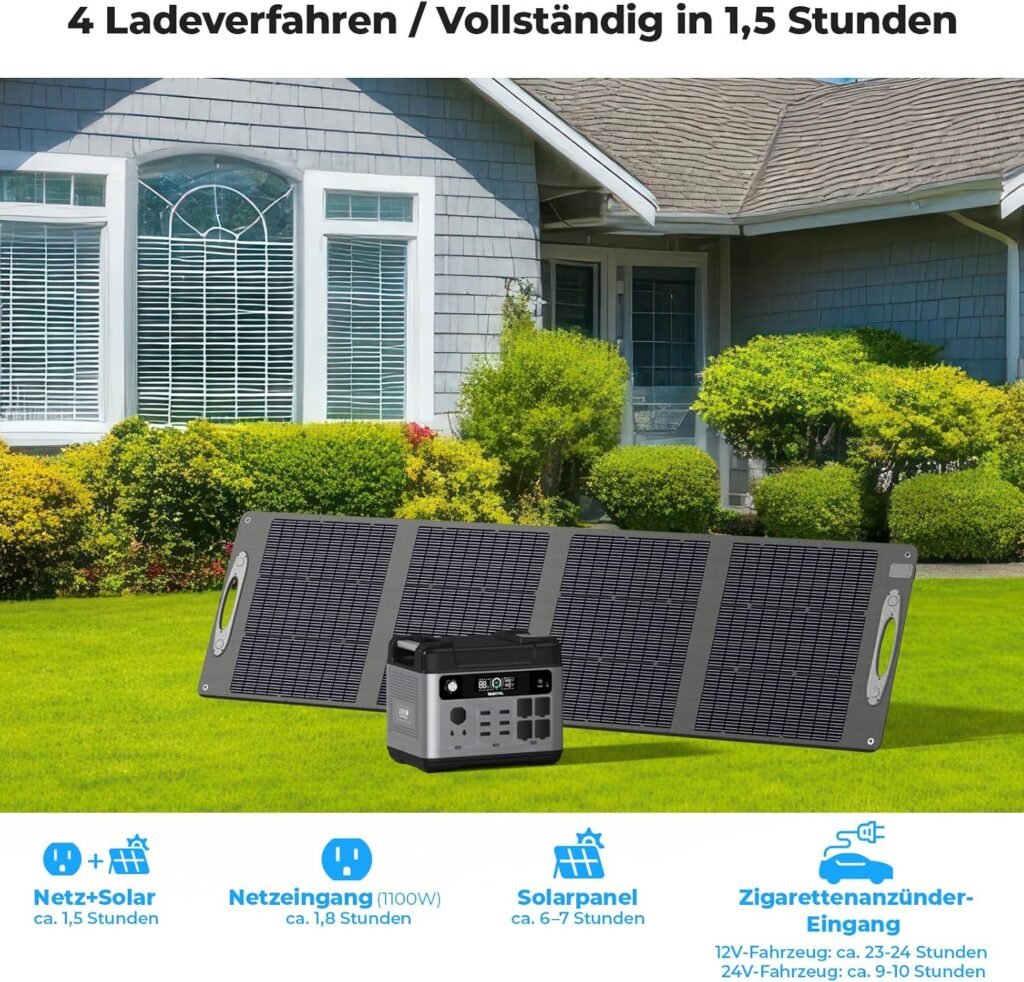
Smart AC Charging: 4 Selectable Power Levels
One of the most thoughtful features of the P2001 Plus is its rotary knob that lets us select AC charging power levels: 400W, 800W, 1200W, or 1800W.
Why Adjustable Charging Power Helps
This design lets us adapt to different situations:
-
On weaker circuits or shared outlets:
We can select 400W or 800W to reduce the chances of tripping breakers or overloading a generator or RV hookup. -
On a strong household circuit:
We can choose 1200W or 1800W to recharge much faster when we know our wiring can handle it. -
When running other devices on the same line:
If we are sharing a wall socket with other appliances, we can keep the charge rate lower to avoid nuisance trips.
The idea is simple but very practical. Instead of the unit always pulling maximum current and causing problems, we can tune the charge to match the situation—especially useful in older homes, small cabins, or RV parks with marginal electrical setups.
Ultra‑Fast Charging Performance
Fast charging is where this power station really shows off. For a 2048Wh capacity, the charge times are impressively short.
AC and Solar Charging Times
We have multiple charging options:
-
AC Only
- Up to 1800W input
- Around 1.5 hours for a full charge from empty
-
AC + Solar Combo
- Up to 1800W AC + 500W solar simultaneously
- Around 1.35 hours for a full charge
In practical terms, if we come home from a trip or a power cut and can plug into a solid wall outlet:
- We can go from low battery to nearly full in roughly the time it takes to watch a movie.
And if we are using solar panels:
- We can top up during the day, then finish quickly from AC when we get access to grid power again.
This kind of speed makes the P2001 Plus much easier to keep ready for the next event, instead of waiting many hours for a full charge.
UPS Mode: 0.01‑Second Switchover
The built‑in UPS (Uninterruptible Power Supply) function is a major advantage if we work from home, run a home office, or rely on continuous power for any sensitive device.
How the UPS Function Helps Us
When the power grid goes out, the P2001 Plus can switch to battery power in just 0.01 seconds. That is fast enough that:
- Our computers or network equipment are far less likely to restart or crash
- Routers and modems usually stay powered
- Monitors and small electronics can ride through the outage smoothly
This makes the power station more than just a backup battery. We can plug key devices into it and let them run “through” the P2001 Plus, using grid power when available and instantly switching to battery when the grid fails.
For example, we might:
- Connect our PC, router, and monitor to the P2001 Plus
- Keep the unit plugged into the wall normally
- Work as usual, knowing that if there is a storm or blackout, our session will likely continue uninterrupted
For anyone who has lost work from sudden shutdowns or has ongoing uploads, calls, or remote work, this feature alone can justify using the P2001 Plus as part of our everyday setup.
Safety and BMS Protection
Alongside the safer LiFePO₄ chemistry, the BMS (Battery Management System) is critical to keeping everything stable and secure.
What the BMS Monitors and Controls
The BMS continuously keeps track of:
- Voltage – making sure cells stay in a healthy operating range
- Current – guarding against overcurrent events
- Temperature – preventing overheating during charging or heavy loads
If anything gets out of the safe range, the system can throttle power, stop charging, or shut down to protect both us and the battery.
This matters when:
- We connect many devices at once
- We fast‑charge frequently at high wattages
- We use the unit in warmer environments
The P2001 Plus is designed to protect itself and our devices rather than letting us accidentally push it into dangerous territory.
Ports and Connectivity: 13 Ways to Power Our Gear
One of the strengths of this power station is that it does not limit us to just AC outlets. We get a wide variety of 13 total ports, which lets us connect almost everything we typically use.
Port Breakdown
Here is what we have available:
-
AC Outlets (4x)
- Standard household-style AC ports for appliances, chargers, and tools.
-
USB-A Ports (2x)
- For older or standard USB devices like phones, headphones, and basic gadgets.
-
USB-C PD Ports (4x)
- Power Delivery (PD) USB-C ports for fast charging laptops, tablets, phones, cameras, and more.
- Ideal for modern devices that can charge over USB-C with high wattage.
-
DC Ports (2x)
- Traditional DC outputs for car fridges, some lights, or special gear using DC barrel connectors.
-
Car/Cigarette Lighter Port (1x)
- For 12V car accessories such as portable coolers, pumps, or car chargers.
This mixture of ports lets us skip a lot of bulky AC adapters. For example, we can plug a USB-C laptop directly into the PD port, saving space and improving efficiency.
App Control and Smart Monitoring
The included mobile app gives us another layer of convenience and control over the P2001 Plus, which is especially nice once the unit is tucked into a corner or RV compartment.
What We Can Do with the App
Using the app, we can:
- Monitor state of charge (SOC) – See the exact battery percentage instead of guessing.
- View input and output power – Know how much power is coming in from AC/solar and going out to devices.
- Check remaining charge/discharge time – Helpful to decide whether we need to reduce usage or add charging.
- Watch temperature and general status – Keep an eye on the system’s health.
In some configurations, we may also be able to adjust settings or turn certain outputs on/off via the app, depending on the firmware and app version.
Having these details on our phone lowers the stress during outages or off‑grid trips, because we are not constantly walking over to squint at a tiny display.
Multiple Charging Methods for Flexibility
Real off‑grid and backup systems are rarely powered from just one source. The P2001 Plus is designed to accept input from AC, solar, car, or AC + solar together.
Our Available Charging Options
We can charge in the following ways:
-
AC Wall Outlet
- Fastest and simplest method.
- Up to 1800W input.
-
Solar Panels
- Up to around 500W solar input (panel configuration and conditions dependent).
- Great for camping, RVs, or long outages when the grid is unavailable.
-
Car Charging
- Plug into a vehicle’s 12V socket while driving.
- Slower than AC or strong solar, but useful for topping up on the road.
-
AC + Solar Combo
- Use both sources at once for up to 1800W + 500W input.
- Shortens charge time to around 1.35 hours from empty.
This flexibility means we can shape our power strategy according to our situation:
- On the road: slowly maintain charge from the vehicle and top up at camp with solar.
- At home: use AC for quick recharges and solar panels during long grid failures.
Use Cases: How We Might Actually Use It
Numbers are helpful, but it is often more useful to imagine how this station can fit into our routine. Here are several realistic scenarios.
Home Backup and Emergencies
For many of us, the main reason to get a power station like this is to make power outages less disruptive and stressful.
With the P2001 Plus, we can:
- Keep a fridge or freezer running long enough to protect our food
- Power lights and a fan during heat waves when the grid fails
- Run a Wi‑Fi router, modem, and phones so we stay connected to family and emergency info
- Support a CPAP machine through the night for health and safety
The UPS function also lets us treat this as a built‑in safety net for sensitive electronics, instead of scrambling to plug things in when power drops.
RVs, Camper Vans, and Road Trips
For RV and van owners, this unit can become the central power hub without complex wiring or generators.
We can:
- Run an RV fridge, lights, laptop, and small appliances from one station
- Use solar panels on the roof or outside to recharge during the day
- Rely on a quiet, fume‑free power supply instead of a noisy gas generator
Because we can adjust the AC charging power, we can be more confident when plugging into campground hookups or smaller generators without constantly blowing breakers.
Camping, Overlanding, and Outdoor Events
When we are off-grid but still want a few comforts, this power station is more than enough for:
- Electric coolers and ice‑makers
- Induction cooktops or electric kettles (with judicious use)
- Drones, cameras, laptops, and phones for photography or remote work
- Bluetooth speakers, projectors, and lighting for gatherings
We get the quietness and cleanliness of battery power plus the possibility of continuous solar recharging, which is a big improvement over traditional generators for campsites and shared spaces.
Pros and Cons
Even strong products have trade‑offs. Summarizing the main upsides and downsides helps us decide whether the P2001 Plus aligns with our priorities.
Advantages
- High capacity (2048Wh) suitable for real home backup and extended trips
- 2400W continuous output with 4800W peak, strong enough for many household appliances
- LiFePO₄ battery chemistry with long life (3500+ cycles at 80%) and improved safety
- 0.01‑second UPS function useful for home offices and sensitive electronics
- Fast AC charging – about 1.5 hours from empty, 0–80% in around 1 hour
- Multiple charging methods – AC, solar, car, or AC + solar together
- Selectable AC charging power (400W/800W/1200W/1800W) to match weak circuits or strong mains
- 13 ports including 4 AC, multiple USB-C PD, USB-A, DC, and car output
- App support for remote monitoring and control
- Solid safety features via BMS for voltage, current, and temperature
- 2‑year warranty with local tech support, refunds, and repairs
Potential Drawbacks
- Weight and size: Larger capacity and LiFePO₄ chemistry usually mean a heavier unit than smaller stations. It is portable but not ultra‑light.
- Not waterproof: Needs reasonable protection from rain and extreme conditions.
- Solar panel not included: We need to purchase compatible solar panels separately if we want full off‑grid capability.
- Finite capacity: While large, 2048Wh can still be drained quickly if we run high‑wattage appliances continuously (like heaters). We still need sensible power management.
These trade‑offs are typical for a power station in this capacity range, but it helps to weigh them against our specific needs and expectations.
Comparing to Typical Alternatives
When we consider a power station like the OUKITEL P2001 Plus, we might also be thinking about other options: smaller stations, fuel generators, or higher‑capacity units.
Versus Smaller Portable Power Stations
Smaller units (around 500–1000Wh) are lighter and easier to move but:
- Struggle with large appliances like microwaves, heaters, or full‑size fridges
- Offer much shorter runtimes for essentials during multi‑day outages
The P2001 Plus offers a better balance for serious emergency and off‑grid use, even if we sacrifice some easy carry convenience.
Versus Gas or Diesel Generators
Traditional generators have their place but come with clear compromises:
- Noise and fumes
- Need for fuel storage and regular maintenance
- Typically not safe to run indoors
The P2001 Plus is:
- Quiet in operation (just some fan noise under heavy load)
- Safe to run indoors
- Virtually maintenance‑free
Its main limitation compared to fuel generators is finite battery capacity, but when combined with solar panels, we can partially offset this and achieve a very practical off‑grid setup without the downsides of fuel engines.
Versus Larger High‑End Battery Systems
There are larger portable power stations and full home battery systems that offer more capacity but usually at higher cost, weight, and complexity.
The P2001 Plus sits in a middle zone that:
- Gives us serious backup for essentials
- Remains somewhat portable
- Does not require permanent installation or electrician work
For many households and travelers, that middle zone is both more affordable and more flexible.
Everyday Usability and Noise
We should also think about what it is like to live with the P2001 Plus day to day, not just during emergencies.
Interface and Ease of Use
The device is designed for straightforward operation:
- Clear front display showing battery percentage, input, and output
- Simple power buttons for AC/DC sections
- A physical rotary knob for adjusting AC charge rate
We do not need to be an engineer to use it, which makes it easier to hand off to family members when needed.
Noise Levels
Battery stations are never completely silent because they use fans to cool internal components, especially at high outputs or during fast charging. However, compared to a combustion generator:
- Noise is significantly lower and more constant (no loud engine idle or revving)
- We can comfortably use it indoors or in a tent/RV without disturbing conversation
During heavy use or high charge rates, the fans will ramp up, but this is still far more pleasant than any fuel generator.
Managing Expectations and Best Practices
Having realistic expectations helps us get the most value from a power station like this. It is powerful, but not infinite, and we still benefit from smart usage habits.
Tips for Maximizing Runtime
We can stretch the 2048Wh capacity by:
- Prioritizing essential loads during outages (fridge, communication, medical devices)
- Using energy‑efficient appliances whenever possible (LED lighting, efficient fridges, laptops over desktops)
- Avoiding or limiting high‑wattage devices like space heaters, hair dryers, and large electric cookers
- Taking advantage of solar charging during the day to offset usage
By planning which devices we will plug in and for how long, we can maintain power for much longer than if we simply plug in everything at once.
Safe and Long‑Term Use
To keep the battery healthy over years, we can:
- Avoid leaving it fully depleted for long periods
- Store it in a cool, dry environment when not in use
- Use regular partial charges and discharges instead of constantly pushing to 0% or 100%
The built‑in protections and LiFePO₄ chemistry already work in our favor here, but good habits add extra longevity.
Warranty and Support
The P2001 Plus comes with a 2‑year warranty, which includes:
- Refund options
- No‑cost repairs
- Access to a local technical support network
This kind of support is important because if we plan to rely on a power station during emergencies, we want to know we are not on our own if something goes wrong.
Over a product that is expected to last more than a decade in terms of battery chemistry, a 2‑year warranty is reasonable, and the mention of local support increases our confidence that service will not be overly complex.
Final Thoughts: Is the OUKITEL P2001 Plus Right for Us?
When we look at the OUKITEL P2001 Plus Portable Power Station 2048Wh, Solar LiFePO₄ Battery Generator, 4 2400W AC Outputs (4800W Peak), 0–80% Fast Charge in 1H for Home, Travel and Camping, it comes across as a well‑rounded solution for people who want serious, yet still portable, backup and off‑grid power.
We get:
- A large, durable LiFePO₄ battery with long lifespan
- Strong 2400W AC output to run real household appliances
- Extremely fast recharging with adjustable AC input levels
- Comprehensive port selection for everything from fridges to laptops
- UPS functionality for office and home electronics
- Flexible charging from AC, solar, car, or a combination
In return, we accept a unit that is substantial in size and weight and that still requires thoughtful use when powering very high‑wattage devices.
If our goals include keeping our home functioning more normally during grid failures, powering an RV or van with minimal noise and hassle, or creating a reliable, solar‑supported camp setup, the P2001 Plus offers a compelling balance of power, safety, and practicality that can serve us well for many years.
Disclosure: As an Amazon Associate, I earn from qualifying purchases.
