Ad Blocker Detected
Our website is made possible by displaying online advertisements to our visitors. Please consider supporting us by disabling your ad blocker.
Have we ever wished our home backup power, RV setup, and outdoor adventures could all rely on a single, reliable power source?
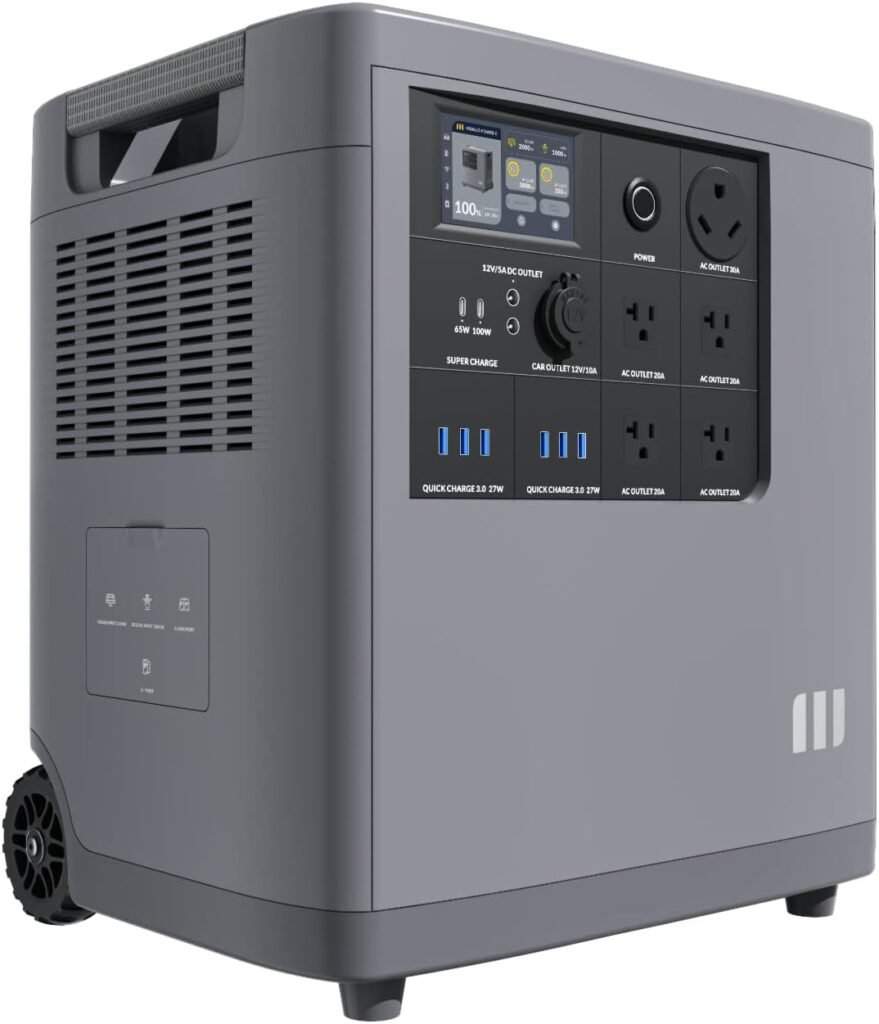

What Is the Mango Power Portable Power Station?
The Mango Power: Portable Power Station, 3.5 kWh, 3 kW, CATL LFP Battery, 10 Years Warranty, Quick Charge in 1.5 Hours, Grey, Emergency/RV/Outdoor positions itself as a serious, high-capacity solution for backup power and mobile energy use. We are not just talking about charging phones and laptops; this unit is designed to support heavy-duty appliances and even partial home backup.
At its core, we get a 3.5 kWh battery pack with a 3,000-watt continuous output, expandable capacity, and ultra-durable CATL LFP battery cells. It is clearly aimed at households, RV owners, and anyone who wants dependable, long-lasting power for emergencies or off-grid situations.
Key Features at a Glance
Before we get into how it fits into our daily life, it helps to see the core specs lined up. The Mango Power E (this main unit) offers quite a bit in terms of flexibility and scalability.
| Feature | Specification / Description |
|---|---|
| Battery Type | CATL LFP (Lithium Iron Phosphate) |
| Base Capacity | ~3.5 kWh |
| Expandable Capacity | Up to 7.06 kWh with one extra battery; up to 14 kWh with two units + E-Link |
| Continuous Output | 3,000 watts (3 kW) |
| Max Output with Two Units | 6,000 watts (6 kW) |
| Split-Phase Output | 240V output with optional mSocket Pro attachment |
| Charging Time | Up to 80% in about 1 hour (approx. 1.5 hours for a near-full charge) |
| AC Charging Power | Up to 3,000 watts |
| Solar Charging Power | Up to 2,000 watts |
| Generator Charging Power | Up to 3,000 watts |
| Battery Lifespan | Long-cycle CATL LFP cells with self-recovery technology |
| Warranty | 10 years |
| Color | Grey |
| Intended Use | Emergency backup, RV, outdoor, off-grid, heavy appliances (with split-phase) |
| Tax Credit Possibility | Potential 30% Residential Clean Energy Credit (when used with qualified solar) |
This table helps us see instantly how the power station stands out. We are not dealing with a small camping battery—this is closer to a compact home power system, especially when expanded.
Design, Build Quality, and Portability
The overall design of the Mango Power E focuses on durability and practicality. While the product’s detailed dimensions are not listed in the provided information, the capacity and power rating tell us we are dealing with a substantial unit, more like a compact generator than a power bank.
We can expect a robust outer shell, solid handles, and clear labeling for ports and connections. The grey color gives it a neutral, modern look that fits nicely in a garage, RV, or even a corner of a home office.
Everyday Usability and Handling
Even though this unit is not something we casually tote in one hand around a campsite, it is still far more manageable than most gas generators. For RV use or stationary home backup, we simply park it in a convenient spot and plug in what we need.
We should think of it like a “portable, but not tiny” power hub: easy enough to move when necessary, but primarily something we set up in a semi-fixed location.
Battery Technology: Why CATL LFP Matters
The Mango Power E uses CATL lithium iron phosphate (LFP) battery cells, which is one of the strongest points of this product. LFP batteries are known for excellent safety, long lifespan, and stable performance.
CATL (Contemporary Amperex Technology Co. Limited) is a major player in the EV and energy storage space, and their technology is not just a marketing label. It gives us a clear idea of the quality and reliability behind this power station.
Safety and Reliability
LFP chemistry has a significantly lower risk of thermal runaway compared with other lithium chemistries like NMC (nickel manganese cobalt). In simple terms, this means reduced fire risk and improved stability when the battery is under stress.
We also benefit from CATL’s self-recovery technology, which helps the cells last more cycles. That translates to more years of use, even under frequent charging and discharging.
Capacity and Expandability: From 3.5 kWh to 14 kWh
The base Mango Power E provides around 3.5 kWh, which is enough to handle a broad range of devices and appliances. However, where it really stands out is in how easily we can scale it up.
Single-Unit Expansion: Up to 7.06 kWh
We can attach one Mango Power E battery expansion module to the main unit. This can increase the total capacity to about 7.06 kWh while still keeping the 3,000-watt output.
For many homes and RV setups, this capacity can mean the difference between only powering essentials and comfortably running multiple appliances for many hours.
Dual-Unit Expansion: Up to 14 kWh and 6,000 Watts
For those of us wanting serious backup power, two Mango Power E units can be linked via an E-Link cable. In this configuration, we can reach up to 14 kWh of total capacity and 6,000 watts of output.
At that point, we are dealing with a substantial home backup system. This setup has the potential to support refrigerators, lights, home networking gear, and even some high-demand appliances (with appropriate wiring and split-phase setup) during outages.
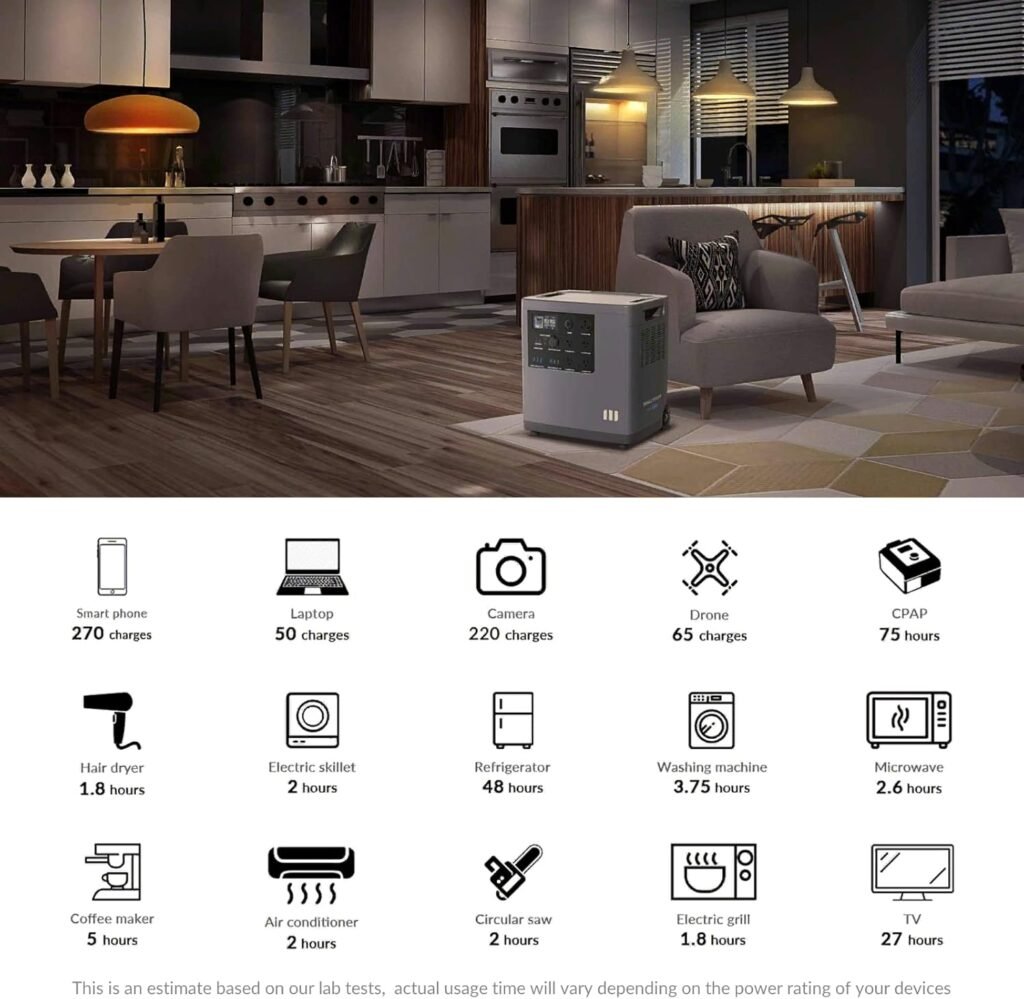

Output Power: What 3,000 Watts Really Means
A 3,000-watt (3 kW) continuous output allows us to power multiple devices at once without tripping overload protections. In practice, this means we can comfortably run:
- A full-size refrigerator or two smaller ones
- Multiple smaller kitchen appliances (not all at once, depending on wattage)
- A TV, router, lights, laptops, and phone chargers
- Power tools, pumps, and similar loads (within rated limits)
When paired with another Mango Power E for a total of 6,000 watts, whole-home applications become more realistic, especially during emergencies.
Handling Peak Loads
Most appliances have a surge or startup wattage. While the exact surge capability is not specified in the details we have, power stations in this range are usually designed to handle momentary peaks beyond their continuous rating.
To be safe, we should always check the power requirements of devices like air conditioners, well pumps, or large power tools and compare them with the unit’s specifications.
240V Split-Phase Capability for Heavy-Duty Appliances
One standout feature of the Mango Power E is the ability to provide 240V split-phase power when we use the optional mSocket Pro attachment.
This distinguishes it from many portable power stations that only offer 120V output. With split-phase, we can run more demanding, 240V-only appliances.
Appliances We Can Run at 240V
With 240V split-phase output and sufficient wattage, we can potentially run:
- Electric water heaters
- Clothes dryers (electric)
- Well pumps and sump pumps that need 240V
- Certain air conditioning units or heavy workshop equipment
For anyone wanting to use this for serious home backup, split-phase output is crucial. It lets us interface with more of our home’s critical loads instead of being limited to low-demand circuits or standalone devices.
Charging Speed and Methods: From Grid, Solar, or Generator
One of the highlights of the Mango Power E is its quick-charging ability. It can reach up to 80% in about one hour and roughly 1.5 hours for a nearly full charge under optimal conditions. For a battery of this size, that is impressively fast.
AC Charging (Mains Power)
The Mango Power E supports up to 3,000 watts of AC charging from a wall outlet or compatible source. With such a high input, we can recharge even a heavily depleted battery in a short time.
This is ideal when we get a small window between power outages or want to top up the system quickly before a storm.
Solar Charging
For off-grid use, solar charging is essential. The Mango Power E supports up to 2,000 watts of solar input, which is substantial.
This means we can:
- Use it as a home solar battery storage solution
- Bring it into an RV or cabin setting and run it off a robust solar panel array
- Extend our runtime indefinitely, depending on sunlight and load
With enough solar, we can maintain a daily cycle: charge during the day, use power at night, and repeat.
Generator Charging
The unit can also accept up to 3,000 watts from a generator. This gives us flexibility in true off-grid or extended-outage situations: we can run a generator for a shorter period just to recharge the Mango Power E and then turn the generator off while enjoying quiet, emission-free power the rest of the time.
Potential for Tax Credits (Residential Clean Energy Credit)
The product details mention that we may qualify for a 30% Residential Clean Energy Credit for certain solar electric ownership costs. This does not automatically apply to everyone, but it is an important point if we are thinking about integrating the Mango Power E with a solar system.
We should check with our local utility and tax guidelines to determine:
- Whether portable or hybrid systems like this qualify in our area
- What documentation is needed
- Whether the panels, batteries, and associated components all qualify
For many households, any model that supports solar charging and acts as a storage solution can contribute to a clean energy setup, and cost savings from tax credits can make a serious difference.
Use Cases: Where the Mango Power E Fits Best
To understand if this system is right for us, it helps to picture how we would use it day to day. The Mango Power E is very versatile, but there are a few core scenarios where it really shines.
Emergency Home Backup
We can treat the Mango Power E as a home backup solution for blackouts and grid instability. In a typical outage scenario, it can keep essentials running:
- Refrigerator and freezer
- Lights in key rooms
- Wi-Fi router and devices
- Medical equipment (always confirm wattage and runtime needs)
When expanded or paired with a second unit and split-phase, we can move beyond just essentials and start powering more of the home.
RV and Van Life
For RV owners or van lifers, the Mango Power E offers a strong balance between capacity and portability. It can power:
- RV air conditioning units (depending on wattage and configuration)
- Induction cooktops or electric kettles
- Laptops, fans, lighting, and entertainment systems
With solar on the roof and this as our main power hub, we can set ourselves up for very comfortable off-grid living.
Outdoor Events and Worksites
For outdoor gatherings, events, or field work, this unit can function as a quiet, clean generator. We can power:
- PA systems, lighting, and audio gear
- Cameras, laptops, and communication equipment
- Construction tools or temporary workstations
No noise, no fuel smell, and much less maintenance than traditional gasoline generators.
Everyday Energy Management
We can even use the Mango Power E as a part of our daily energy strategy. For example, we could:
- Charge it when electricity is cheap (off-peak hours)
- Use it during expensive peak-rate hours
- Combine it with solar panels to reduce grid reliance over time
This kind of “time-of-use” management can lower our electricity bills, depending on how our utility charges for energy.
Runtime Estimates: What Can We Actually Power?
To get a practical sense of what 3.5 kWh (and expanded versions) means, we can estimate runtimes for different loads. These are rough examples and assume ideal conditions.
Sample Runtime Table (Single Mango Power E at 3.5 kWh)
| Device / Load | Approx. Power Draw | Estimated Runtime (Single Unit, 3.5 kWh) |
|---|---|---|
| Full-size refrigerator | 150W (avg) | ~20–22 hours |
| Wi-Fi router + modem | 20W | ~140–150 hours |
| LED lighting (5 bulbs at 10W each) | 50W | ~60–65 hours |
| Laptop (charging/usage) | 60W | ~50–55 hours |
| TV (LED, medium size) | 100W | ~30–33 hours |
| CPAP machine (without humidifier) | 40W | ~80–85 hours |
| Portable AC or space heater | 1,000W | ~3–3.5 hours |
| Microwave (intermittent use) | 1,000W | ~3–3.5 hours (continuous equivalent) |
With expansion or dual-unit configurations, we can multiply these runtimes accordingly. For emergency situations or off-grid living, this flexibility is a major advantage.
Setup and Installation
Getting started with the Mango Power E is designed to be straightforward. Inside the box, we find:
- 1 Mango Power E unit
- 1 AC charging cable
- 1 solar input cable
- 1 quick guide
- 1 warranty card
We simply plug it into a wall outlet to charge, connect solar panels using the appropriate cable, or connect it to a compatible generator. From there, we can plug devices into its AC outlets, DC ports, and other available outputs (depending on the exact port configuration).
Expansion and Linking
If we want to expand:
- We attach an additional Mango Power E battery to the main unit to increase capacity (up to 7.06 kWh).
- We can link two Mango Power E units using an E-Link cable for up to 14 kWh and 6,000 watts of output.
For split-phase 240V output, we use the optional mSocket Pro accessory, which lets the system act more like a home backup generator for heavy appliances.
For advanced home integration, we may want the help of a qualified electrician to connect the system safely to our home circuits.
Noise, Emissions, and Comfort
Unlike gas or diesel generators, the Mango Power E operates silently apart from a cooling fan under heavier loads. There are no fumes, no need to store fuel, and no regular oil changes or engine maintenance.
This makes a major difference in:
- Indoor comfort (we can use it inside without worrying about exhaust)
- Neighborhood noise levels
- Campsite tranquility
For those of us who are used to the roar of a gas generator, the quiet operation alone can be a reason to switch.
Maintenance and Longevity
With CATL LFP cells and self-recovery technology, the Mango Power E is built for long-term use. We are not swapping the unit out after a couple of years.
Basic Care
To keep it in good shape, we should:
- Avoid storing it at 0% charge for long periods
- Keep it in a cool, dry environment when not in use
- Use it regularly, charging and discharging to keep the battery active
LFP batteries are very forgiving compared with other chemistries, but sensible care helps ensure we get the most life out of the system.
Warranty and Customer Support
One of the most reassuring aspects is the 10-year warranty included with the Mango Power E. Many portable power stations offer shorter coverage, so this long-term warranty signals confidence in the product’s durability and performance.
We also get access to friendly local customer service when we need help. When making a large energy investment, support and backing matter almost as much as raw specs.
Pros and Cons of the Mango Power Portable Power Station
To help decide if this power station is right for us, it helps to consider both strengths and trade-offs.
Advantages
We see several strong positives:
- High-capacity, expandable system: Starts at ~3.5 kWh and can reach up to 14 kWh with two units and expansions.
- CATL LFP battery cells: Safer chemistry with long cycle life and self-recovery technology.
- 3,000W (up to 6,000W) output: Enough power for multiple devices and even heavy appliances in a dual-unit setup.
- 240V split-phase support: With mSocket Pro, suitable for dryers, pumps, and other high-demand loads.
- Fast charging: Up to 80% in about 1 hour and multiple input methods (AC, solar, generator).
- Solar-ready: Up to 2,000W of solar input for off-grid and renewable setups.
- 10-year warranty: Long-term protection and confidence in the battery.
Possible Drawbacks
No product is perfect, and we should keep these points in mind:
- Weight and size: A system with this capacity will not be ultra-light; we should expect a more stationary unit.
- Accessory costs: To unlock split-phase 240V or large-scale capacity, we may need additional gear (mSocket Pro, E-Link, extra battery).
- Upfront price: High-quality LFP batteries and expandable architecture usually come at a premium compared with smaller portable units.
- Learning curve for home integration: For complex setups (like partial home backup), an electrician and some planning may be needed.
If we are mainly looking for a tiny, backpack-sized charger for phones and cameras, this system would be overkill. But if we want serious, scalable power for a home, RV, or off-grid cabin, the trade-offs make sense.
Who Is This Power Station Best For?
We can narrow down ideal users based on the features and capabilities.
Homeowners Focused on Backup and Resilience
If we live in an area with frequent outages, storms, or an aging grid, the Mango Power E makes a strong case as a home backup solution. With expansion and split-phase options, we can tailor it from a basic emergency system to a near-whole-home backup.
RV Owners, Van Lifers, and Off-Grid Travelers
For long road trips, full-time RV living, or remote camping, the system’s high capacity, solar-charging capabilities, and quiet operation are major assets. We can run many home-like comforts without relying on noisy generators.
Remote Workers and Creatives
If we work from remote cabins, film on location, or set up outdoor studios, a reliable power station like this becomes a central tool. It keeps our gear running without the logistical headache of fuel and generator maintenance.
Environmentally Conscious Users
For those of us aiming to reduce reliance on fossil fuels and invest in clean, renewable energy systems, this unit naturally fits into that vision—especially when combined with solar panels and potential tax incentives.
Practical Tips for Getting the Most Out of the Mango Power E
Once we own a system like this, small habits help us maximize usefulness and lifespan.
Plan Our Loads
We should prioritize critical loads during outages:
- Keep the refrigerator and freezer running.
- Power lights and communication devices.
- Add comfort loads (fans, entertainment) as capacity allows.
By planning, we avoid overloading the system and ensure our most important devices stay online.
Optimize Solar Integration
If we are using solar:
- Position panels for maximum sun exposure.
- Use the full 2,000W of solar capacity if our budget and space allow.
- Consider seasonal sun changes and shading from trees or buildings.
The closer we get to matching our daily energy use with daily solar production, the more independent we become.
Monitor Usage and State of Charge
Most modern power stations provide a display or app showing remaining capacity, input, and output. Paying attention to these metrics helps us adjust behavior during outages or long trips.
Over time, we will develop intuition about what loads we can sustain and for how long.
How It Compares to Traditional Gas Generators
Many of us grew up seeing gas generators as the default backup option. The Mango Power E changes the equation in multiple ways.
Advantages Over Gas Generators
- No fuel storage: We do not have to stock gasoline or worry about fuel going stale.
- Indoor use: We can keep it inside without carbon monoxide risks.
- Quiet: Minimal noise, significantly more comfortable in residential or camping environments.
- Maintenance: No engine oil changes or spark plug issues.
- Instant power: No pull-starts; we simply press a button.
Situations Where a Gas Generator Still Helps
In extremely long outages with no solar or grid charging available, a generator still provides a way to continuously refuel and keep power running. However, combining a generator with a large battery system like the Mango Power E is often the best mix: use the generator sparingly to charge the batteries, then shut it off.
Environmental and Lifestyle Benefits
Switching to a system like the Mango Power E aligns with a more sustainable lifestyle. By pairing it with solar, we can move toward:
- Lower carbon emissions
- Reduced reliance on fossil fuels
- Quieter, cleaner neighborhoods
On a personal level, we also gain peace of mind knowing that we have a resilient, flexible power source ready to go, whether a storm is coming, a trip is planned, or we simply want more control over our energy usage.
Our Overall Impression
After walking through the features and potential uses, we see the Mango Power: Portable Power Station, 3.5 kWh, 3 kW, CATL LFP Battery, 10 Years Warranty, Quick Charge in 1.5 Hours, Grey, Emergency/RV/Outdoor as more than just a “big battery.” It is a modular power ecosystem.
We get:
- Serious capacity and power output
- Long-lasting, safe LFP battery technology from a top-tier manufacturer (CATL)
- Fast charging, with multiple methods
- Scalability up to 14 kWh and 6,000 watts
- 240V split-phase capability for heavy loads
- A reassuring 10-year warranty
For households planning for emergencies, RV owners seeking independence, and anyone committed to a cleaner, more resilient power setup, this product delivers a strong combination of reliability, flexibility, and long-term value.
If our goal is to move away from noisy generators, become more self-reliant, and be ready for whatever the grid throws at us, the Mango Power E stands out as a compelling, future-ready choice.
Disclosure: As an Amazon Associate, I earn from qualifying purchases.
