Ad Blocker Detected
Our website is made possible by displaying online advertisements to our visitors. Please consider supporting us by disabling your ad blocker.
Have we ever wished we could bring reliable wall-outlet power with us wherever we go, without hauling a noisy gas generator around?

Why We Chose the Litheli Portable Power Station B300
When we went looking for a compact yet capable power solution for camping, road trips, and home backup, the Litheli Portable Power Station, 300Wh Solar Generator with U-Battery Pack stood out. We wanted something that could charge our devices, run small appliances, and stay flexible for different situations, and this model checks a lot of those boxes.
We also liked that it is designed with modular U-Battery packs, multiple charging methods, and thoughtful usability touches. In this review, we break down what it offers, how it performs, and who it suits best.
Key Specifications at a Glance
Before we get into real-world use, it helps to see the core specs in one quick snapshot. We found that understanding these numbers makes it easier to decide if this power station fits our needs.
Here is a clear breakdown of the main features:
| Feature | Specification / Description |
|---|---|
| Model | Litheli Portable Power Station B300 |
| Battery Capacity | 300Wh (plus two 32Wh U-Battery packs, if included) |
| Rated Output Power | 300W (continuous) |
| Peak Output Power | 600W (surge) |
| AC Outlets | 2 AC outlets |
| DC / USB Ports | Multiple, including 60W USB-C PD and other USB ports |
| USB-C PD Port | Up to 60W output, 100W two-way Type-C port for high-speed charging (in/out) |
| Wireless Charging | 15W wireless charging pad on top |
| Charging Options | AC wall outlet, solar panel (optional), car charging |
| Recharging Speed | Around 2.5 hours to full when using Type-C + DC input simultaneously |
| Weight & Portability | Lightweight, compact body with side handle |
| Battery System | Battery Management System (BMS) + pure sine wave inverter |
| Safety Features | Overheating protection, abnormality alarm, extended battery life management |
| Ideal Uses | Outdoor camping, RV trips, hiking, road trips, home emergency backup |
This overview already tells us a lot: the B300 is designed to be a portable, versatile powerhouse for small to medium power needs, not a whole-house backup system.
Design and Build Quality
The first thing we notice with any portable power station is how it feels in our hands and how easy it is to carry around. With the Litheli B300, the compact and sturdy form factor feels well thought-out for real-world use.
The side handle is a small but important detail. We appreciate being able to grab it with one hand and move it in and out of a car trunk or tent easily. The overall construction feels solid, with a durable casing that seems built to handle outdoor conditions, though we would still avoid drops and exposure to heavy rain.
Practical Layout and Usability
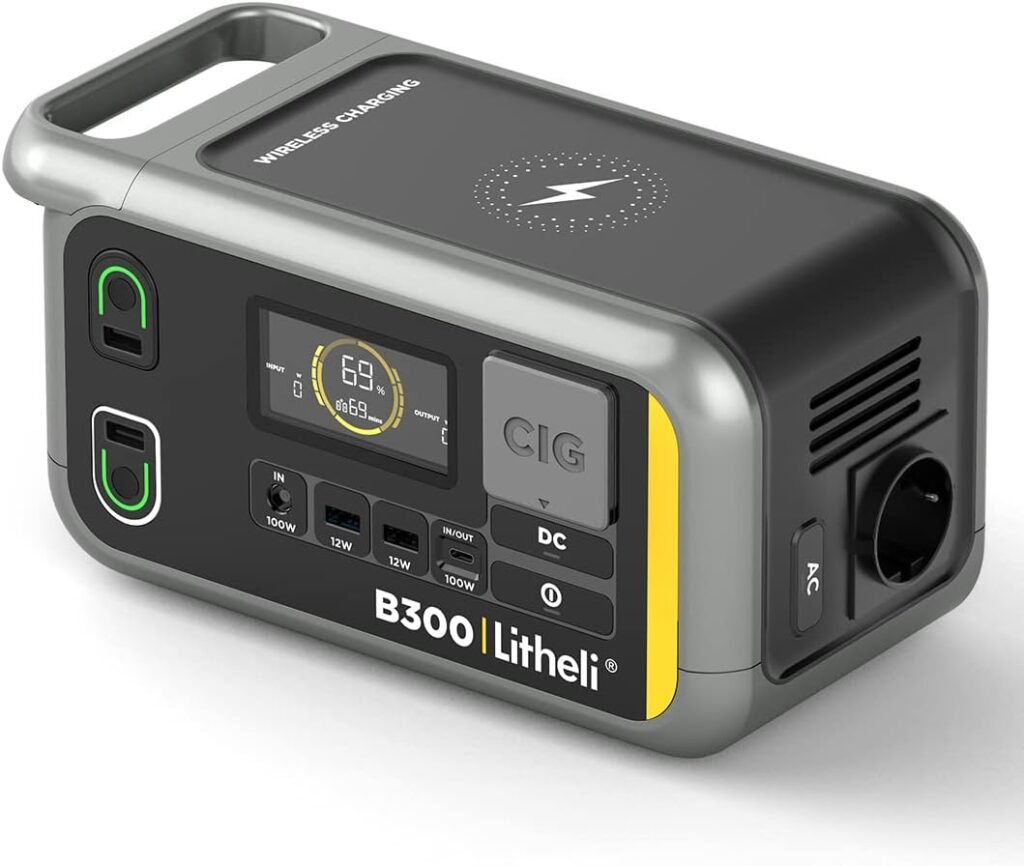
We like that the B300’s layout groups ports logically and keeps everything intuitive. The AC outlets sit together, USB and Type-C ports cluster in one place, and the wireless charging pad is on top and easy to access. This makes it simple for us to plug in multiple devices at once without things feeling tangled and chaotic.
The flat top that doubles as wireless charging and an improvised little storage space is a nice bonus. When we are not charging wirelessly, we can set our phone, flashlight, or small accessories on top. It is the kind of small touch that makes the station easier to live with during actual trips.

Battery Capacity and U-Battery System
Battery capacity is really the heart of any portable power station. The Litheli B300 offers 300Wh, which puts it in the “mid-range compact” category—plenty for charging devices and running small appliances for a reasonable stretch, while still staying portable.
What sets this unit apart is the inclusion of the U-Battery packs. The product comes with two 32Wh U-Battery packs (depending on configuration), and those are not just regular batteries; they are part of a modular ecosystem.
What the U-Battery Packs Actually Do
We found the U-Battery system to be one of the most interesting aspects of this power station. These swappable packs are designed to be compatible with other Litheli U4 Series appliances, which opens up a variety of possibilities.
Instead of having a single fixed internal battery, we can:
- Swap U-Battery packs between the power station and other tools, if we own them.
- Enjoy a kind of “plug-and-play” capability, especially if we expand our collection of Litheli gear.
- More easily manage charging and storage for different devices using the same battery platform.
This modularity gives us a taste of a more flexible power ecosystem, rather than a single-purpose box that only acts as a power station.
Output Power and Supported Devices
Understanding what we can realistically power with the B300 is important. The rated power output of 300W (with 600W peak) tells us a lot about what we should and should not plug into it.
With 300W continuous power, we can typically handle:
- Laptops, tablets, and phones
- Portable fans and LED lights
- Small camping fridges or coolers (depending on their power draw)
- CPAP machines (check wattage and power requirements)
- Cameras, drones, and other electronic gear
The 600W peak rating helps cover short starting surges, which is useful for devices that temporarily spike when they switch on.
Example Use Cases by Device Type
We often think more clearly about power when we break it down into actual devices. While exact runtimes depend heavily on the power draw of each device, we can use some rough guidance:
- Smartphones: Charge many times over from 300Wh.
- Laptops: Several full charges, depending on the battery size.
- CPAP machine: Potentially a full night or more, depending on settings and usage.
- LED lights: Many hours or even days, since they generally use very little power.
- Small fan: Several hours for nighttime comfort in a tent or RV.
We should always check the wattage and consumption of each device, but for most lower-power electronics and small appliances, the B300 is more than capable.
Ports and Connectivity
One of our priorities with any portable power station is how many devices we can run at once. Litheli designed the B300 with multiple port options so we are not forced to choose between our phone, laptop, and light.
Port Breakdown and Practical Use
The product supports up to 6 devices being powered at the same time, which is a strong point for group camping, road trips, or households with multiple gadgets.
Ports include:
- 2 AC outlets (300W rated, 600W peak combined)
- A 60W USB-C PD port for fast charging modern devices
- A 100W two-way Type-C port that can act as both input and output
- Other USB ports for phones, tablets, and accessories
- 15W wireless charging on top
We like how this variety caters to both older devices (needing standard AC or USB-A) and newer devices (USB-C and PD charging). The wireless charging pad is convenient when we just want to set a phone down and not worry about cable clutter.
Fast USB-C PD and Dual Role Ports
We find the USB-C Power Delivery port particularly useful. With up to 60W output, it can easily power or fast-charge many laptops, tablets, and larger phones that support PD. That means fewer bulky laptop bricks and an easier, lighter setup.
The 100W two-way Type-C port is valuable as well. We can use it to recharge the power station more quickly and also use it to power devices. This flexible port design helps shorten charging times and reduce the number of separate chargers we need to carry.
Charging Options: AC, Solar, and Car
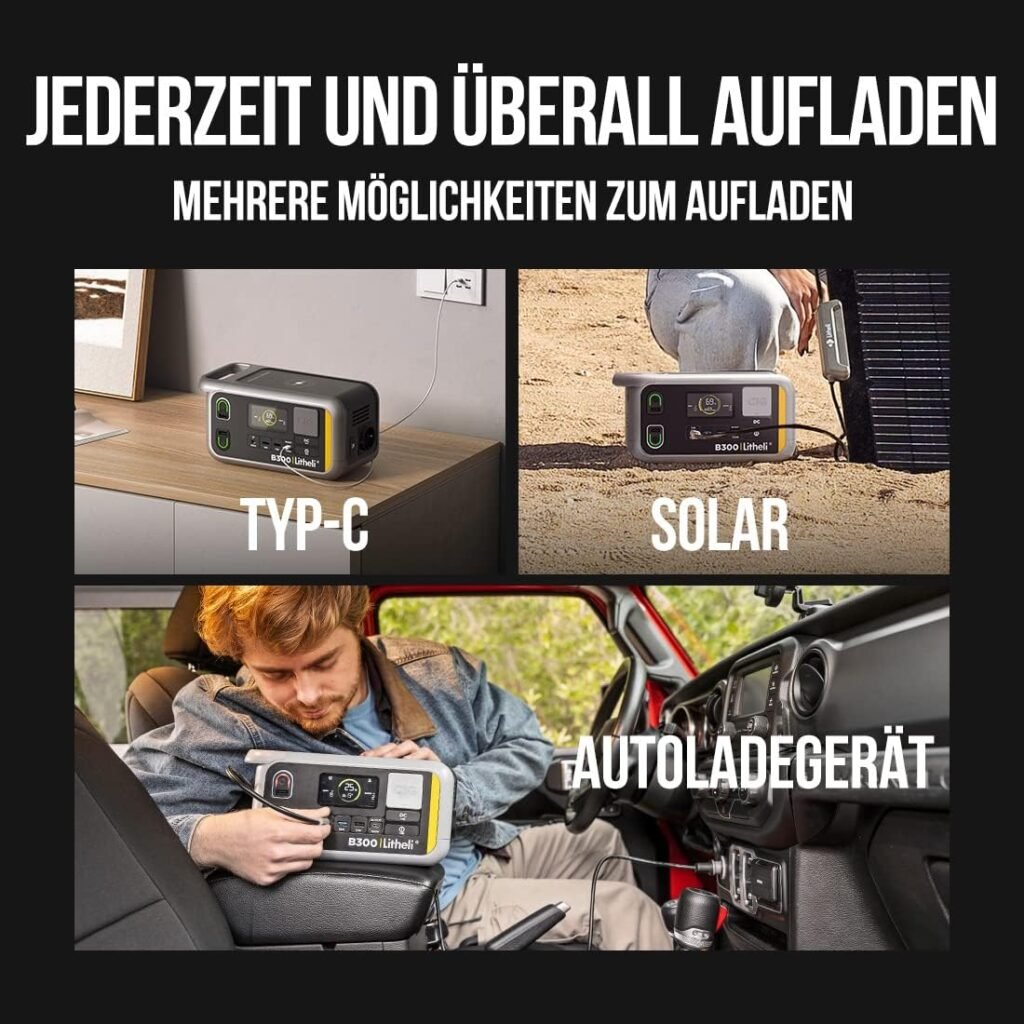
A portable power station is only as good as how easily we can recharge it. We found that the B300 offers three main methods: AC wall charging, solar (panel optional), and car charging. This variety gives us flexibility both at home and on the road.
AC Wall Charging
Using a standard AC wall outlet is usually the fastest and simplest method, especially for pre-trip preparation or topping up before a storm. The B300 can reach full charge in around 2.5 hours when we use the DC input combined with the Type-C input at the same time.
Being able to recharge this quickly means we can react to short-notice trips or upcoming bad weather without needing a full day to charge our backup power.
Solar Charging for Off-Grid Use
The B300 is marketed as a solar generator, and it supports solar charging through a compatible panel (sold separately). While the exact solar charging time depends on panel wattage, sunlight conditions, and setup, we appreciate that we can keep the battery topped up during multi-day camping trips or off-grid stays.
For us, this is one of the biggest benefits: we can extend our time outdoors significantly by pairing the B300 with a decently sized solar panel and using it sensibly.
Car Charging on the Go
Car charging is a major plus for road trips and RV use. While car charging is usually slower than AC or strong solar input, it is extremely convenient. We can keep the power station charging while we drive, then arrive at the campsite with a healthier battery level for the evening.
We think of this as a way to “constantly top off” the station between stops, turning drive time into charging time.
High-Speed Charging Performance
One of the selling points of this product is its fast recharging capability, and we find that especially helpful for emergency preparedness and frequent travelers. Nobody enjoys waiting around for long, slow charges when a storm is on the way or a trip starts in a few hours.
The combination of DC input and Type-C input allows us to cut down the charge time to about 2.5 hours from empty to full. That speed, for a 300Wh unit, is quite useful.
We also appreciate that the Type-C port is two-way, which gives us more flexibility in how we charge the station and our devices. It simplifies the gear we pack while still delivering good performance.
Safety, Stability, and Battery Management
We care a lot about safety when dealing with lithium batteries and multiple electronics plugged in at once. Litheli equipped the B300 with a Battery Management System (BMS) and a pure sine wave inverter, both of which matter in day-to-day use.
The BMS helps protect against:
- Overheating
- Overcharging
- Potential irregularities that could damage the battery or our devices
We also find reassurance in the abnormality alarm feature. If something unusual happens, we want to know immediately rather than guess at the problem.
Pure Sine Wave Output
The pure sine wave inverter is important if we want to plug in sensitive electronics, medical devices, or appliances that do not do well with modified sine wave power. Pure sine wave more closely matches household AC power, which typically means safer and smoother operation for many devices.
This is especially important if we rely on this power station for sensitive gear like CPAP machines, some types of chargers, or specialty equipment. We like knowing that our devices are getting clean power, not just whatever the inverter happens to produce.
Portability and Outdoor Readiness
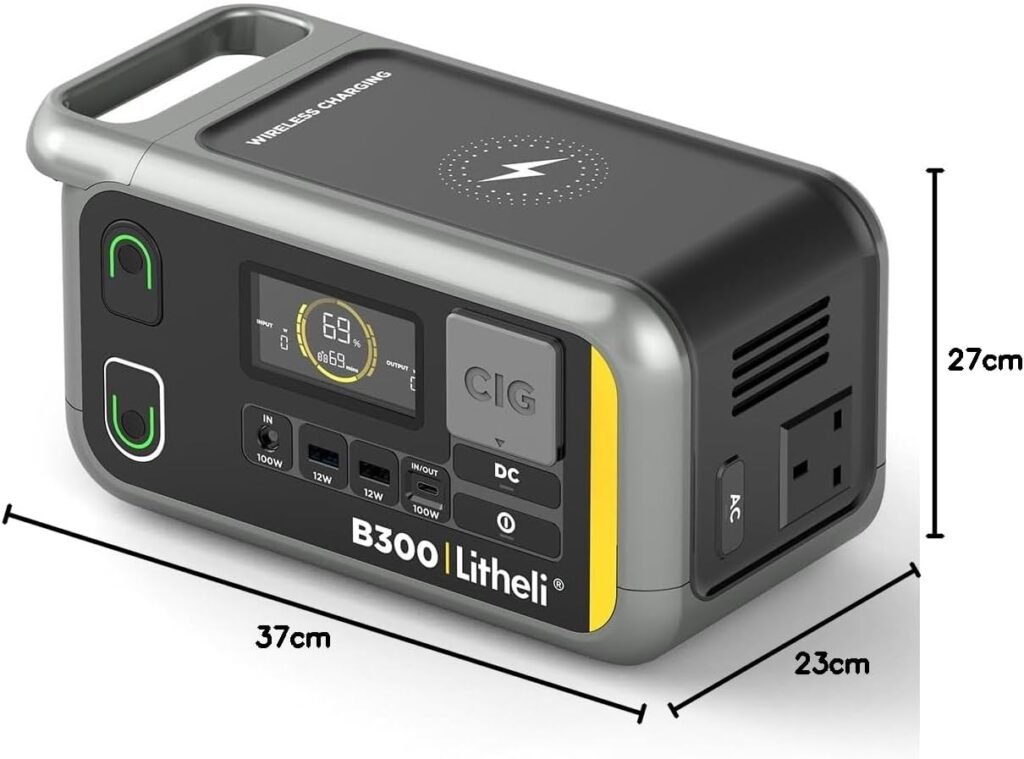
We chose a 300Wh class power station partly because it offers a good balance between capacity and portability. The B300’s form factor, side handle, and overall weight make it suitable for carrying from car to campsite or moving around the house without struggling.
For hiking and more active outdoor use, weight always matters. While this is not something we would carry for many miles on foot like a backpacking item, it is ideal for car camping, cabin stays, RV use, and most recreational trips where vehicles do most of the heavy lifting.
Everyday Convenience
Besides outdoor adventures, we find the B300 convenient for everyday tasks:
- Powering tools or lights in the backyard
- Using electronics in parts of the house without easy outlets
- Keeping devices going during short-term power outages
The fact that it is small enough to store in a closet or under a desk and still powerful enough for meaningful use makes it easy to justify having on hand.
Real-World Scenarios: How We Actually Use It
Sometimes specs alone do not capture how a product feels to live with. We found it helpful to picture how we might use the B300 in real situations.
Camping and RV Trips
On camping trips, we plug in:
- Phones and tablets
- A small LED string light or lantern
- A portable fan at night
- A small camping fridge or cooler (if within the power range)
With reasonable use and some help from solar charging, we can keep essentials powered for days. For RV trips, the B300 becomes a handy supplement, giving us extra outlets and battery capacity without tapping into the RV’s primary systems too heavily.
Road Trips and Car Use
During long drives, we appreciate:
- Charging laptops for work or entertainment on the road
- Keeping everyone’s phones charged without fighting over car USB ports
- Running a portable cooler for drinks and snacks
We also like having a backup power source when stopping at rest areas or staying in locations without reliable outlets.
Home Emergency Backup
For power outages, we treat the B300 as a “mini backup hub.” We can:
- Keep phones and laptops charged for communication and information
- Run a router (if power requirements are suitable) to maintain internet
- Power a CPAP machine (after checking device wattage and compatibility)
- Use LED lights to safely move around the house in the dark
While 300Wh is not enough to run large appliances like full-size refrigerators or air conditioners, it does give us a layer of security for smaller essentials.
Ease of Use and Setup
We find the B300 easy to understand and use, even for people who are not particularly tech-savvy. The controls and indicators are straightforward, and the port labels help avoid confusion.
In everyday use, we simply:
- Charge the unit via wall, solar, or car.
- Plug in devices to the appropriate ports.
- Monitor the remaining battery and power output as needed.
The system does not require a steep learning curve, which matters when we are under stress during an outage or in a hurry before a trip.
Wireless Charging Simplicity
The wireless charging pad adds a touch of convenience that we appreciate more than we expected. We often have at least one phone that supports wireless charging, and being able to just set it down on the top of the unit feels natural.
No searching for cables, no extra clutter—just place the phone on the pad and it starts charging. It is a small advantage, but it makes the power station feel a bit more modern and user-friendly.
Reliability and Long-Term Use
We always want to know if our investment in a portable power station will hold up over time. While long-term durability depends on how we treat it, the combination of BMS and solid build quality gives us confidence.
By using proper charging habits, not leaving it fully drained for extended periods, and avoiding extreme temperatures, we can help extend the life of the battery and the unit overall. The stability from the pure sine wave inverter also reduces stress on connected devices, which is another factor in overall reliability.
We also appreciate that the product is designed for both outdoor and home use, rather than being a fragile, indoor-only gadget.
Pros and Cons of the Litheli B300
To make our decision clearer, we like to summarize the strengths and limitations. This helps us quickly see whether the product aligns with our actual needs.
What We Like
- Flexible charging options: AC, solar, and car charging keep us powered in many situations.
- Multiple ports and wireless charging: We can power up to 6 devices at once and have a handy 15W wireless pad.
- Weight and portability: Easy to transport for car-based trips, camping, and home use.
- High-speed recharging: Around 2.5 hours to full using DC + Type-C input simultaneously.
- Pure sine wave + BMS: Safer and more stable power for sensitive electronics.
- Innovative U-Battery ecosystem: Swappable packs compatible with U4 Series tools create a modular power system.
What We Should Keep in Mind
- Not for heavy-duty appliances: 300W continuous output cannot handle larger gear like full-size microwaves, big heaters, or large AC units.
- Solar panel is optional: We need to purchase a compatible panel separately if we want full off-grid capability.
- Limited capacity vs. larger power stations: 300Wh is ideal for light to moderate needs but not enough for extended whole-house backup.
These points are not dealbreakers; they simply define what kind of power station the B300 is meant to be.
Who This Power Station Is Best For
We find that the Litheli Portable Power Station B300 fits best into the lives of people who want portable, moderate power rather than heavy-duty backup.
It is especially well suited for:
- Campers and outdoor enthusiasts who need to run small devices and lights for a few days.
- Road trippers and RV users wanting extra outlets and battery power without large, bulky units.
- Homeowners and renters who want a compact emergency backup for electronics during outages.
- Tech users with multiple gadgets, thanks to fast USB-C PD and wireless charging.
- Owners of Litheli U4 Series tools who can take advantage of the U-Battery ecosystem.
If we are looking for something to power an entire kitchen or big workshop tools, we should consider a more powerful system. But if we want a nimble, modern power hub for daily life and adventures, the B300 hits a very appealing balance.
Comparing to Typical Alternatives
In the portable power station market, we see a wide range of sizes and capacities. On one side are tiny power banks; on the other are big, heavy 1000Wh+ units.
The B300 sits in a sweet spot:
- More capable and versatile than a simple phone power bank or small 150Wh unit.
- Far more portable than bulky high-capacity stations that weigh significantly more.
- With modular U-Battery packs, it offers a unique twist not found in many competitors.
For many of us, this middle ground serves our real-world needs better than going too small or too big.
Using It Responsibly and Efficiently
To get the most from a 300Wh power station, we like to use a few simple habits:
- Prioritize essential devices first (phones, medical devices, lights).
- Use energy-efficient LED lights and low-power appliances.
- Turn off or unplug devices when not in use.
- Pair with solar for multi-day off-grid trips.
- Avoid running the battery completely to zero repeatedly, to support longer battery health.
By managing our expectations and using power wisely, we can extend runtime and keep our most important equipment available.
Final Thoughts: Is the Litheli B300 Worth It?
After going through the details of the Litheli Portable Power Station, 300Wh Solar Generator with 32Wh U-Battery Pack and 200W+ capability, we see a product that is clearly targeted at practical, everyday power needs and outdoor adventures rather than extreme heavy-duty scenarios.
We appreciate its:
- Compact size and light weight for portability
- Multiple output ports, including modern high-speed USB-C PD and wireless charging
- Fast recharging capability using combined DC and Type-C input
- Safety features and pure sine wave output for peace of mind
- Innovative U-Battery system for modular, ecosystem-based power
If our goal is to support camping trips, road journeys, light RV use, and small-scale home backup, this power station is a strong candidate. It gives us a reliable, flexible source of energy without becoming cumbersome or overly complex.
As long as we respect its 300W output limit and 300Wh capacity, the Litheli B300 can become a dependable partner for our devices and adventures, reducing our low-battery anxiety and letting us stay connected, lit, and comfortable when we are away from conventional power.
Disclosure: As an Amazon Associate, I earn from qualifying purchases.
