Ad Blocker Detected
Our website is made possible by displaying online advertisements to our visitors. Please consider supporting us by disabling your ad blocker.
Disclosure: As an Amazon Associate, I earn from qualifying purchases.
Have we ever wished our gadgets, camping setup, and emergency gear could all run off one reliable, quiet box of power?

What Is the Jackery Explorer 1000 v2 and Who Is It For?
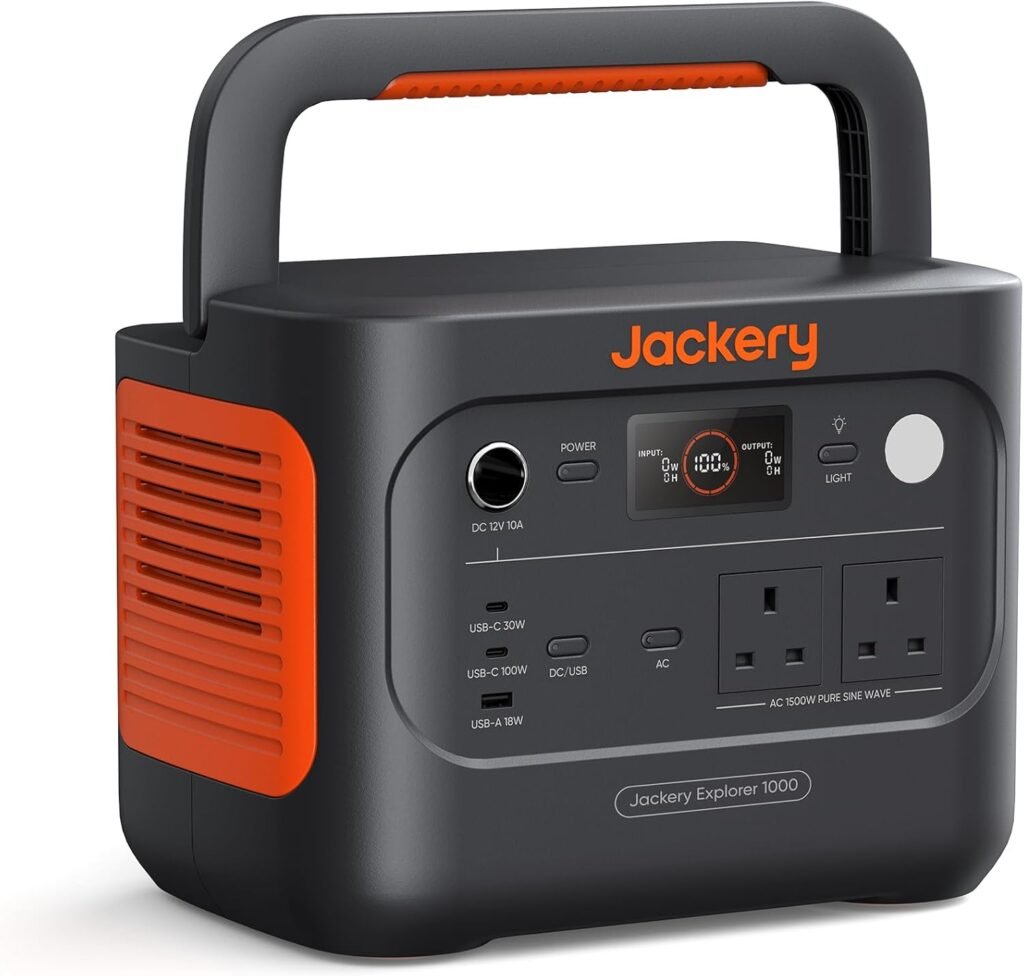
When we think of a portable power station, we usually want something that is strong enough for serious gear, compact enough to carry, and smart enough to keep us safe. The Jackery Explorer 1000 v2 Portable Power Station (2024 New) is clearly designed to hit that balance for modern users.
This unit targets campers, RV travelers, off-grid enthusiasts, and households wanting a dependable backup during outages. With a big 1070Wh LiFePO4 battery, 1500W AC output, app control, and fast charging, it aims to be our go-to portable power hub rather than a niche gadget we use once a year.
Key Specifications at a Glance
Before we get into real-world use, it helps to lay out the core specs. Seeing the numbers side-by-side gives us a quick sense of what the Explorer 1000 v2 is capable of.
| Feature | Specification / Detail |
|---|---|
| Battery Type | LiFePO4 (Lithium Iron Phosphate) |
| Battery Capacity | 1070Wh |
| AC Output | 1500W rated, 3000W surge (Pure Sine Wave) |
| USB-C Ports | 2 × USB-C, up to 100W PD (input & output) |
| USB-A Ports | 1 × USB-A |
| DC Car Port | 1 × 12V car outlet |
| AC Outlets | 2 × AC outlets (Pure Sine Wave) |
| Fast Charging | Up to 1 hour full charge via AC with app-optimized modes |
| Battery Lifespan | Up to 4,000 life cycles, retains >70% capacity |
| Weight | 23.8 lbs (approx. 10.8 kg) |
| Safety System | ChargeShield 2.0, 62 types of safety protection, CE certified, fire & shock resistant |
| App Connectivity | Wi-Fi and Bluetooth, with multiple charging modes |
| Use Cases | Camping, RV trips, off-grid setups, home backup, emergency power |
This table is a good snapshot of why many of us would consider this model: it packs power, fast charging, and long lifespan into a portable and manageable form factor.
Design, Build, and Portability
We usually notice design and build long before we test the electronics. The Explorer 1000 v2 looks and feels like a serious piece of kit without being intimidating.
Jackery has kept its familiar rugged design language but refined it. The integrated ergonomic handle makes a real difference when carrying those 23.8 lbs. It’s not feather-light, but for 1070Wh of LiFePO4 capacity, that weight feels reasonable and manageable, especially for car-based activities.
Build Quality and Durability
We expect a device like this to hold up to travel, bumps, and frequent use. The housing feels robust, with quality plastics and a solid frame that resists flexing or creaking.
The unit also claims full fire and shock resistance and is CE certified, which adds confidence for long-term daily use or tougher environments. We are still dealing with electronics and batteries, but it’s reassuring that Jackery has clearly prioritized structural and safety robustness here.
Portability and Everyday Handling
Portability isn’t just about weight. It’s also about size, shape, and how easy it is to actually move and stash the thing.
The Explorer 1000 v2 is more compact than we might expect given its specs. The slimmer, updated design compared to the older E1000 is noticeable. We can tuck it behind a car seat, under an RV bench, or beside a tent wall with minimal trouble. The integrated handle is comfortable and well-balanced, making it reasonable to carry short distances even if we’re not especially strong.

Battery Technology: Why LiFePO4 Matters
Battery chemistry is the silent hero (or villain) of any power station. Here, Jackery uses LiFePO4 (Lithium Iron Phosphate), and that choice makes a big difference for reliability and longevity.
LiFePO4 batteries are known for better stability, improved safety, and a much longer cycle life than typical NMC lithium-ion cells. For us, that translates into a unit we can recharge for years without significant degradation.
Lifespan and Cycle Life
Jackery rates this battery for around 4,000 life cycles while maintaining over 70% capacity. In practice, that means we could fully charge and fully discharge it once a day for more than ten years before it dips below 70% of its original capacity.
Even if we only use it seasonally (camping, road trips, occasional outages), we may never realistically reach that cycle limit. This kind of endurance gives the Explorer 1000 v2 a strong value proposition long-term, especially compared with cheaper stations that lose capacity much faster.
Safety and Stability Benefits
LiFePO4 chemistry is also more thermally stable, meaning it’s less prone to overheating and thermal runaway compared to some other lithium technologies. Combined with Jackery’s ChargeShield 2.0 system and 62 layers (or types) of safety protection, we’re looking at a configuration that prioritizes safe operation:
- Overcharge and over-discharge protection
- Overcurrent and short-circuit protection
- Temperature monitoring and control
- Surge and spike management
Knowing this system has been engineered with this many safeguards makes us more comfortable using it indoors, overnight, and around families, kids, and pets.
Power Output and Performance
Power output is where we test whether this device can replace noisy gas generators for many common tasks. The Explorer 1000 v2 steps up with more muscle than the older E1000 model.
1500W AC Output and 3000W Surge
The standout spec is the 1500W continuous AC output with a 3000W surge capability. This lets us run a large range of household and outdoor gear:
- Medium-sized fridge or mini-fridge
- CPAP machine and medical devices (check device wattage)
- Laptops, tablets, phones, cameras
- TVs and streaming gear
- Portable heaters (low and mid-range models; check exact draw)
- Electric griddles, small induction cookers, and some coffee makers
- Power tools (drills, small saws, etc.)
The 3000W surge is especially important for devices with motors or compressors, such as fridges or some power tools, which draw a high initial current when starting up. The Explorer 1000 v2 can absorb that spike and then settle back to a steady operational load.
Pure Sine Wave for Sensitive Electronics
Both AC outlets provide Pure Sine Wave power, which is crucial if we’re running sensitive or high-end electronics. Cheap inverters can output “modified sine wave” power that sometimes leads to:
- Noise or buzzing in audio equipment
- Overheating or malfunction in laptop power bricks
- Subtle damage over time to electronics designed for clean power
With Pure Sine Wave, we can treat the AC power much like regular wall power from home, giving confidence for laptops, NAS devices, medical gear, and more.
Real-World Load Scenarios
To gauge whether 1500W is enough, it helps to think in realistic combinations. For example:
-
Camping Setup:
- Mini-fridge (60–100W)
- LED lights (5–20W)
- Two phones (10–20W combined)
- Laptop (50–80W)
We’re well under the 1500W limit, and our runtime stretches many hours.
-
Power Outage Essentials:
- Fridge (100–200W cycling)
- Wi-Fi router (10–20W)
- Laptop (60W)
- A few LED lamps (20–40W total)
We stay far below maximum output but get real life-saver utility.
-
High-Demand Burst:
- Small induction cooker or electric kettle (800–1200W)
We can run it, but we’ll eat through battery capacity quickly if we keep it going for long periods.
- Small induction cooker or electric kettle (800–1200W)
We simply need to keep total active watts under 1500W and pay attention to approximate runtime based on the 1070Wh capacity.
Capacity and Expected Runtimes
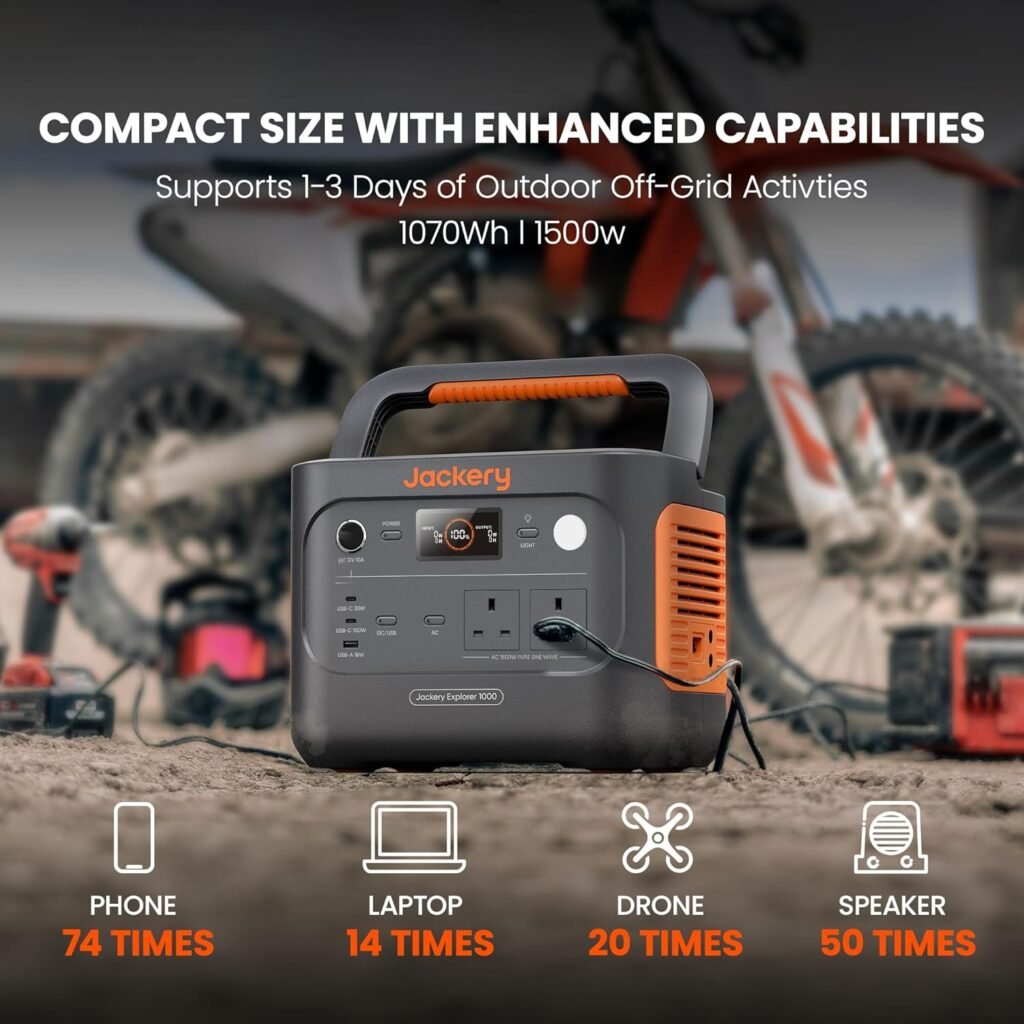
The 1070Wh capacity is the heart of what we can actually do in a day. Wh (watt-hours) is essentially “how much power we can use over time.”
As a simple rule of thumb, we can estimate:
Runtime (hours) ≈ 1070Wh ÷ (total device watts) × 0.85
(The 0.85 accounts for typical conversion and efficiency losses.)
Example Runtimes for Common Devices
Let’s run through a few approximations:
-
Smartphone (10–15Wh charge)
- We could theoretically charge a phone 50–70 times, but in practice maybe 40–60 charges after losses and mix of other uses.
-
Laptop (60W while in use)
- Runtime: 1070Wh ÷ 60W × 0.85 ≈ 15 hours of continuous use.
-
Mini-fridge (average 60W, cycling)
- If it averages 60W over 24 hours:
- 1070Wh ÷ 60W × 0.85 ≈ 15 hours straight.
- But because fridges cycle, in a real scenario we might get close to a full day of intermittent use if it’s efficient and in a moderate-temperature setting.
- If it averages 60W over 24 hours:
-
CPAP Machine (40W average, no humidifier or low humidifier use)
- 1070Wh ÷ 40W × 0.85 ≈ 22–23 hours, enough for two or three nights of sleep depending on actual draw and usage.
-
Electric cooker at 1000W
- 1070Wh ÷ 1000W × 0.85 ≈ 0.9 hours, so around 50–55 minutes continuous.
- Used for quick meals (5–10 minutes at a time), this is still very practical.
These estimates help us decide whether this station is enough as a primary emergency backup or mainly as an outdoor and secondary backup tool.

Fast Charging: From Empty to Full in About 1 Hour
Fast charging is one of the Explorer 1000 v2’s marquee features. Jackery claims up to 7.5x faster charging compared to the older E1000 model, with full charging in about 1 hour via AC when we use the optimized charging mode through the app.
Why Fast Charging Matters
In real life, we often don’t have all day to wait for a power station to recharge. Fast charging gives several advantages:
- Top up quickly at home before a sudden trip or incoming storm.
- Use brief windows of grid power during rolling blackouts.
- Recharge rapidly at RV parks or campgrounds between boondocking stops.
- Work more effectively with solar by supplementing during sunny hours with a quick AC top-up when available.
That speed makes the Explorer 1000 v2 feel much more like a dynamic tool rather than a slow, once-a-day battery.
Balancing Speed, Noise, and Longevity
Jackery pairs fast charging with intelligently managed modes in the app:
- 1-Hour Super Charging: Gets us back to 100% quickly when we need it urgently.
- 1.7-Hour Fast Charging: Still quick, but gentler than max-speed charging.
- 30 dB Quiet Mode: Prioritizes low noise and smoother charging, ideal for overnight or when we want subtle operation.
These flexible modes let us decide how aggressively we want to charge, balancing convenience, noise, and potential impact on long-term battery health.
Charging Options and Input Flexibility
While the product details emphasize fast AC charging, the Explorer 1000 v2 is also built to work nicely with solar and other inputs, making it useful in off-grid or mobile situations.
(Exact wattage for solar or car charging is not fully detailed in the product blurb we have, but we can infer typical Jackery practice and general usage.)
AC Wall Charging
This is the main method Jackery highlights. With the included AC charging cable, we can:
- Recharge from near empty to full in about an hour with the right mode via the app.
- Manage charging speed and behavior from our phone.
- Use any standard wall outlet at home, in an RV park, or at a friend’s place.
It’s plug-and-go simple for most users.
USB-C PD Charging (Input & Output)
The 100W USB-C PD port is capable of both input and output. This is especially handy when:
- We have a powerful USB-C charger or another power source capable of PD.
- We want to top up the battery in a pinch using alternative sources.
While USB-C alone will not charge as fast as AC, it offers flexibility and redundancy. If our AC adapter is misplaced or damaged, a decent USB-C PD charger can still keep us going.
Solar and Car Charging (Contextual Use)
Even though the listing snippet doesn’t spell out the precise solar parameters, Jackery’s “solar generator” branding strongly suggests compatibility with Jackery SolarSaga panels and other solar arrays within the supported voltage and wattage range.
In typical use, we might:
- Connect compatible solar panels during the day while camping or off-grid.
- Top up over several hours of sunlight; the exact speed will depend on panel wattage, sunlight intensity, and orientation.
- Use solar plus power station as a semi-permanent off-grid setup for small cabins, sheds, or remote work sites.
The 12V DC car port input is also common on these units, allowing slower charging while we drive. This is great for road trips and RV life, where charging while moving is part of the routine.
Output Ports and Device Compatibility
A good power station is not just about watts; it’s also about where and how we plug devices in. The Explorer 1000 v2 offers 6 output ports thoughtfully arranged for everyday scenarios.
AC Outlets for Household Gear
We get 2 Pure Sine Wave AC ports. This is enough for most setups:
- One port for a fridge or high-wattage device
- One port for a secondary device: TV, laptop charger, or small kitchen appliance
While more AC ports could offer extra flexibility, 2 is usually enough for a portable station this size, especially if we combine them with USB and DC outputs for smaller gadgets.
USB-C and USB-A Ports for Modern Electronics
The 2 USB-C ports and 1 USB-A port handle most modern electronics:
- USB-C PD (up to 100W) for laptops, tablets, phones, portable monitors, and power banks
- USB-A for legacy devices, lights, older phones, and accessories
For many of us, the most frequently used ports day-to-day will be these USB outlets. It means we can charge multiple devices simultaneously without needing wall bricks or adapters.
12V Car Port for Automotive and DC Gear
The DC car port is ideal for:
- Portable coolers or 12V fridge/freezers
- Automotive accessories
- Some camping gear (DC-powered pumps, fans, etc.)
This port keeps the station versatile, especially for RV and vehicle-based camping where 12V appliances are common.
Smart App Control: Monitoring and Modes
The app integration is a major part of what makes the Explorer 1000 v2 feel modern and flexible. Instead of walking up to the unit every time, we can handle much of the management from our phone.
Wi-Fi and Bluetooth Connectivity
We can connect to the Explorer 1000 v2 via Wi-Fi or Bluetooth, so we’re not tethered to the unit:
- Bluetooth works well when we’re physically near the station, like in a campsite or small cabin.
- Wi-Fi enables wider range monitoring in some setups (for example, in a home or RV with a shared network).
This connectivity lets us check in on the station while we’re working, cooking, or hanging out, without constantly getting up to look at the display.
Monitoring Battery Status and Usage
Through the app, we can typically see:
- Current battery percentage
- Input power (how fast it’s charging)
- Output power (how much we’re using)
- Estimated remaining runtime
This kind of real-time data helps us avoid surprises. If we see that, for example, our CPAP and mini-fridge will deplete the battery faster than we expected, we can adjust usage before it becomes a crisis.
Custom Charging Modes and Noise Management
The app also unlocks the different charging profiles mentioned earlier:
- Lightning-fast 1-hour super charging when we’re in a rush.
- 1.7-hour fast mode for a healthier balance.
- 30 dB quiet mode, where fan noise and charging aggressiveness are reduced, ideal for nighttime.
We get to tailor the station’s behavior to our day rather than adjusting our day to the station’s limitations.
Safety Systems and Protections
Whenever we use a large battery and high-wattage outputs, safety is paramount. Jackery’s ChargeShield 2.0 system and 62 safety protections show that this model has been engineered to handle both everyday use and edge cases.
Comprehensive Electronic Safeguards
The internal protection suite covers a broad range of risks:
- Over-voltage and under-voltage
- Over-current and short-circuit
- Over-temperature and under-temperature
- Charging and discharging controls
Together, these help prevent:
- Overheating during intense use
- Damage from faulty plugs, cables, or devices
- Excessive stress on the battery from extreme conditions
We gain peace of mind knowing that multiple electronic systems are quietly supervising operations in the background.
Fire and Shock Resistance
Jackery goes beyond simple electrical protections by designing the housing and interior for fire and shock resistance. This matters most if we:
- Use the station in rough environments (construction, workshops, outdoor work).
- Have it near kids or pets, where accidental bumps and knocks are more likely.
- Store it in RVs or vehicles where vibration and movement are constant.
This added resilience means fewer worries about accidental damage turning into serious hazards.
Outdoor Use: Camping, Hiking, and Off-Grid Adventures
Outdoor use is one of the main reasons many of us consider a portable power station in the first place. The Explorer 1000 v2 is clearly aimed at that audience.
Powering a Modern Campsite
With 1500W output and 1070Wh capacity, we can transform a campsite into a comfortable, highly functional base:
- Keep a portable fridge or cooler running to avoid dealing with melting ice.
- Charge multiple phones, tablets, cameras, and drones for content creation or navigation.
- Run LED lights for a well-lit camp kitchen or evening hangout area.
- Occasionally run a small induction cooker or electric grill for quick meals.
We do need to be mindful of overall consumption, but this unit offers enough energy to last a few days for light-to-moderate use, especially if we supplement with solar.
Portable Enough for Car and RV Trips
At 23.8 lbs, the Explorer 1000 v2 is not backpack material, but it’s excellent for car camping and RV trips. We can carry it from car to tent or cabin without much struggle, and its compact footprint fits in small trunks or storage bays.
The integrated handle and rugged build make it feel like a piece of dependable gear rather than a delicate piece of tech. It’s something we’re comfortable hauling along for long trips.
Built-In LED Lights for Convenience
The station includes built-in LED lights, an underrated feature that makes a difference in real use:
- Setting up camp after dark becomes easier.
- We get immediate illumination during sudden power outages without fumbling for flashlights.
- We can move it around as a lantern source for general visibility when walking around a site or working on a vehicle.
Having lighting integrated into our power hub is one of those quality-of-life features we quickly grow used to.
Emergency and Home Backup Use
While camping is fun, emergencies and blackouts are where the Explorer 1000 v2 can truly shine as a practical household tool.
Keeping Essentials Running During Outages
In a typical power outage, we may need:
- A fridge to keep food from spoiling
- A router and modem to stay connected
- Phone and laptop charging for communication and work
- A few key lights in frequently used rooms
With thoughtful management, 1070Wh can cover several hours to a day of essential loads, particularly if the fridge is efficient and we’re not running high-wattage devices constantly. Paired with solar, we can extend this support across multiple days.
Supporting Medical and Critical Devices
Many people rely on electrically powered medical devices. While we must always confirm exact power requirements and consult device manuals, the Explorer 1000 v2 is a strong candidate for:
- CPAP machines (often 30–60W without heavy humidifier use)
- Oxygen concentrators (check wattage carefully; some can be demanding)
The combination of Pure Sine Wave output, monitorable runtimes via the app, and LiFePO4 stability helps us treat this station as a reliable emergency bridge when the grid fails.
Stability for Remote Work and Connectivity
In storm seasons, remote and hybrid workers especially appreciate continuous power:
- Keep laptops, monitors, and routers running long enough to finish tasks or safely log out.
- Use the app to track exactly how long we can keep working.
- Charge phones and hotspots to maintain communication if home internet fails completely.
This model doesn’t replace a whole-house backup generator, but it can absolutely bridge common outages and keep our digital lives functional.
Comparison to the Previous Jackery E1000
Jackery mentions this new model has 50% more power output and charges 7.5x faster than the old E1000, which matters a lot if we’re considering an upgrade or choosing between old stock and this new version.
Performance Gains
Key performance enhancements include:
- 1500W AC output vs. lower output on the previous E1000.
- Faster AC charging: about 1 hour to full, compared to many hours on the older version.
- Smaller body while retaining similar total capacity (1070Wh).
This means we get a more capable, more efficient, and more convenient unit in nearly every practical dimension.
Battery Longevity Upgrade
The switch to a LiFePO4 battery with 4,000 cycles is another huge step forward. It’s not just about day-one performance; it’s about how this device will feel after years of use.
Compared to previous generations that used different lithium chemistries with lower cycle counts, this new Explorer 1000 v2 is built to be a long-term tool rather than a short-lived gadget. That alone makes it a more sensible investment for frequent users.
Pros and Cons Summary
To help us decide whether this unit is right for our needs, it’s useful to lay out its key strengths and limitations.
Advantages
-
Strong 1500W AC Output with 3000W Surge
Handles many home appliances, power tools, and cooking devices. -
Large 1070Wh LiFePO4 Battery
Long lifespan (up to 4,000 cycles) and stable performance. -
Extremely Fast AC Charging
Around 1 hour to go from low to full with proper mode via app. -
Comprehensive Safety and Fire/Shock Resistance
ChargeShield 2.0 with 62 protections and robust housing. -
Portable for Its Class (23.8 lbs)
Well-balanced handle and compact footprint for camping and RV life. -
Versatile Output Ports
2 AC, 2 USB-C, 1 USB-A, and 1 DC car port for a wide range of devices. -
Smart App Integration
Remote monitoring, charging modes, and noise-optimized quiet mode. -
Built-In LED Lights
Very handy in real-world outdoor and emergency scenarios. -
5-Year Customer Support
Indicates confidence in product longevity and provides peace of mind.
Potential Drawbacks
-
Weight Still Noticeable
While portable, 23.8 lbs is not something we carry long distances on foot. -
Limited Number of AC Outlets (2)
For larger setups, we might need to use power strips carefully to expand outlets. -
Solar Panel Not Included by Default
To use it as a full “solar generator,” we need compatible panels, which are an additional expense. -
Finite Capacity for High-Wattage Devices
Heavy loads like large electric heaters or long cooking sessions will drain the battery quickly; we must manage expectations and usage.
These trade-offs are typical in this category, but it helps to know them clearly before purchasing.
Value and Ideal Use Cases
When we consider whether the Explorer 1000 v2 offers good value, we need to weigh its capabilities against how we plan to use it.
Who Will Benefit Most?
We see this model as an excellent fit for:
- Car and RV campers who want serious off-grid flexibility without a gas generator.
- Outdoor enthusiasts who run portable fridges, drones, cameras, and laptops away from the grid.
- Homeowners looking for emergency backup for fridges, routers, lighting, and medical devices during outages.
- Remote workers who want resilience against power cuts.
- Preppers and off-grid hobbyists who value long battery life, safety, and solar compatibility.
If we frequently operate at medium loads (100–800W) and occasionally use higher loads for short bursts, this unit’s balance of capacity, output, and portability makes a lot of sense.
Situations Where It Might Be Overkill or Underpowered
It may be overkill for:
- Simple phone and laptop charging on short weekend trips where a small power bank would be enough.
- Occasional picnic outings where we only need minimal power.
It may be underpowered for:
- Whole-house backup where we want to run HVAC systems, large electric stoves, or many high-wattage devices simultaneously.
- Continuous high-power workshop or construction use where a larger stationary system or gas generator is more appropriate.
Understanding our own needs and patterns is key. For many modern users, the Explorer 1000 v2 lands in the sweet spot: big enough to be genuinely useful, small enough to be truly portable.
Final Thoughts: Is the Jackery Explorer 1000 v2 Worth It?
Putting everything together, we see the Jackery Explorer 1000 v2 Portable Power Station (2024 New) as a thoughtfully updated, high-performance entry in the mid-range power station market. It addresses many of the limitations common to older models:
- It delivers serious power (1500W) without becoming too bulky.
- It uses LiFePO4 for excellent longevity and stability.
- It charges very quickly, especially via AC, making top-ups far more flexible.
- It integrates smart app control, adding convenience and insight.
- It offers robust safety features, making it more trustworthy around our families and homes.
If we want a reliable, feature-rich portable power station for camping, off-grid adventures, RV setups, and emergency backup, this model is a strong contender. It’s not the cheapest option out there, but given the combination of long battery life, high performance, and advanced safety, it stands as a compelling long-term investment for those of us who plan to use it regularly and rely on it when it matters most.