Ad Blocker Detected
Our website is made possible by displaying online advertisements to our visitors. Please consider supporting us by disabling your ad blocker.
Disclosure: As an Amazon Associate, I earn from qualifying purchases.
Have we ever wished our vehicle could quietly refill our portable power station while we drive, without the noise, fumes, and hassle of a traditional generator?

What Is the EF EcoFlow 800W Alternator Charger?
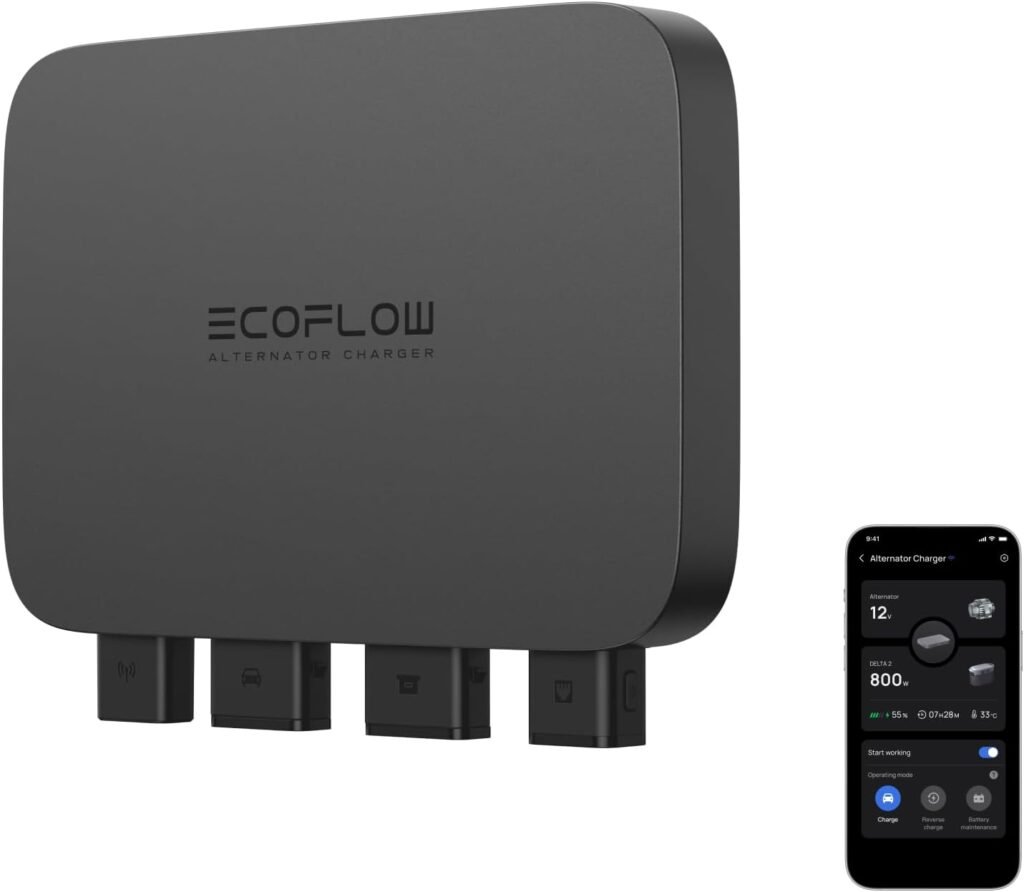
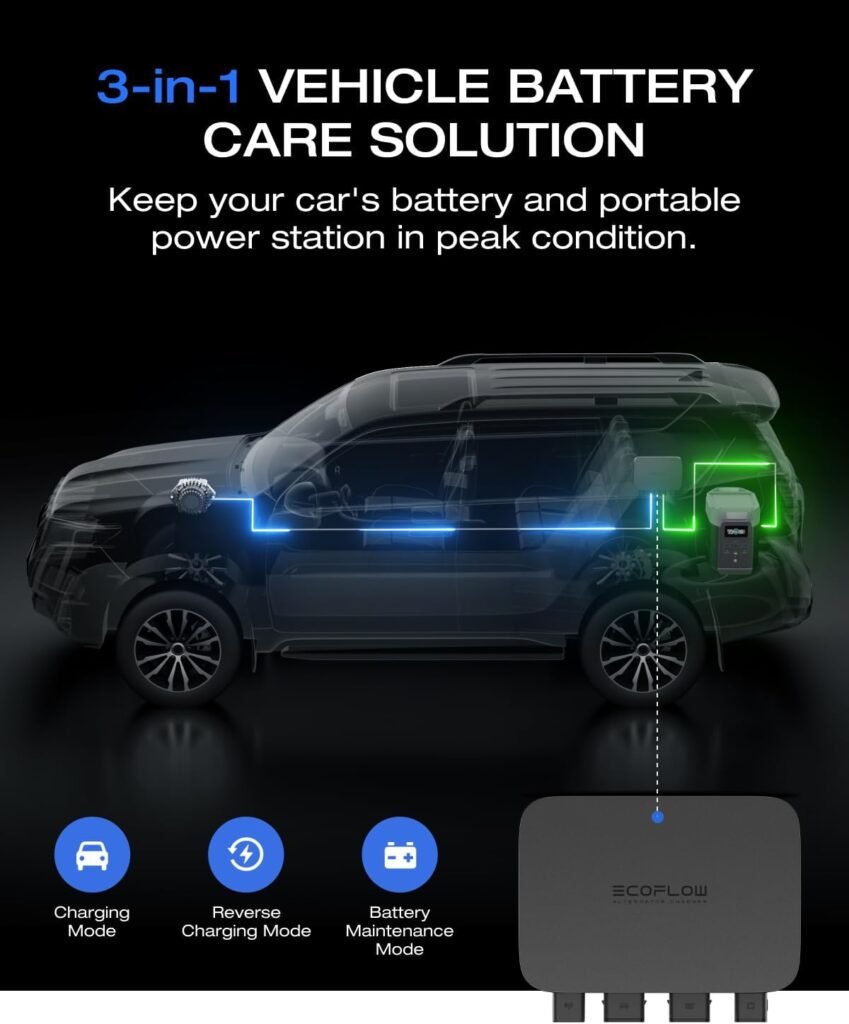
The EF EcoFlow 800W Alternator Charger is a 3‑in‑1 DC-DC system designed to work with EcoFlow portable power stations. It charges our power station from the vehicle alternator, maintains our vehicle battery, and even acts as a jump starter.
In practical terms, it turns our car, van, RV, or truck into a rolling energy source. As we drive, it automatically tops up our portable power station using energy our alternator is already producing.
Key Features at a Glance
Sometimes it helps to see everything laid out in one place. Here’s a quick summary of what this charger offers and how it fits into our on-the-road power setup.
| Feature | What It Means for Us | Why It Matters |
|---|---|---|
| 800W Alternator Charging | Recharges a 1kWh EcoFlow DELTA 2 in about 80 minutes of driving | Much faster than standard 12V cigarette lighter ports |
| 3‑in‑1 Functionality | Charger, vehicle battery maintainer, and jump starter in one unit | Fewer devices to buy, carry, and manage |
| 8× Faster Than Cigarette Lighter Port | High‑power DC‑DC charging instead of low‑power 12V socket | Gets our power station ready between stops, not overnight |
| GaN Technology | Efficient power conversion with lower heat and higher safety | Stable performance even at high wattages |
| Vehicle Protection Features | Reverse polarity, overcurrent, short circuit, over/under voltage protection | Reduces the risk of damaging our vehicle’s electrical system |
| Plug‑and‑Play Design | Out-of-the-box setup with minimal installation | Ideal for vanlife, RVs, overlanding, and frequent travelers |
| App Integration via EcoFlow App | Monitor and control charging from our phone | Better planning and control over our energy usage |
| Portable Power Ecosystem | Works with EcoFlow power stations for off‑grid, camping, home backup, and RV use | One ecosystem for road trips, camping, and emergencies |
| Vehicle Battery Maintenance | Keeps starter battery healthy while we run loads off our system | Less risk of a dead starter battery |
| Jump Starter Function | Provides the power to jump start our vehicle when our starter battery is low | Emergency backup when we’re far from help |
This isn’t just another 12V gadget. It’s a compact power hub that connects our vehicle and our portable power station into a single, flexible energy system.

Charging Speed: How Fast Is 800W in Real Life?
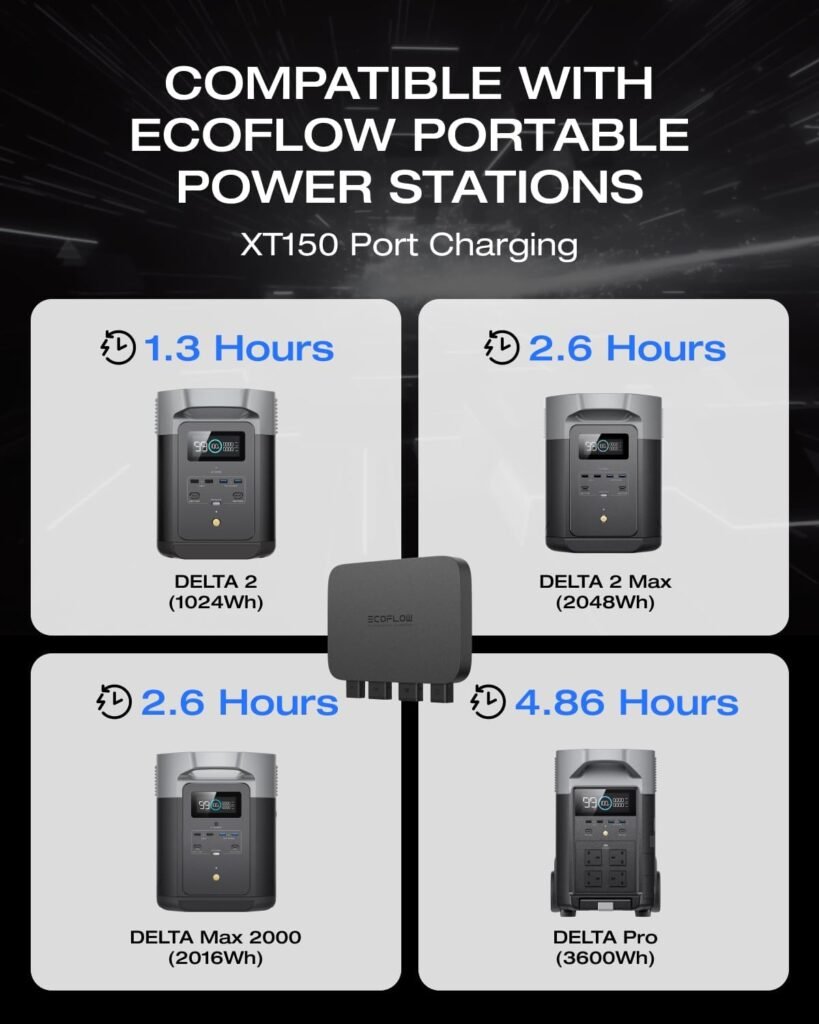
EcoFlow claims this alternator charger can fully recharge a 1kWh power station, like the EcoFlow DELTA 2, in around 80 minutes of driving. That’s roughly the time of a modest commute, or the distance between neighboring cities.
Compared to a standard cigarette lighter port (typically around 96–120W), 800W is a major upgrade. We’re looking at roughly 8× the power, meaning the difference between “maybe charged by tomorrow” and “charged before we reach our next campground.”
What 800W of Charging Lets Us Do
With an 800W charge rate, here’s the kind of runtime we can reasonably expect from a 1kWh power station after an 80‑minute drive:
- Power laptops, phones, and tablets for hours
- Run a small coffee maker in the morning
- Keep a portable fridge running through the day
- Top up camera gear, drones, headlamps, and other accessories
Instead of worrying about rationing power, we can plan around the fact that driving time actively refills our battery bank at a meaningful rate.
3‑in‑1: Charger, Maintainer, and Jump Starter
We’re often forced to carry separate devices for power station charging, battery maintenance, and emergency jumps. This charger rolls all three roles into one.
1. Power Station Charger
Our core use case is simple: we drive, our power station charges. By connecting directly to the alternator via the vehicle’s electrical system, this unit takes advantage of surplus energy that would otherwise go unused.
Instead of plugging into a low‑power 12V cigarette port, we get a tuned DC‑DC charging system optimized for portable power stations, with much higher wattage and better efficiency.
2. Vehicle Battery Maintainer
Running lights, fridges, or other accessories off a vehicle can gradually weaken the starter battery if we’re not careful. The maintainer function helps keep our vehicle battery in better condition.
By managing how power flows between the alternator, the vehicle battery, and the portable power station, the charger reduces the risk that we’ll step out of our van in the morning only to find a flat starter battery.
3. Jump Starter Function
We all know the sinking feeling of turning the key and getting only a weak click. Being able to use the system as a jump starter means we’re not relying solely on jumper cables and the kindness of nearby drivers.
When our vehicle battery is too weak to start the engine, we can tap into the energy stored in our EcoFlow power station, and let the alternator charger deliver the surge needed to start the vehicle. For off‑grid trips, remote camping, winter driving, and long road adventures, this adds real peace of mind.
Extending Battery Runtime for RVs, Vans, and Overlanding
For vanlife, overlanding, and RV use, extending runtime is what makes trips more comfortable and less stressful. This is where the alternator charger truly shines.
Perfect Companion for 12V RV House Batteries
Many RV setups rely on 12V house batteries that power everything from lights to water pumps to refrigerators. When we add a portable power station plus this alternator charger to the mix, we can:
- Supplement our existing house battery instead of replacing it
- Shift some loads (like cooking appliances, laptops, or tools) to the EcoFlow system
- Recharge the EcoFlow unit while driving between stops, trailheads, or campsites
The result is a hybrid system where our RV house battery and our power station share the workload, reducing strain on both.
Vanlife and Overlanding Benefits
For vanlife and overlanding, we often need power in unpredictable situations—at trailheads, off‑grid spots, or dispersed campsites without hookups. With this system, our day might look like this:
- Drive in the morning: charge our ECOFLOW portable power station up to near full
- Park and camp: run our devices, fridge, lights, and even small appliances from the power station
- Next day’s drive: automatically fill the battery again while we move to the next spot
Instead of hunting for shore power or relying heavily on solar (which depends on weather and shade), we leverage the power our vehicle already produces.
Off‑Grid and Outdoor Use: Not Just for the Van
Even though the alternator charger lives in our vehicle, the power station it charges is portable. That means all the energy we collect while driving is free to go wherever we go.
We can charge the EcoFlow power station during our drive, then carry it:
- To our campsite table to run lights, fans, and portable coolers
- Down to a lakeside area to power speakers or cooking equipment
- Into a cabin or tent to run electronics safely away from the car
Because the power station is separate from the alternator charger, our vehicle becomes the charging source, but not the place where we’re forced to sit when we want access to energy.
Safety, Protection, and GaN Technology
Whenever we connect high‑power electronics to our vehicle’s electrical system, safety matters a lot. EcoFlow incorporates several layers of protection into this charger, and uses GaN technology to keep things efficient and cool.
What GaN Technology Means for Us
GaN (Gallium Nitride) components are more efficient at converting power than traditional silicon-based designs. For us, that translates into:
- Higher power output from a compact device
- Less heat buildup during extended charging sessions
- Better long‑term reliability and energy efficiency
This is especially important at 800W, where inferior components could overheat, throttle performance, or fail prematurely.
Built‑In Vehicle Protections
EcoFlow lists multiple protection measures:
- Reverse polarity protection – helps prevent damage if leads are connected incorrectly
- Overcurrent protection – prevents drawing too much current from the alternator or battery
- Short circuit protection – safeguards against wiring or device faults
- Overvoltage and undervoltage protection – keeps operation within safe limits
These protections give us more confidence when installing and using the unit, especially on long journeys or in harsh conditions where errors or equipment strain are more likely.
Warranty Support
The charger comes with a 2‑year warranty. That’s a reassuring time frame for a component that sits in a demanding environment—heat, vibration, and variable loads. For a core piece of our power setup, warranty support and brand backing are important.
Installation and Ease of Use
EcoFlow emphasizes that this system is “installation‑free” and “plug and play.” Realistically, we should expect some basic connecting and routing of cables, but it’s clearly designed to be approachable, even if we’re not professional upfitters.
Out-of-the-Box Use
The idea is that we can begin using the system with minimal fuss:
- Connect the charger to our vehicle’s battery system, following the included instructions
- Connect the output to our EcoFlow portable power station
- Start the vehicle, and let the alternator do the rest
We’re not dealing with complex inverters, large battery banks, or custom wiring harnesses in the same way as a full van electrical build. For many users, especially renters, weekend warriors, or those just starting vanlife, that simplicity is a major appeal.
Pass‑Through Charging for On‑the‑Go Use
The charger supports pass‑through charging, meaning:
- Our power station can charge from the alternator
- At the same time as it’s powering our RV or van appliances
We’re not forced to choose between charging our battery and using our devices. When we’re driving, we can run a fridge, lights, or a few smaller appliances off the power station, while the alternator charger keeps the battery level from dropping.
This pass‑through behavior gives us more flexibility and makes road time much more productive from a power standpoint.
EcoFlow App Integration and Monitoring
Modern power systems are increasingly app‑driven, and this unit plugs into the EcoFlow ecosystem. With the EcoFlow app, we can check in on our power system right from our phone.
What We Can Monitor and Control
Depending on our EcoFlow power station model and firmware, we can use the app to:
- View charge status and input wattage from the alternator charger
- See how quickly our battery is filling in real time
- Manage loads and keep track of estimated runtime
- Adjust some settings related to charging behavior and power usage
Having this data in our pocket allows us to make smarter decisions—like whether we need a slightly longer drive to top up the battery or if we have enough charge for the night.
Planning Trips Around Energy, Not Guesswork
When we can see real wattage and a percentage of charge, we stop guessing and start planning. We might decide:
- To take a scenic route that adds an extra 30–40 minutes of driving to finish topping off
- To feel comfortable boondocking another night because we see we have enough stored energy
- To run higher draw appliances for a short time because we know we’re about to drive again
This shifts our whole approach to trip planning. Energy becomes a known quantity, not an uncertainty.
Where This Charger Fits in the EcoFlow Ecosystem
EcoFlow has built a wide range of portable power stations and solar solutions, and this alternator charger fits into that ecosystem as a specialized but powerful link between vehicle and battery.
Ideal Pairings with EcoFlow Power Stations
Most of the marketing references an EcoFlow DELTA 2 (1kWh), but the charger is generally aimed at mid to larger size power stations in the EcoFlow lineup. Paired with units like:
- EcoFlow DELTA 2 (around 1kWh)
- EcoFlow DELTA Max / DELTA 2 Max (larger capacities)
- Compatible other EcoFlow “DELTA” series units
we get a complete system that charges via:
- Vehicle alternator (using this charger)
- Solar panels (while parked or driving)
- Shore power at campgrounds or at home
This redundancy is valuable. If it’s cloudy, we have the alternator; if it’s night and we’re parked, we still have the stored energy; if we’re at a campground, we can top up from shore power.
Better Than Relying Only on Solar or Generators
We love solar, but it’s not always reliable:
- Shade from trees
- Cloudy days and bad weather
- Parking constraints that force us into less-than-optimal angles
And generators come with their own list of negatives—noise, fumes, fuel costs, and restrictions in many campgrounds. With a high‑power alternator charger, we have another clean, quiet option that uses energy we’re already generating by driving.
Everyday Use Cases and Real‑World Scenarios
Sometimes the best way to understand a product is to picture ourselves using it in everyday situations. Here are a few scenarios where this alternator charger makes a noticeable difference.
Weekend Camping Trips
We leave Friday after work with our EcoFlow power station partially charged. During the drive to the campsite, the alternator charger fills the battery close to 100%. All weekend, we use it to:
- Run a portable fridge or cooler
- Charge phones, cameras, and lights
- Brew coffee and run a small fan at night
On Sunday’s drive home, whatever we used is mostly replenished. We return with a ready‑to‑go power station for the next trip or for home backup.
Long Vanlife Journeys
On a multi‑week vanlife journey, we might be moving every few days. With this setup:
- We wake up, use power for breakfast and morning routines
- Start driving, let the alternator charger begin refilling our battery
- Arrive at the next stop with a strong charge and no need to run a generator
Over time, that consistency removes a lot of stress. We’re not constantly searching for hookups or sunshine.
Off‑Grid Work and Creative Projects
For those of us working or creating content on the road (photographers, videographers, remote workers), this system gives us:
- Stable charging for laptops, cameras, drones, and editing gear
- Quiet operation for audio recording and focused work
- Reliable power for Wi‑Fi routers, hotspots, or Starlink setups
Because we know driving will refill our power station quickly, heavy editing sessions or upload days are easier to plan.
Emergency and Home Backup Use
Even though the alternator charger lives in our vehicle, the power it provides to our EcoFlow power station can be used at home during outages. We can:
- Keep the EcoFlow topped up during normal driving days
- Bring it indoors during an outage to run essentials like lights, communication devices, or a router
- Return it to the vehicle later to recharge via alternator if needed
We essentially turn our car into a mobile charging station for home emergencies.
Advantages Compared to Other Charging Options
We have choices when it comes to charging portable power stations. This 800W alternator charger brings a unique mix of benefits.
Compared to a Cigarette Lighter Charger
Most vehicles already have a 12V socket, but the power output is very limited.
- Cigarette port: Often ~96–120W
- EcoFlow Alternator Charger: Up to 800W
With a cigarette port, charging a 1kWh power station can easily take 8–10 hours or more. With this alternator charger, we’re looking at roughly 80 minutes, as EcoFlow claims. That difference determines whether a system is practical for daily use or just an occasional backup.
Compared to a Stand‑Alone Jump Starter
Dedicated jump starters are useful, but they sit idle most of the time. This unit:
- Functions daily as a high‑power charger
- Actively maintains and supports our power system
- Doubles as a jump starter when needed
We’re not paying for a tool that only matters once a year. Instead, it becomes part of our core energy setup, and the jump start ability is a helpful extra layer of security.
Compared to a Traditional Generator
Generators can put out more raw wattage but at a serious tradeoff:
- Noise and fumes that disrupt quiet campgrounds
- Limited use in many parks due to restrictions
- Extra fuel to carry and maintain
With the EcoFlow system, we:
- Charge quietly while we drive
- Use silent battery power at camp
- Avoid worrying about fuel storage or generator maintenance
For many travelers, sacrificing some peak wattage is well worth the trade for silence and simplicity.
Who This Product Is Best For
This alternator charger isn’t for absolutely everyone. It shines in particular use cases, and we can quickly tell if we’re in that group.
Great Fit For
-
Vanlifers and overlanders
We’re regularly on the move, need reliable power, and value silent operation. -
RV owners
We want to supplement our 12V house battery and reduce generator use while still running key appliances. -
Frequent road trippers and campers
We prefer to pre‑charge our power setup during the drive instead of hunting for hookups. -
Remote workers on the road
We need confidence that our laptops and communication gear will stay powered without constant planning around outlets. -
Preparedness‑minded drivers
We like having a jump starter function, battery maintenance, and portable backup power in one integrated ecosystem.
Not Ideal For
-
Those who rarely drive
If we barely move our vehicle, alternator charging will not provide much benefit. Solar or home AC charging may be more appropriate. -
Users without or unwilling to get an EcoFlow power station
The system is designed for EcoFlow’s ecosystem. If we already own an entirely different brand and don’t plan to switch, the synergy is lost.
Pros and Cons
To give ourselves a balanced perspective, it helps to summarize both strengths and tradeoffs.
Pros
- Extremely fast charging from our alternator (up to 800W, significantly faster than 12V sockets)
- 3‑in‑1 functionality – charger, vehicle battery maintainer, and jump starter
- Plug‑and‑play oriented design aimed at non‑experts
- Safe operation with multiple built‑in protections and GaN efficiency
- Works seamlessly with EcoFlow power stations and app ecosystem
- Reduces or replaces generator usage for many use cases
- Enhances vanlife and RV setups by extending runtime and sharing load with house batteries
Cons
- Best value when we already use, or plan to use, EcoFlow power stations
- Relies on alternator output, so driving is required for full benefit
- Install, while simplified, still requires careful connection to the vehicle’s system
- Upfront investment compared to low‑power 12V adapters
Tips for Getting the Most Out of the 800W Alternator Charger
To really benefit from this product, we can approach our power usage and driving habits a bit more strategically.
1. Align Driving Time with Charging Needs
Instead of treating driving as “dead time,” we can think of it as “charging time”:
- Plan transitions between camps or cities when our battery is low
- Use drives after heavy-energy activities (like cooking or working) to refill
Approaching energy like this turns normal road time into part of our power plan.
2. Combine with Solar for Even More Flexibility
If we already have solar panels for our EcoFlow power station:
- Let solar handle top‑ups when we’re parked in good light
- Let the alternator charger do the heavy lifting on cloudy days or when shade is unavoidable
This combination dramatically reduces our dependence on shore power or any external charging.
3. Use the App to Track Real Usage Patterns
By watching our daily usage in the EcoFlow app, we can:
- Identify which devices drain the most power
- Decide when to run heavy loads (like kettles, induction cookers, or power tools)
- Adjust our expectations for how often we need to drive to stay topped off
The more we understand our own habits, the more confidently we can roam.
4. Keep Vehicle and Power Station in Good Condition
The charger depends on both the vehicle alternator and the EcoFlow power station, so:
- Ensure our vehicle’s electrical system is healthy and properly maintained
- Keep firmware up to date on our EcoFlow units when updates are available
- Follow any recommended guidelines for maximum continuous draw and duty cycles
Taking care of the whole system will extend its life and maintain performance.
Final Thoughts: Is the EF EcoFlow 800W Alternator Charger Worth It?
If we already rely on, or plan to rely on, EcoFlow portable power stations for travel, camping, overlanding, or backup power, this alternator charger can be a powerful upgrade. It effectively turns our vehicle into a fast, quiet, mobile charging station—no extra fuel, no loud generator, and no hours‑long waits tied to a low‑power 12V port.
We gain:
- Fast, meaningful charging (1kWh in around 80 minutes of driving)
- Integrated jump start and battery maintenance support
- Safer, more robust vehicle integration with modern GaN efficiency and protections
- A more confident, flexible off‑grid lifestyle where our driving time directly supports our energy needs
For those of us who spend significant time on the road and want a cleaner, more seamless way to keep our EcoFlow power stations ready, the EF EcoFlow 800W Alternator Charger stands out as a thoughtful and capable solution in a compact package.