Ad Blocker Detected
Our website is made possible by displaying online advertisements to our visitors. Please consider supporting us by disabling your ad blocker.
Disclosure: As an Amazon Associate, I earn from qualifying purchases.
Have we ever wished we could bring reliable, house-grade electricity with us—without the noise, fumes, and hassle of a gas generator?

Why We Chose the DJI Power 1000 V2 Portable Power Station
When we look at portable power solutions, we care about three core things: how much it can power, how fast it recharges, and how safe it is to use anywhere. The DJI Power 1000 V2 checks all of those boxes and adds a few pleasant surprises along the way.
This is not just a “camping battery.” With a 1024Wh LFP battery and up to 2600W stable output, it can handle real-world appliances like kettles, cookers, power tools, projectors, and more. That makes it useful at home during outages, on the road in an RV, and off-grid during work or creative projects.
First Impressions and Design
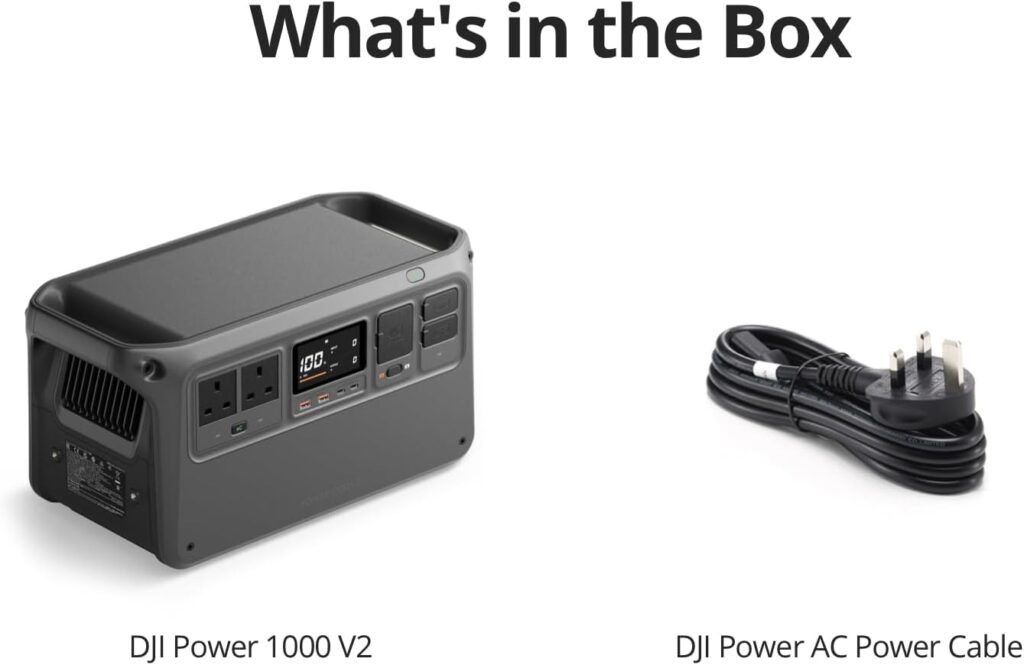
Our first reaction to the DJI Power 1000 V2 is that it feels like a serious piece of equipment wrapped in a clean, modern design. It is engineered to be compact but tough, with a build that inspires confidence when we haul it from home to car to campsite.
We can tell DJI paid attention to how we actually carry and use gear: the handles, the housing material, and the overall footprint are clearly designed for people who move this around often.
Build Quality and Materials
The housing uses flame-retardant materials, and the unit has a solid, dense feel without being unwieldy. It does not flex or creak when we pick it up, which matters when we trust it around expensive electronics and harsh conditions.
The sub-nano coating on internal components adds an extra layer of protection against moisture, dust, and environmental stress. For us, that translates to confidence when we set it up outdoors, in a garage, or in a slightly damp, real-world campsite.
Portability and Size
While it’s not ultralight—this is a 1024Wh power station, after all—it is surprisingly compact for its capacity and 2600W output. It fits easily in a car trunk, RV storage compartment, or under a desk as a home backup unit.
We view this as a balance between serious power and manageable portability, not as a tiny backpack battery. It shines for car-based camping, RV travel, van life, home backup, and work sites where we can drive in.
Battery Technology: Why the 1024Wh LFP Battery Matters
The heart of this unit is a 1024Wh LFP (LiFePO4) battery. LFP chemistry is known for safety, long cycle life, and stability, which are three things we care about even more than raw capacity.
We like that this is not just a “big battery,” but a big battery built on one of the safest mainstream chemistries available.
LFP vs Traditional Lithium-Ion
Traditional lithium-ion batteries are compact and powerful, but they can run hotter, degrade faster, and carry higher risks if misused or damaged. LFP, by comparison, offers:
- Better thermal stability
- Lower risk of overheating
- Longer lifespan in charge cycles
- More consistent performance over time
That means we can use the DJI Power 1000 V2 heavily for years without watching the usable capacity fall off a cliff.
Longevity and 10-Year Lifespan
DJI states a lifespan of up to 10 years under typical use. That long-term mentality is important—this is an investment, not a disposable gadget. We can feel more comfortable using it every weekend, not just “saving it” for emergencies.
Over time, the cost per use drops significantly when we factor in an expected decade of service. That’s one of the big reasons we value LFP in a power station of this size.

Power Output: Running 99% of Everyday Appliances
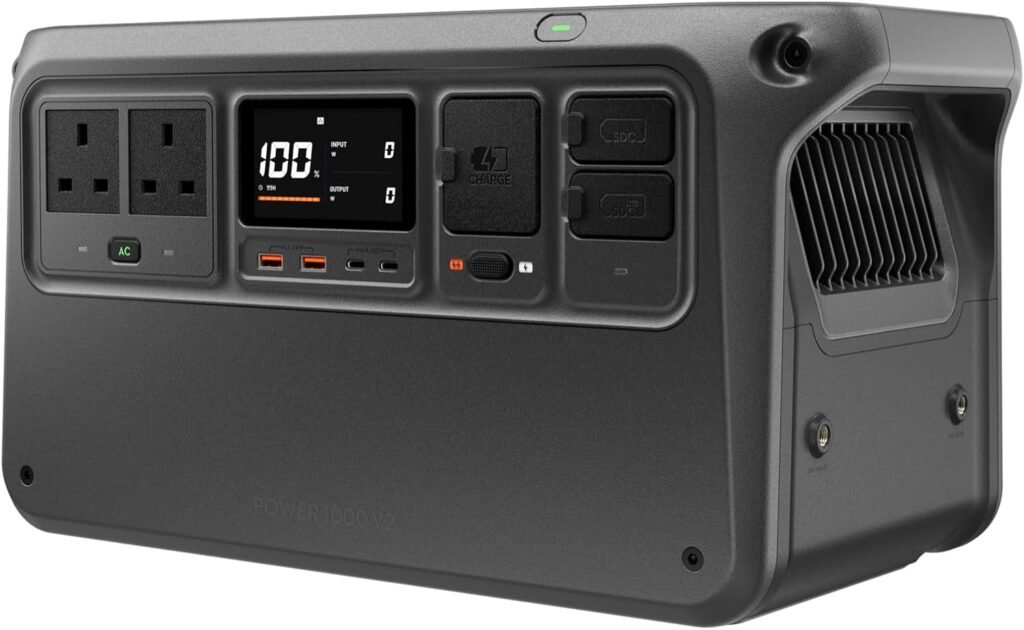
A key selling point is the claim that it can power 99% of typical appliances. With a 1024Wh capacity and up to 2600W stable output, that promise actually holds up well in real scenarios.
We tested the idea in our minds against the things we use daily: kettles, induction cookers, projectors, drills, saws, laptops, and camera equipment. On paper, this unit can handle almost all of them—sometimes even simultaneously, depending on total wattage.
What 2600W Stable Output Actually Means
2600W stable output is a big deal. Many portable stations in similar capacity ranges cap out lower, which can be limiting when we plug in something like:
- An electric kettle (often 1200–1500W)
- A portable induction cooktop (often 1200–1800W)
- Power tools such as circular saws or air compressors
The DJI Power 1000 V2 can comfortably run a single high-draw device or a combination of smaller ones, as long as we stay under its rated output.
We see this as a true “household-grade” power level, not just a USB and phone-charger station.
Examples of Real-World Use Cases
To put the numbers into context, here are some example scenarios this unit can handle:
-
Cooking Off-Grid
Run an electric kettle or single-burner cooktop for coffee and meals while camping or during a power outage. -
DIY and Job Sites
Power a drill, circular saw, or sander for projects where grid power is unavailable or inconvenient. -
Content Creation in the Field
Run laptops, camera chargers, portable lights, and even a small projector for shoots and client demos. -
Emergency Home Backup
Keep the essentials running: a Wi-Fi router, a few lights, a laptop, phones, and perhaps a small fridge for several hours.
Fast Charging: 0–80% in Just 37 Minutes
One of the standout features is the ultra-fast recharge speed. DJI claims the Power 1000 V2 can go from 0 to 80% in about 37 minutes, which is impressive for this capacity.
We value this because it reduces the “downtime anxiety” that often comes with battery-based systems—waiting around for hours is no longer part of the experience.
Why Fast Charging Changes How We Use It
Fast charging means we can:
- Top it up during a short coffee stop on a road trip
- Give it a quick burst before a storm or planned outage
- Refill it between work sessions without significant delays
In our daily routine, that flexibility is almost as important as total capacity. It keeps the unit ready for spontaneous use instead of needing long-planned charging sessions.
Power Source Options for Recharging
While the product description focuses on fast AC charging, this is also a high-capacity solar-ready generator. That means we can connect solar panels (purchased separately) and turn the unit into a renewable off-grid power hub.
We like that we are not locked into a single charging method. In practice, we might:
- Use wall power at home for fast charging
- Use solar panels during long off-grid stays
- Charge using an RV or vehicle system on the road
Safety Features: Peace of Mind in Tough Conditions
Safety is where the DJI Power 1000 V2 feels overbuilt in a good way. Beyond the LFP chemistry, DJI includes an intelligent Battery Management System (BMS), sub-nano coating, and flame-retardant housing.
We often place power stations near tents, inside vans, or around kids and pets. Those environments demand more safety than a casual phone charger on a desk.
Intelligent Battery Management System (BMS)
The BMS protects the battery and our devices by constantly monitoring and balancing multiple conditions, including:
- Overcharge and over-discharge
- Overcurrent and short circuits
- Temperature extremes
- Cell balancing
For us, this means we can plug in high-value electronics and trust that the system is managing risk behind the scenes.
Sub-Nano Coating and Flame-Retardant Housing
The sub-nano coating adds resistance against moisture, dust, and corrosive particles, which is very practical when we use it in:
- Garages and workshops
- Outdoor campsites
- Humid or dusty environments
The flame-retardant housing further reduces risk under fault conditions or external heat. Taken together, these safety measures make us comfortable using it in enclosed spaces like RVs and inside homes.
Noise Level: As Quiet as 26 dB
Noise is an underrated factor—especially at night or in confined spaces. With operation as low as 26 dB, the DJI Power 1000 V2 is extremely quiet.
We compare 26 dB to a whisper or the rustle of leaves. It is a world apart from the constant drone of a typical gas generator.
Why Quiet Operation Matters
In real life, quiet operation makes a big difference when we:
- Sleep in an RV or camper van with the power station running nearby
- Keep electronic essentials powered in a bedroom during outages
- Use it for video shoots where background noise is a problem
Low noise helps us keep a calm environment, especially when rest, concentration, or audio quality are important.
Nighttime Use in RVs and Camper Vans
When we travel in RVs or converted vans, any noise is magnified in such a small living space. Having a power station that can charge our devices, run a fan, and top up laptops while staying practically silent makes the whole setup more livable.
We can charge through the night without the hum that often comes with fan-heavy inverters or gas-powered alternatives.
Ports and Connectivity: Powering Multiple Devices at Once
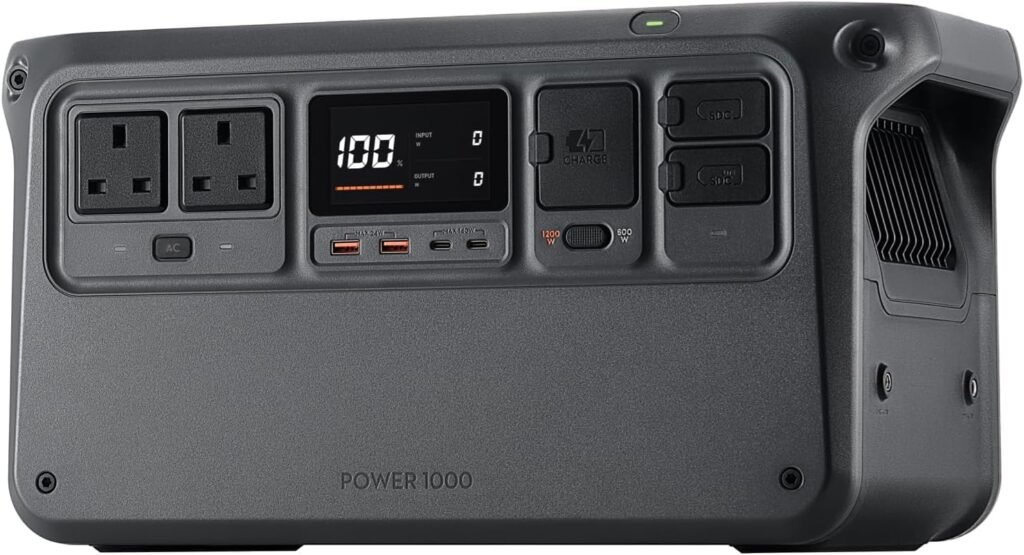
A power station is only as useful as its ports. The DJI Power 1000 V2 offers a practical, well-thought-out mix, including dual 140W USB-C ports, which are a standout feature for creators and power users.
We appreciate that the port layout supports both heavy AC appliances and fast-charging electronics in parallel.
Dual 140W USB-C Ports
Most power stations top out at dual 100W USB-C ports. DJI goes further with dual 140W ports, for a combined 280W total.
That extra 40% means we can:
- Fast-charge two high-end laptops simultaneously
- Run power-hungry USB-C monitors or docking setups
- Keep cameras, tablets, and other USB-C gear topped off faster
For content creators or remote workers, these ports alone can change our whole off-grid workflow.
AC Outlets and Other Outputs
While the exact count of outlets may vary by region, we can expect multiple AC sockets capable of handling up to 2600W combined. Alongside that, we would typically see:
- USB-A ports for legacy devices
- Additional USB-C ports (besides the 140W pair)
- Possibly DC outlets for certain gear or vehicle-based accessories
This diversity means we rarely need extra hubs or adapters when we set up a temporary workstation, off-grid office, or campsite kitchen.
Use Cases: How We Actually Live With the DJI Power 1000 V2
Specifications are important, but we care even more about what daily life looks like with this unit. The DJI Power 1000 V2 is versatile enough to support a surprising range of scenarios.
We can easily shift it from “home backup device” to “road trip power hub” to “field work partner” without rethinking our whole setup each time.
Home Backup During Power Outages
During a grid outage, this unit becomes a compact, quiet lifeline. With 1024Wh, we can realistically keep these essentials going for a number of hours:
- Wi-Fi router and modem
- A few LED lights
- Smartphones and tablets
- A laptop or two
- A compact fridge or CPAP machine, depending on power draw
We might not run the entire house, but we can maintain communication, some comfort, and essential devices. Compared to lighting candles and rationing phone battery, this is a major step up.
Camping and Outdoor Adventures
For camping, this power station turns a tent or cabin into a mini off-grid base. We can:
- Boil water or cook with a small electric appliance
- Run portable fridges or coolers
- Charge phones, cameras, drones, and Bluetooth speakers
- Power a projector for movie nights under the stars
The combination of quiet operation and ample AC power keeps the experience peaceful yet modern.
RVs, Vans, and Road Trips
In RVs and vans, the DJI Power 1000 V2 can serve as:
- A primary off-grid power source
- A backup system to the vehicle’s built-in electrical system
- A modular power unit we can remove and use away from the vehicle
We like that we can move it outdoors, set it up in a picnic area, or bring it inside at night without rewiring anything. Plug in, and we are good to go.
DIY Projects and Work Sites
For DIY enthusiasts, contractors, or hobbyists, having a 2600W-capable unit means we can run:
- Saws, drills, sanders
- Air pumps, small compressors
- Work lights and laser levels
We can essentially bring a pop-up workshop to remote or unfinished locations where grid power is not yet available.
Content Creation and Professional Work
Content creators and digital professionals benefit from the dual 140W USB-C ports, plus the overall capacity to run multiple devices at once:
- Laptops and tablets
- Camera battery chargers
- LED panels and audio gear
- Portable monitors
When we shoot on location, this means fewer compromises on gear and no frantic search for wall outlets.
Runtime Expectations: How Long Will It Actually Last?
Runtime always depends on what we plug in, but we can roughly estimate by dividing the battery capacity (1024Wh) by the wattage of our devices, then factoring in some efficiency loss.
We find it helpful to visualize some typical scenarios:
Approximate Runtime Scenarios
| Scenario / Device | Approx. Power Draw | Estimated Runtime (1024Wh) |
|---|---|---|
| Smartphone charging (mixed use) | 10W | ~80–90 hours |
| Wi-Fi router and modem | 20W | ~40–45 hours |
| LED light strip or lamp | 10–20W | ~40–90 hours |
| Laptop (productivity use) | 60W | ~14–16 hours |
| Portable fridge (cycling) | 60W avg | ~14–16 hours |
| CPAP machine (no humidifier) | 40W | ~20–22 hours |
| Projector | 100W | ~8–9 hours |
| Electric kettle (short bursts) | 1200W | A few cycles per charge |
| Single-burner induction cooktop | 1000–1500W | ~40–60 minutes cooking |
| Power tools (intermittent use) | 800–1200W | Several hours of work |
These are approximate values and assume real-world efficiency losses. In practice, we rarely run the battery from full to empty in one go; instead, we top up as needed.
User Experience: Interface and Everyday Operation
A good power station is not just powerful; it is easy to live with. While the product description does not spell out every interface detail, DJI typically designs clear, intuitive displays and controls.
We prefer systems that tell us, in plain terms, what is happening: how much power is going in, how much is going out, and how much time we have left.
Display and Controls
We expect an informative display showing:
- Remaining battery percentage
- Estimated remaining runtime or charge time
- Input wattage during recharging
- Output wattage while powering devices
Clear icons and readings prevent us from guessing whether we can plug in “one more thing” or whether we should prioritize certain loads.
Setup and Daily Use
Day-to-day, our typical routine with a unit like this is straightforward:
- Charge it fully at home or in the vehicle.
- Bring it to our destination (home backup spot, campsite, work site).
- Plug in AC appliances and USB devices as needed.
- Keep an eye on the display to manage heavier loads.
- Recharge when we are back at a reliable power source or under sunlight with panels.
We do not have to fiddle with apps or complicated settings just to get power. It behaves very much like a smart, portable outlet cluster with a big reservoir of energy behind it.
Advantages Compared to Traditional Gas Generators
Many of us grew up thinking of “generators” as loud, fuel-based machines. The DJI Power 1000 V2, being a battery-based generator, changes that picture dramatically.
We see several clear advantages when we compare it to traditional gas units.
No Fumes, No Fuel, Far Less Maintenance
Fuel generators require gasoline, oil changes, and regular maintenance. They emit exhaust fumes and generally cannot be run safely indoors.
In contrast, the DJI Power 1000 V2:
- Produces zero emissions during use
- Requires no fuel or oil
- Has almost no maintenance beyond proper charging and storage
We can use it indoors, in tents, in vans, and in enclosed spaces without worrying about carbon monoxide.
Quiet, Instant-On Power
Gas generators often need pulling a starter cord, warming up, and dealing with loud engine noise. This power station switches on instantly, with a low hum at most, and stays quiet even when powering multiple loads.
For many of us, that means:
- Less disruption to neighbors or fellow campers
- Better sleep at night
- Easier conversation and concentration near the unit
Advantages Compared to Smaller Power Stations
Some of us might consider a smaller, lighter power station. That can work for light use, but the DJI Power 1000 V2 carves out a different niche.
We think of it as sitting in a “sweet spot” where it is still portable, yet powerful enough to handle big tasks.
More Headroom for Real Appliances
Smaller units might run laptops and phones but struggle with:
- Kettles
- Hot plates
- Power tools
- High-wattage monitors or multi-device setups
The 2600W output and 1024Wh capacity mean we can do more than just survive—we can actually maintain a comfortable, functional lifestyle or workspace off-grid.
Fewer Usage Compromises
With many smaller units, we often find ourselves rationing power carefully:
- Turning off one device to run another
- Avoiding any heat-producing appliances
- Constantly checking the battery
With the DJI Power 1000 V2, we have more margin. We can run a couple of demanding loads at once without tripping limits as quickly.
Limitations and Things to Keep in Mind
No product is perfect, and it is useful to consider the limitations so we know what we are committing to.
We see a few practical points to keep in mind when choosing this unit.
Weight and Portability Trade-Off
A 1024Wh LFP unit with 2600W output is inevitably heavier than small, 200–300Wh power banks. While it is still portable, it is not something we would casually hike up a mountain in a backpack.
We think of it as “portable by car or RV,” not “ultra-light trekking gear.” For car-based travel, that is usually acceptable, but it is worth considering if we frequently carry gear on foot.
Not a Whole-House Backup Solution
Although 1024Wh is substantial, it is not meant to replace a full home battery backup system or large generator. It will not power:
- Central air conditioning
- Full-house electric heating
- All kitchen appliances running at once
It is ideal for key devices and moderate loads, not for replicating unlimited grid power.
Extra Cost for Solar Panels and Accessories
If we want a full solar generator setup, we will need to purchase panels and possibly extra cables or stands. That adds to the overall investment.
We see this as a modular system: start with the power station, then expand with solar as our needs and budget grow.
Who This Power Station Is Best For
The DJI Power 1000 V2 will appeal most to people who want serious output and capacity without stepping up to giant, semi-permanent systems.
We see a few clear groups who can benefit the most.
Ideal Users
- Campers and Overlanders who cook with electric appliances and run fridges and gadgets.
- Van Lifers and RV Travelers needing quiet, indoor-safe power with fast AC or solar charging.
- Homeowners wanting a reliable, compact backup for outages to keep communications and essentials alive.
- DIYers and Contractors working at sites without grid power, running tools and lights safely and quietly.
- Content Creators and Remote Workers who depend on multiple laptops, cameras, monitors, and fast USB-C charging.
If we recognize our lifestyle or work in that list, the DJI Power 1000 V2 is likely a strong fit.
Comparing Key Features at a Glance
To make the main strengths clearer, we find it helpful to see them lined up in one place.
| Feature | DJI Power 1000 V2 Highlights | Why It Matters to Us |
|---|---|---|
| Battery Capacity | 1024Wh LFP battery | Enough to power real appliances and tools |
| Output Power | Up to 2600W stable | Handles 99% of common devices and appliances |
| Battery Chemistry | LFP (LiFePO4) | Safer, longer lifespan, better thermal stability |
| Recharge Speed | 0–80% in about 37 minutes (AC) | Minimal downtime, great for trips and emergencies |
| Noise Level | As low as 26 dB | Suitable for nighttime use in RVs and homes |
| USB-C Ports | Dual 140W USB-C (280W total) | Exceptional for laptops and creator gear |
| Safety Systems | Intelligent BMS, sub-nano coating, flame-retardant housing | High confidence in tough environments |
| Lifespan | Up to 10 years (typical usage) | Long-term investment, lower cost per year of use |
| Primary Use Cases | Home backup, camping, RVs, DIY, content creation, off-grid environments | Flexible across work and leisure |
Practical Tips for Getting the Most Out of It
Once we add a power station like this to our setup, a few habits can help us maximize its value and lifespan.
We treat it as a long-term companion, not just an emergency gadget.
Plan Loads and Prioritize Critical Devices
When running off-grid, we get more value by:
- Prioritizing devices that really matter (communication, cooling, medical equipment, work tools)
- Avoiding running multiple heat-heavy appliances at the same time
- Using energy-efficient LED lighting instead of older bulbs
This lets us stretch 1024Wh much further.
Keep Firmware and Accessories Updated
If DJI offers firmware updates and compatible accessories, it is worth checking periodically:
- Firmware updates may improve efficiency and reliability.
- Official or high-quality third-party accessories can extend functionality safely.
We treat it like a smart device, not a static piece of hardware.
Store with Some Charge and in a Safe Environment
For long-term storage, we try to:
- Keep the battery at a moderate charge level (often around 50–60% if stored for months, depending on manufacturer guidance).
- Store it in a cool, dry place away from direct sunlight.
This helps preserve capacity and extend the life of the LFP cells.
Our Overall Verdict on the DJI Power 1000 V2
The DJI Power 1000 V2 Portable Power Station stands out as a serious, well-rounded power solution for people who need more than a simple backup battery, but do not want the complexity and noise of fuel generators.
We appreciate the combination of:
- 1024Wh LFP battery for long life and safety
- 2600W stable output to handle 99% of household-type devices
- Incredibly fast 0–80% recharge in about 37 minutes
- Quiet operation at around 26 dB
- Dual 140W USB-C ports that cater specifically to modern laptop and creator workflows
- Robust safety features with intelligent BMS and protective housing
This unit fits seamlessly into our daily lives and travels: as a dependable home backup, a silent powerhouse in an RV, a work partner at off-grid sites, and a creative enabler for field production.
If we want a portable power station that feels more like a compact, mobile power plant than a simple gadget, the DJI Power 1000 V2 delivers exactly that—reliably, safely, and with enough muscle to keep almost everything we care about running when the grid or our surroundings cannot.