Ad Blocker Detected
Our website is made possible by displaying online advertisements to our visitors. Please consider supporting us by disabling your ad blocker.
Disclosure: As an Amazon Associate, I earn from qualifying purchases.
Have we ever wished our 12V LiFePO4 battery system felt as smart and secure as the rest of our tech gear?

Understanding What the DALY 12V 4S 300A Smart BMS Actually Is
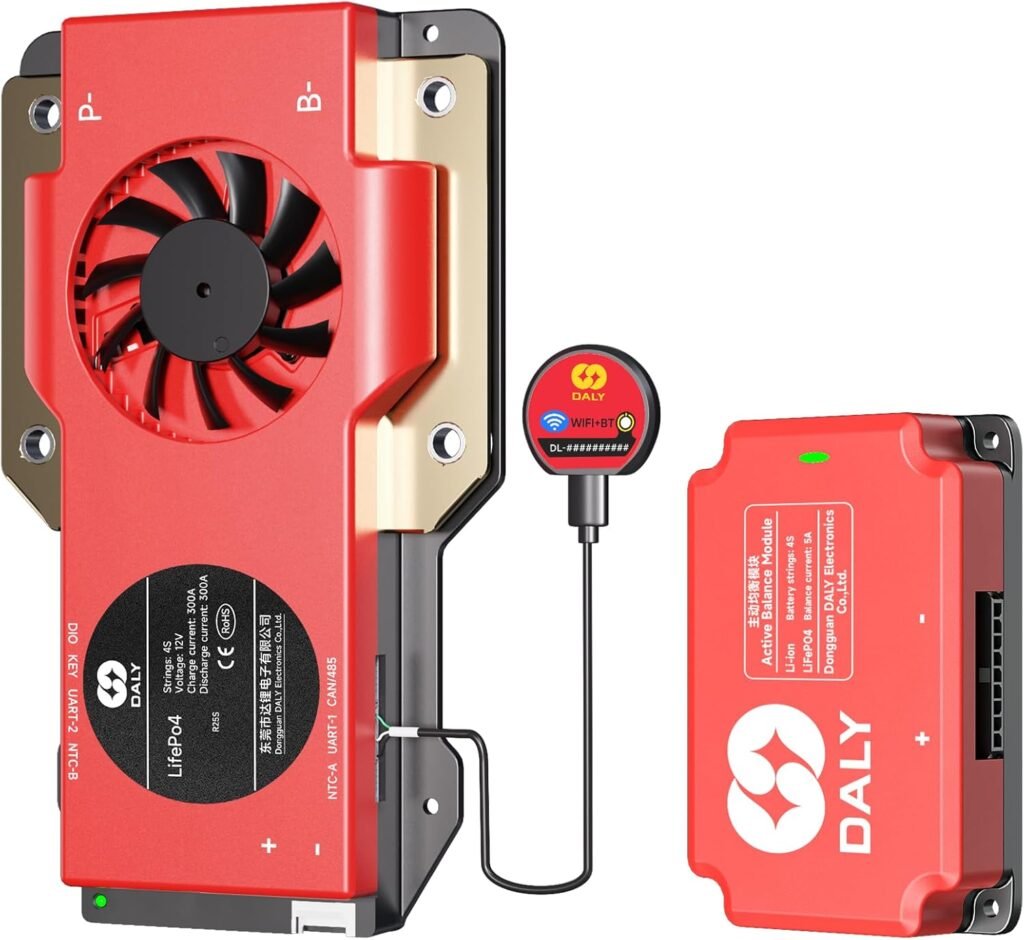
When we look at the DALY BMS 12V 4S 300A Balance – Smart WiFi Bluetooth BMS, we are really looking at the “brain” and “bodyguard” of our 12V LiFePO4 battery pack. This device manages, monitors, and protects our cells so we get more performance, more safety, and a much longer service life from our battery bank.
It is designed specifically for 4S (4‑series) 12V LiFePO4 configurations, with a massive 300A rating, which positions it perfectly for RVs, portable power stations, small marine applications, off‑grid cabins, and high‑draw inverters.
Key Features at a Glance
Before we go deeper into how it behaves in real use, it helps to see the key specs and features in one place. This gives us a quick snapshot of what we are actually getting for our money and how it compares to more basic BMS units.
Feature Breakdown Table
| Feature | Description | Why It Matters to Us |
|---|---|---|
| Battery Type | 4S 12V LiFePO4 | Optimized for the chemistry many of us use in RVs and portable power setups |
| Continuous Current Rating | 300A | Supports high‑power inverters, large loads, and strong charge currents |
| Cell Balancing Type | 5A Active Balancing | Faster, more efficient balancing with less heat than typical passive balancers |
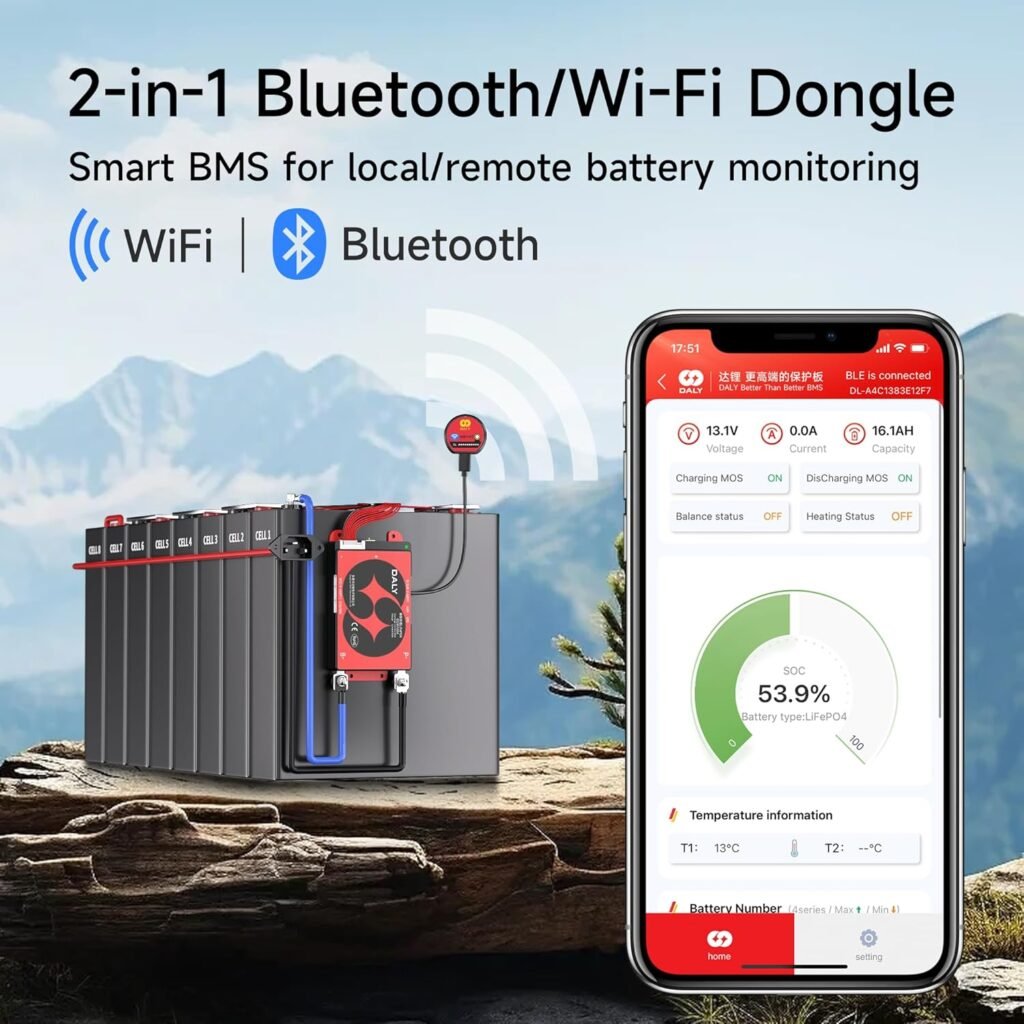
| Communication | 2‑in‑1 Bluetooth + Wi‑Fi module | Local and remote monitoring with app control and real‑time alerts |
| Protocol Support | RS485 and CAN | Integrates with advanced systems, inverters, and custom controllers |
| Protection Functions | Undervoltage, overvoltage, surge, short circuit, temperature protection | Protects our cells and wiring from common fault conditions |
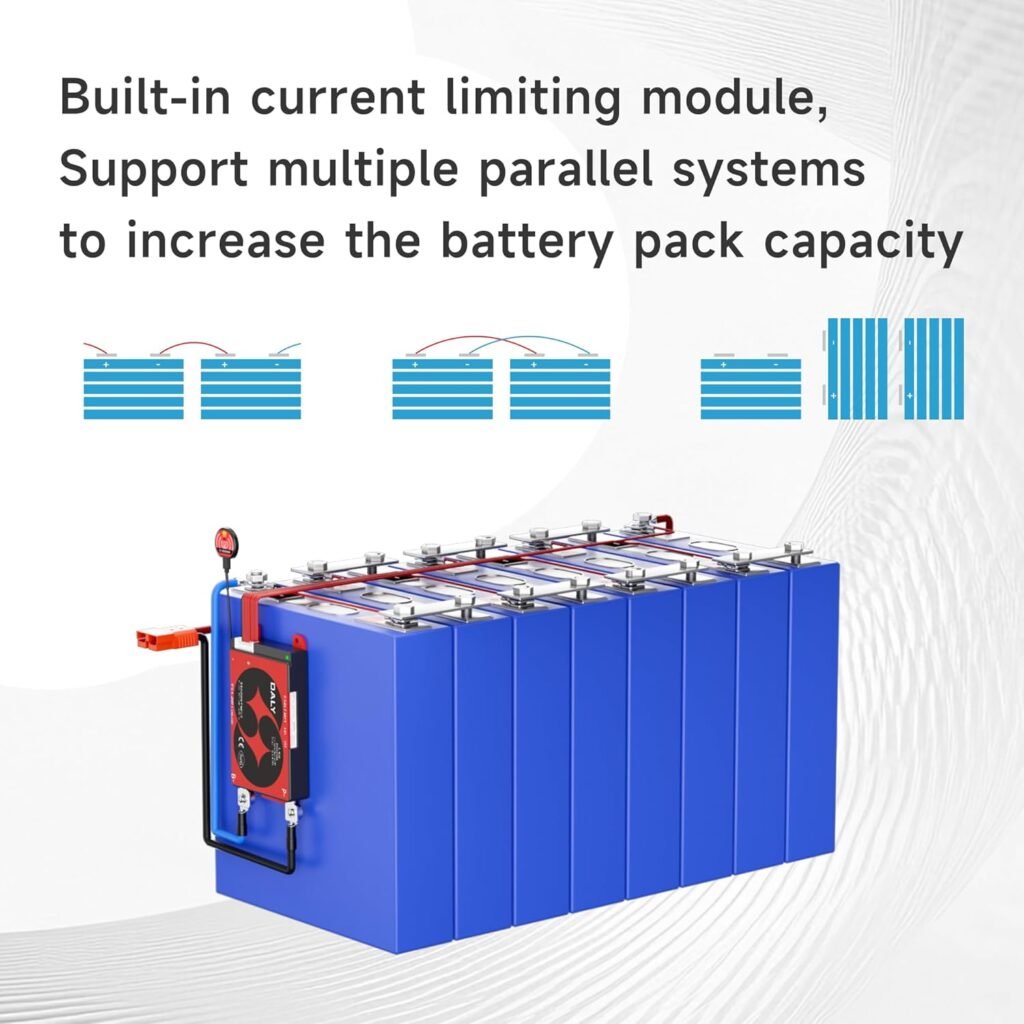
| Parallel Support | Supports 8+ packs in parallel | Lets us scale capacity easily for bigger systems |
| Warranty | 5 years | Gives us confidence that this is meant for long‑term use |
| Included in Package | Smart BMS, 5A active balancer, B‑/P‑ output cables, BT/Wi‑Fi module, sampling cable, NTC, manual | We get a complete setup kit, not just the BMS board |
| Typical Applications | RVs, boats, portable power stations, off‑grid storage, backup systems | Designed with real‑world mobile and stationary power users in mind |
This combination of 300A capacity, active balancing, and smart connectivity pushes this BMS into a more “professional” class, while still staying within the reach of DIY users.
Overall Design and Build Quality
We notice right away that DALY has built this with a focus on robustness. The casing and bus bars are designed to handle serious current, and the wiring connections feel substantial rather than flimsy.
Hardware and Physical Layout
The main BMS body houses the high‑current switching components, protection circuitry, and communications interface. The separate 5A active balancer module is included as a companion unit, which connects through a dedicated harness.
We see clearly labeled terminals: B‑ (battery negative), P‑ (load/charger negative), and balance leads for each cell in the 4S pack. The included output cables and sampling cable reduce the guesswork that often comes with BMS wiring.

Protection and Safety Functions
When we configure a high‑current LiFePO4 system, safety is not optional. The DALY BMS offers a full suite of protective features that automatically intervene before damage occurs.
Voltage Protection (Over and Under)
The BMS constantly checks each cell’s voltage and the overall pack voltage. If cells rise above the configured maximum (overvoltage), charging is cut off. If cells fall below the minimum (undervoltage), discharging is stopped.
This matters because:
- Overvoltage can degrade LiFePO4 cells and shorten lifespan
- Deep undervoltage can permanently damage or even kill cells
By handling this automatically, the BMS removes the risk of over‑discharging batteries in an RV or off‑grid system where loads may be left on unintentionally.
Current and Short Circuit Protection
With a 300A rating, we are most likely running serious loads or inverters. This also means we are carrying a lot of energy that can do damage if something goes wrong. The DALY BMS monitors current and can:
- Shut down during short circuits
- Stop discharging during overcurrent events
- Provide surge shutdown for sudden, dangerous spikes
This protection is especially valuable in mobile scenarios where wiring may flex, chafe, or be exposed to vibration and environmental changes.
Temperature Protection
LiFePO4 cells are relatively safe compared to other lithium chemistries, but temperature still matters. The included NTC temperature sensor plugs into the BMS and monitors the pack’s temperature.
If temperatures exceed safe limits—either too high during heavy loads or too low during charging—the BMS can suspend charging or discharging to prevent damage. This is important if our system is in a van, RV, or shed that experiences wide temperature swings.
Active Balancing: The 5A Advantage
Battery balancing is often misunderstood, but it makes a huge difference in performance and longevity. DALY includes a dedicated 5A active balancer, which is a big upgrade over the passive balancing we see in many low‑cost BMS designs.
What Makes Active Balancing Different
Most basic BMS units use passive balancing: they bleed excess energy from higher‑voltage cells as heat through resistors. This is slow and inefficient.
Active balancing, like this 5A unit, instead transfers energy from higher‑voltage cells to lower‑voltage cells. Benefits include:
- Faster balancing (5A is a strong balancing current)
- Less wasted energy (more of it remains in the pack instead of turning into heat)
- Reduced heat generation
- Better cell harmony over time as the pack ages
Why Balancing Matters in Real Use
If we are running a 4S pack in an RV or power station, we may be cycling it daily—or leaving it topped up for long periods. Over time, small cell differences grow, causing:
- Some cells to hit full voltage earlier and stop charging the entire pack
- Some cells to hit low voltage earlier and trigger a cutoff before we use all the energy
Active balancing keeps the cells tightly aligned, giving us:
- More usable capacity
- More consistent performance
- Extended pack life
In short, the active balancer is one of the standout reasons to consider this DALY model over cheaper alternatives.
Smart Connectivity: Bluetooth and Wi‑Fi in One Module
Many of us want to see what our batteries are doing without opening a compartment or connecting a laptop. The 2‑in‑1 Bluetooth/Wi‑Fi module is where this BMS really feels “smart”.
Bluetooth for Local Monitoring
With Bluetooth, we can:
- Use the Smart BMS mobile app on a phone or tablet
- Check real‑time data: cell voltages, pack voltage, current, SOC (if provided), temperature
- See historical or status information depending on app version
- Change certain parameters if the firmware and app allow it
This is very convenient when we are inside our RV, on a boat, or standing near our battery bank. We do not need to physically access the BMS, and we do not need complicated wired displays.
Wi‑Fi for Remote Access
The Wi‑Fi function gives us the ability to monitor the system remotely in many setups. Depending on how we integrate the module (and the network it connects to), we can:
- Check battery status when away from the vehicle or property
- Get system warnings remotely (e.g., low SOC, high temperature alerts)
- Track system behavior over time
For off‑grid cabins, remote monitoring of backup systems, or RVs stored away from home, this can be extremely helpful. It moves our power system into the “connected” world where we can react to warnings before a problem becomes serious.
Real‑Time Warnings and Custom Parameters
The Smart BMS app is designed to give us:
- Real‑time alerts when limits are hit (over/under voltage, overcurrent, abnormal temperature)
- The ability, in many cases, to adjust key parameters like cutoff voltages and current limits
We should keep in mind that parameter access and detail can depend on app versions and firmware, but the intended design is clearly toward a configurable, user‑friendly interface.
RS485 and CAN: Integration with Advanced Systems
For those of us building more complex systems—like integrated RV electrical panels, small commercial setups, or custom off‑grid installations—communication protocols are critical. DALY includes RS485 and CAN support on this BMS.
Why RS485 Matters
RS485 is a robust, long‑distance communication protocol often used in industrial environments. With RS485, we can:
- Connect the BMS to external monitoring equipment
- Tie it into a central control system
- Use certain third‑party displays or PLCs with appropriate drivers
If we are running multiple battery banks or want central management, RS485 gives us a stable backbone for that communication.
Why CAN Is Important
CAN (Controller Area Network) is commonly used in automotive and advanced energy systems. Many modern inverters, chargers, and vehicle control systems can communicate with CAN‑enabled BMS units.
Using CAN, we can:
- Allow our inverter/charger to read battery status directly
- Enable smarter charging profiles based on live data
- Potentially integrate with vehicle CAN systems in RVs or vans (with proper interface hardware)
This makes the DALY BMS a much more “future‑proof” choice since it can play nicely with higher‑end equipment and evolving ecosystems.
Parallel Support: Scaling Up to 8+ Packs
One of the standout features of this DALY model is its integrated support for multiple battery packs in parallel. Many of us eventually hit the point where we want “just a bit more capacity”—and sometimes a lot more.
How Parallel Support Works
The BMS is designed so we can connect 8 or more packs in parallel, each with its BMS, or through a parallel‑friendly configuration. This allows us to:
- Start with a smaller system and expand gradually
- Build a larger power system in modular blocks
- Replace or add packs without redesigning the entire system
We still need to follow proper wiring practices, cable sizing, and fuse protection, but the BMS itself is designed to support this scaling without conflicts.
Benefits for RVs and Portable Power Stations
In an RV or van, we might begin with a single 12V pack. Later, as we add solar panels or heavier loads (induction cooktops, air conditioning, etc.), we may want doubles or triples of the capacity.
With integrated parallel support, we can:
- Add new packs in a predictable way
- Keep system architecture consistent
- Rely on the BMS to manage each pack’s safety while still acting in a coordinated way
For a portable power station build, modular parallel design also helps with troubleshooting and service. If one pack misbehaves, we can isolate it without taking down the whole system.
Real‑World Use Cases
To make sense of all these technical features, it helps to picture how we might use this BMS in actual scenarios. Let’s look at a few common ones for a 12V LiFePO4, 300A system.
RV or Camper Conversion
In a camper conversion, we might have:
- A 12V LiFePO4 pack at 200–400Ah
- A 2000–3000W inverter
- Solar charging from the roof
- Alternator charging via DC‑DC
- Loads like fridges, fans, laptops, induction hobs, and lighting
The DALY BMS shines here because:
- 300A current support can handle large inverter loads
- Active balancing keeps the cells healthy through daily cycles
- Bluetooth lets us check battery health from inside the living space
- Temperature protection is critical if the battery compartment is inside a van subject to heat
The Wi‑Fi feature is particularly handy if our rig is parked away from home and we want to check SOC or health from a distance.
Portable Power Station Build
For a custom portable power station, we may package:
- A 12V LiFePO4 battery pack
- An inverter/charger combo
- Input from solar or AC charging
- DC and AC output panels
The DALY BMS gives the pack:
- Strong protection against user abuse or accidental shorts
- High current capacity for surge loads on the AC inverter
- Smart insights through the app so we can show clients or friends the performance
- A 5A active balancer that keeps the pack optimized, important when stored partially charged or at high SOC
This can make our DIY power station feel like a polished commercial product.
Small Boats and Marine Use
On a small boat, we may need:
- Reliable 12V power for navigation, lighting, pumps, and sometimes an inverter
- Protection from the harsher marine environment
- Awareness of system health even when the boat is docked
The DALY BMS gives us:
- Robust current and short‑circuit protection
- Remote status checks when we are not at the dock (with Wi‑Fi and suitable network access)
- Better cell longevity despite frequent partial cycles
- Integration potential with marine displays that can speak CAN or RS485 (with the right interface)
Installation Experience
Many of us are comfortable with basic DC wiring but feel cautious around BMS installation. DALY aims to ease this process by including the essential accessories and offering a fairly straightforward layout.
What Comes in the Box
The package includes:
- 1 × 4S 12V 300A Smart BMS
- 1 × 5A Active Balancer module
- 2 × B‑/P‑ output lines (high‑current cables)
- 1 × 2‑in‑1 Bluetooth/Wi‑Fi module
- 1 × Sampling (balance) cable
- 1 × NTC temperature sensor
- 1 × Manual (note: English is not guaranteed, though it is often included or accessible online)
This is nearly everything we need to integrate the BMS into our pack, minus the cells, main cables, fuses, and bus bars of our specific installation.
Wiring and Setup
We generally follow this sequence when installing:
- Plan the system layout: Decide where the BMS, cells, and cables will sit. Avoid cramped, excessively hot, or damp locations.
- Connect the temperature sensor: Attach the NTC thermistor to the battery pack in a thermally representative spot (often near the middle of the pack).
- Wire the balance leads: Connect the sampling cable to each cell according to the 4S scheme, following the labeling carefully (B1, B2, B3, B4, etc.).
- Connect the active balancer: Follow the instructions to plug the balancer into the BMS or cell taps, as specified by DALY.
- Connect B‑ and P‑: Wire the main negative from the battery to the BMS B‑, and from P‑ to the system load/charger negative. The positive usually bypasses the BMS and goes directly to the system bus.
- Install fuses and disconnects: Add appropriate fusing and manual disconnect switches as part of our system safety.
- Attach the communication module: Connect the Bluetooth/Wi‑Fi module to the BMS, and mount it in a place where signal reception is reasonable.
- Power up and configure: Use the Smart BMS app to detect the system, check cell readings, and adjust parameters where needed.
We should be careful with sequence and double‑check all connections before applying power. A mistake on balance leads can damage a BMS in any brand, so slow, methodical work pays off here.
App Experience and Usability
A smart BMS lives or dies by the quality of its app experience. While the exact app interface can change over time, the DALY Smart BMS app generally focuses on clarity and direct access to important values.
Data We Can Typically See
Once connected, we can usually view:
- Individual cell voltages (for all four cells)
- Total pack voltage
- Charge/discharge current
- Status flags (charging, discharging, protection triggered)
- Temperature readings from the NTC sensor
- Possibly SOC and capacity estimates (depending on configuration and firmware)
This helps us not only diagnose problems, but also understand how our system behaves under different loads.
Adjusting Parameters
With many DALY smart BMS units, we can:
- Set overvoltage and undervoltage thresholds
- Adjust charge and discharge current limits
- Modify balance voltage thresholds
- Configure protection delays and release conditions
We may want to adjust these values to match our specific cells’ recommended settings, especially if we are using high‑quality LiFePO4 cells with known specs.
We should always change parameters cautiously, keeping safety margins in mind and sticking within the cell manufacturer’s recommendations.
Performance in Daily Use
Once installed and configured, the real test is how the BMS behaves day after day. The combination of 300A rating, active balancing, and well‑rounded protections tends to deliver a dependable experience.
Handling High Loads
At 300A continuous rating, the BMS can support:
- Large inverters (2000–3000W continuous at 12V)
- High surge currents for motor loads (pumps, compressors, etc.) within spec
- Fast charging from powerful DC chargers, alternators, or solar charge controllers
We want to ensure our cabling and fusing are also rated appropriately; the BMS is just one part of the entire current path. When properly matched, we can expect smooth power delivery for demanding applications.
Balancing and Pack Health Over Time
The 5A active balancer helps keep cell voltages aligned, especially:
- After repeated cycles under high load
- When the pack has been stored for long periods
- When cells age at slightly different rates (which they naturally do)
In practice, we should see minimal cell imbalance at the top and bottom of the charge range, which translates into:
- Higher perceived capacity
- Fewer surprises where one cell triggers cutoff early
- Longer pack lifespan before capacity loss becomes noticeable
We do not need to manually “top balance” as frequently with a robust active balancer keeping things in sync.
Who This BMS Is Best Suited For
Not every battery system needs a 300A smart BMS with active balancing and communication protocols. We should ask ourselves if our project justifies these features.
Ideal Users and Projects
We think this DALY BMS is especially suited to:
- Serious RV and van conversions with larger inverters and substantial loads
- Off‑grid power systems that rely on 12V LiFePO4 packs as their main energy storage
- DIY portable power stations where we want a professional‑level feature set
- Small marine systems needing dependable, protected power with remote monitoring
- Tech‑savvy builders who want RS485/CAN integration and app‑based control
If we are just running a small, low‑current 12V LiFePO4 pack for lights and phone charging, this BMS may be more capability than we need. In that case, a simpler, lower‑amp BMS might suffice.
When It Might Be Overkill
We might not need this much BMS if:
- Our maximum current is under 50–80A and we have no inverter
- We are not interested in remote monitoring or app‑based configuration
- We are using pre‑built, sealed batteries that already have internal BMS protection
In those situations, simpler solutions can save budget. But for larger builds and high‑demand setups, DALY’s 300A Smart BMS lands in a sweet spot of power and intelligence.
Pros and Cons Summary
To help us decide whether this fits our needs, we can weigh the key strengths and limitations.
What We Like
- High 300A current rating: Suitable for powerful 12V systems with big inverters.
- 5A active cell balancing: Faster, more efficient, and more gentle on cells than passive balancing.
- 2‑in‑1 Bluetooth/Wi‑Fi module: Convenient local and remote monitoring without extra hardware.
- RS485 and CAN support: Great for advanced system integration and future upgrades.
- Comprehensive protection: Voltage, current, short circuit, and temperature safeguards.
- Parallel‑friendly design: Supports 8+ packs in parallel for modular system expansion.
- 5‑year warranty: Suggests that DALY expects long service life and is backing the product.
- Accessory completeness: Includes active balancer, cables, communication module, and temperature sensor.
What We Should Consider
- Installation complexity: Properly wiring a 300A BMS with active balancing and communication is more involved than using a simple drop‑in battery.
- Documentation language: The manual’s English quality may vary, and we might need to reference online guides or community support.
- Overkill for small systems: For low‑power, casual setups, we might be paying for features we will not use.
- App learning curve: Some users may need a bit of time to get comfortable with all the app options and parameters.
Tips for Getting the Most from This BMS
Once we decide this BMS fits our needs, a few best practices can help us get full value from it.
Match It with Quality Cells and Hardware
We will see the best results when we:
- Use high‑quality, matched LiFePO4 cells
- Ensure proper bus bars and cable sizing for 300A current
- Install solid fusing and disconnects
- Mount the BMS in a well‑ventilated, protected area
Good cells and good wiring let the BMS focus on its core job: intelligent management and protection rather than constantly cleaning up after poor system design.
Set Proper Parameters in the App
We should set BMS parameters in line with:
- Our cell manufacturer’s recommended voltage limits
- Our inverter and charger’s current capabilities
- Our actual use case (e.g., more conservative settings if longevity is our top priority)
By tailoring the settings, we can balance performance (more capacity, higher power) with lifespan (gentler operation, less stress).
Monitor Regularly at First
In the first weeks after installation, it can be helpful to:
- Check the app during heavy loads and charging
- Watch how cell voltages behave at both high and low SOC
- Confirm that temperatures stay within a safe range
Once we are confident in the system, we can relax and use the app more casually for spot checks or remote reassurance.
How It Compares to Simpler BMS Units
We may be wondering whether the DALY 12V 4S 300A Smart BMS is truly worth the step up from cheaper, more basic alternatives.
Where It Clearly Stands Out
Compared with simple, no‑name BMS boards that offer only basic protection, the DALY unit gives us:
- Much higher current capacity (300A vs. 50–120A in many cheap units)
- Active balancing rather than passive, improving efficiency and pack care
- Smart monitoring (Bluetooth/Wi‑Fi) instead of “black box” operation
- Communication protocols (RS485, CAN) for advanced integration
- A defined, multi‑year warranty
This makes it a much better fit for serious, long‑term systems rather than short‑term experiments.
The Value of Smart Insights
The difference in day‑to‑day ease of use is also significant. With a “dumb” BMS, we only know something is wrong when the system shuts off. With a smart BMS, we can:
- See problems developing early (e.g., one cell drifting out of balance)
- Adjust settings if real‑world usage differs from our design assumptions
- Capture data that guides upgrades and maintenance decisions
For many of us who invest in solar arrays, quality inverters, and good LiFePO4 cells, this level of visibility is worth the incremental cost.
Long‑Term Reliability and Warranty
With any core system component, we need to think beyond the first installation. DALY backs this BMS with a 5‑year warranty, which is quite meaningful in the battery world.
Why Warranty Length Matters
LiFePO4 cells themselves are usually rated for thousands of cycles and many years of service. It makes sense to pair them with a BMS that is also expected to last.
A multi‑year warranty:
- Suggests confidence from the manufacturer
- Gives us peace of mind against early failures
- Reduces the total cost of ownership over the life of the battery pack
In a mobile or remote setting, replacing a failed BMS can be inconvenient and sometimes risky. A solid warranty helps ensure we are not constantly worrying about the “brain” of our system.
Final Thoughts: Is the DALY 12V 4S 300A Smart BMS Right for Us?
If we are putting together a serious 12V LiFePO4 system—especially for an RV, boat, portable power station, or off‑grid installation—this DALY BMS offers a compelling blend of power, intelligence, and protection.
We get:
- 300A capacity for large loads
- 5A active balancing for fast, efficient cell maintenance
- Smart monitoring via Bluetooth and Wi‑Fi
- Integration potential with RS485 and CAN
- Full protective features and long‑term warranty support
For modest, low‑demand projects, it may be more BMS than we truly need. But for those of us who want a robust, scalable, and connected power system, this unit stands out as a strong, future‑oriented choice that can anchor our energy setup for years to come.