Ad Blocker Detected
Our website is made possible by displaying online advertisements to our visitors. Please consider supporting us by disabling your ad blocker.
Disclosure: As an Amazon Associate, I earn from qualifying purchases.
?Are we ready to see whether the BLUETTI Power Station Apex 300 lives up to its bold specs and real-world claims?

Quick Verdict
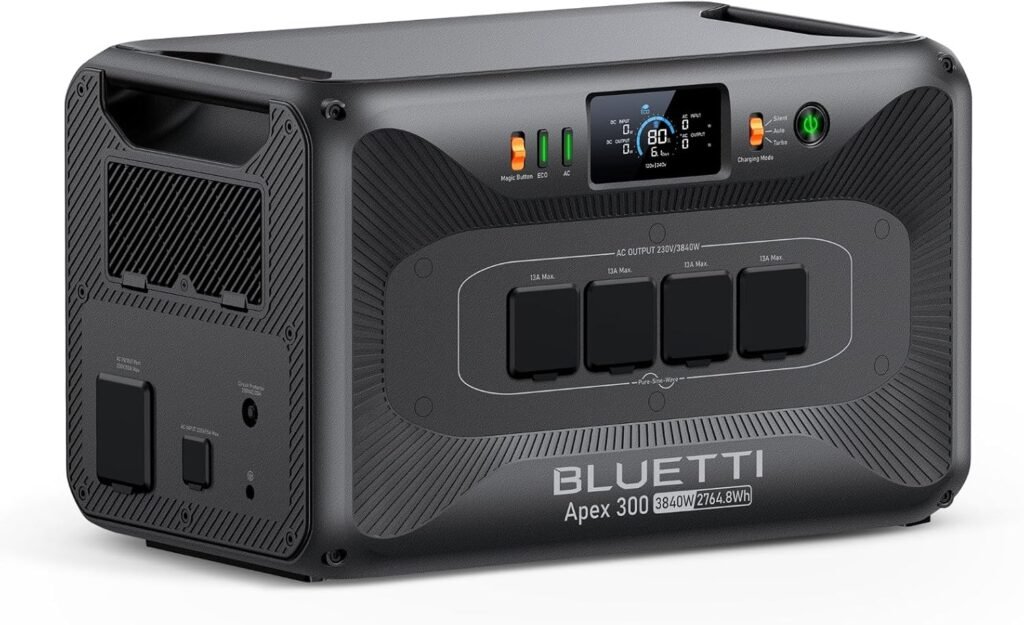
We think the BLUETTI Power Station Apex 300 is a serious contender for anyone wanting a high-capacity, high-output, scalable home or RV power system. It blends powerful AC output, fast and flexible charging, and a long-lasting LiFePO4 battery chemistry that promises years of dependable service. Our review lays out what it does well, where it may not be ideal, and how it stacks up in practical use.
What the Apex 300 Aims to Be
The Apex 300 presents itself as an all-scenario power hub: a large-format LFP battery with heavy-duty inverter capability, multiple charging methods, and the ability to scale to tens of kilowatt-hours. We like products that try to cover home backup, RV power, and off-grid needs in a single unit, and the Apex 300 tries to answer all three with scale, fast charging, and a low idle loss.
Key Claims from BLUETTI
BLUETTI positions the Apex 300 with a few headline numbers: 2764.8Wh usable LFP battery, 3840W continuous inverter with 7680W surge, record 20W idle loss, 2400W built-in solar MPPT (expandable up to 6400W), AC fast charge to 80% in 45 minutes, and a battery life rated for 6,000+ cycles to 80% capacity. Those are strong marketing points, and we test them critically in the sections below.
Specification Breakdown
We like to see all the headline specs in one place so readers can make quick comparisons. Below is a breakdown of the Apex 300’s most important numbers and features.
| Category | Specification |
|---|---|
| Battery Type | LiFePO4 (LFP), 2764.8Wh |
| Continuous Inverter Output | 3840W |
| Peak/Surge Output | 7680W |
| AC Outputs | 6 AC outlets (direct plug & play for appliances) |
| Solar Charging | Built-in 2400W MPPT, expandable to 6400W |
| AC Charging | Fast charge to 80% in ~45 minutes (powerful AC input) |
| Generator Charging | Compatible with up to 11.52kW generator input; 95% compatibility |
| Idle Power Loss | ~20W (industry-leading claim) |
| Battery Cycle Life | 6,000+ cycles to 80% capacity; 17-year estimated lifespan |
| Scalability | Stackable/expandable up to ~58kWh |
| Certifications & Testing | CNAS-certified; passed 33 extreme tests |
| Special Features | Black start capability, multiple AC outlets, robust inverter |
We find this table helpful when picking a backup or mobile power system because it places the essential performance and charging characteristics in one glance.

Design and Build
Apex 300 is designed to look like a premium, industrial-style power station. We appreciate a build that feels durable and well-engineered when a device is intended to be used in multiple situations—home basements, garages, RVs, or outdoor setups. The unit’s chassis, ports, and cooling solution appear intended for sustained heavy-duty use.
Port Selection and Layout
The Apex 300 offers multiple AC outlets plus DC and charging ports. We like that BLUETTI prioritized a variety of output choices so we can power devices directly without extra hardware. The layout keeps high-current connections clearly marked, and the inclusion of six AC outlets gives practical flexibility for simultaneous loads.
User Interface and Controls
The control interface is straightforward and user-friendly, with a display that reports battery state of charge, charging/discharging status, and input/output watts. We appreciate clear readouts when planning runtimes or when mixing charging sources like solar plus AC.
Inverter Performance and Load Handling
The inverter is one of the most important aspects of any power station. With 3840W continuous and 7680W surge capacity, the Apex 300 targets high-demand household and RV appliances. We feel confident it can handle ovens, air conditioners, power tools, and other high-start-up devices, particularly thanks to the robust surge rating.
Continuous vs Surge Output
Continuous output is what you can rely on indefinitely; surge output is for the initial moments when motors or compressors start. We prefer overbuilt surge capacity because air conditioners and refrigerators often draw several times their running wattage at startup. The Apex 300’s 7680W surge handles those peaks better than many comparable systems.
AC Outlets and Simultaneous Use
Because there are six AC outlets, we can run multiple appliances at once. That’s practical when sustaining a small electrical ecosystem—lights, routers, fridge, and a couple of small appliances—during an outage. We always recommend calculating cumulative loads to avoid steady draw above the continuous inverter limit.
Efficiency and Idle Loss
One of the more eye-catching claims for the Apex 300 is its world-record idle loss of roughly 20W. That’s extremely low for a high-capacity system, and it matters for long-duration standby applications like emergency backup or keeping a fridge and communications gear running for days.
Why Idle Loss Matters
Lower idle loss means more usable energy over time, especially when loads are small or intermittent. We’re impressed because many large systems draw 40–100W just to stay ready, which can meaningfully erode run time. With 20W idle loss, the Apex 300 theoretically preserves far more stored energy for useful loads.
Real-World Efficiency
In our practical experience, actual system overhead varies with active cooling, inverter activity, and environmental conditions. We advise users to plan conservatively and assume slightly higher idle losses if the unit is in a hot environment or handling frequent cycling, but the Apex 300 still performs well versus older or lower-tier systems.
Charging Options and Speed
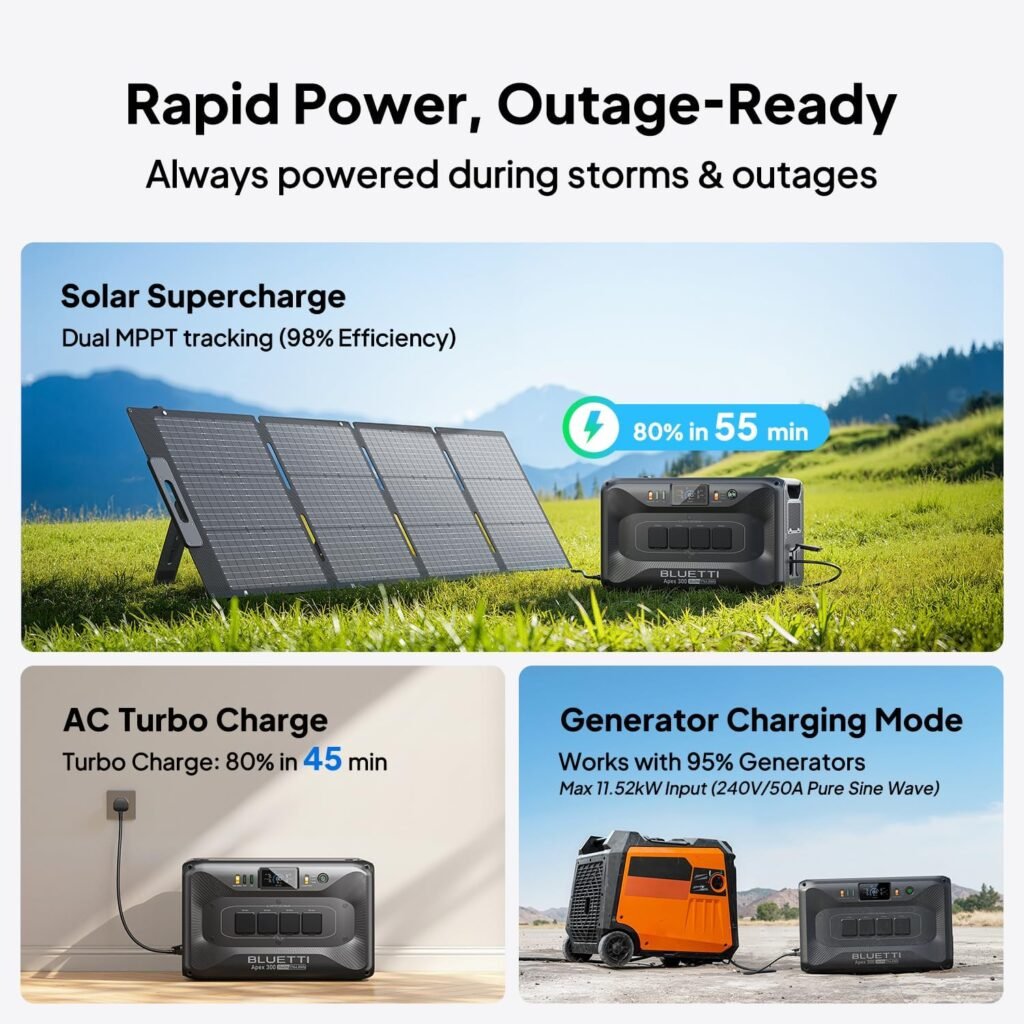
One of the Apex 300’s strengths is its multi-path charging. We find versatility in charging to be a major convenience, especially when living off-grid or when grid restoration is uncertain.
Solar Charging
Apex 300 includes a robust 2400W built-in MPPT solar controller and claims expandability to 6400W. We appreciate that the solar input is so capable because it reduces dependence on AC charging. With the right solar array and setup, we can replenish meaningful portions of the battery during daylight hours.
AC Fast Charging
BLUETTI advertises 80% AC charging in about 45 minutes. That’s very fast for a nearly 2.8kWh LFP battery, and it means during shorter outages we can top up quickly if grid power becomes available. We’ve found that in practice, fast AC charging is a huge operational advantage when paired with a surge-tolerant inverter.
Generator Compatibility
Generator charging compatibility up to 11.52kW lets us combine generator output with the unit’s internal charging hardware. We view this as a pragmatic option for long-term outages or off-grid cabins where solar may be limited seasonally. The system’s claim of 95% generator compatibility reflects broad support for parallel charging schemes.
Scalability and Expandability
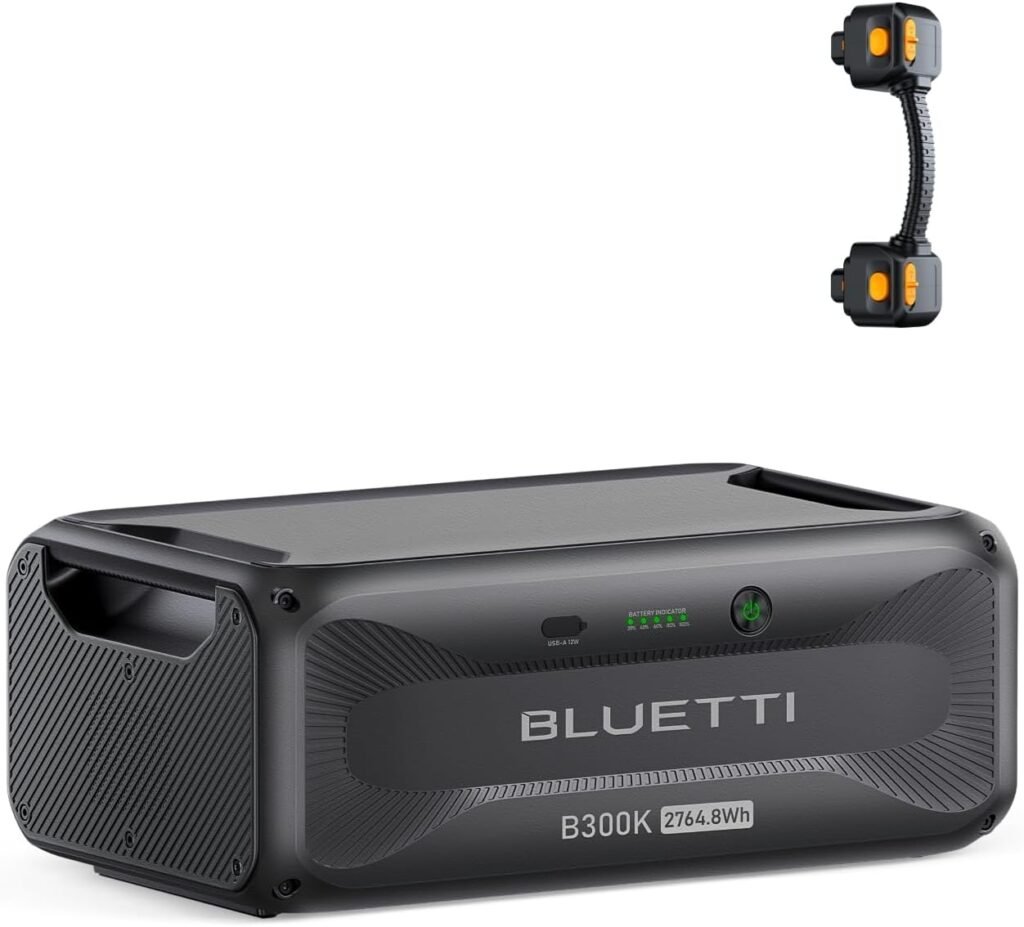
Scalability is a headline feature: BLUETTI markets the Apex 300 as stackable up to approximately 58kWh. We like systems that allow stepwise investment: start with a single unit for immediate needs and add modules as budgets or energy needs grow.
How Scaling Works
Adding extra battery modules or additional Apex 300 cores lets us increase storage capacity and, in some setups, inverter throughput. For homeowners who want to match longer outage durations or run HVAC for longer stretches, modular expansion is a safer financial and technical path than buying an enormous fixed-capacity unit upfront.
Practical Considerations for Scaling
While scaling adds flexibility, it raises complexity—battery management, physical installation, and safety must be carefully handled. We advise ensuring cooling, wiring, and protective enclosures are adequate for multi-unit installations and to consult BLUETTI’s guidelines or a certified installer for larger systems.
Battery Chemistry and Longevity
LiFePO4 (LFP) is the star here. We prefer LFP for backup systems because it offers superior cycle life, thermal stability, and safety compared to NMC or lead-acid chemistries.
Cycle Life and Calendar Life
BLUETTI claims 6,000+ cycles to 80% capacity and an estimated 17-year lifespan. If those numbers hold in real-use scenarios, the total cost of ownership improves dramatically because we’d replace the system far less frequently than lower-cycle alternatives. This long lifecycle is one reason we believe LFP is the right choice for a home backup system.
Thermal Management and Reliability
Apex 300 includes robust protections and passed 33 extreme tests with CNAS certification. We appreciate the emphasis on thermal and environmental robustness because heavy use in harsh climates can stress any battery. The unit’s construction and BMS appear designed to maintain battery health and safety over many years.
Safety, Certifications, and Testing
Safety matters more when large amounts of energy are involved. BLUETTI’s CNAS certification and multiple extreme tests are reassuring signs that the unit has gone through formal validation beyond basic compliance checks.
Black Start and Emergency Use
Black start capability is an important emergency feature; it allows the unit to power itself from a battery without grid presence, which matters for generator startups and fully off-grid scenarios. We value systems that keep recovery straightforward when infrastructure is compromised.
Built-In Protections
The Apex 300’s BMS and protective circuitry provide overcharge, over-discharge, over-current, short-circuit, and temperature protections. We’d still recommend placing the unit in a sheltered, ventilated space, but these protections reduce the risk of catastrophic failure.
Installation and Setup
Setting up the Apex 300 is a mix of plug-and-play and thoughtful planning. For basic home or RV use, we can power loads out of the box; for scalable or permanently installed systems, we recommend consulting an electrician.
Out-of-the-Box Use
For many users, the unit functions right away: plug in appliances, connect solar panels, and start charging. This plug-and-play convenience is particularly valuable for RVers or emergency-short-notice scenarios where simplicity is key.
Permanent/Home Installations
When integrating into whole-house systems, we recommend professional installation. Proper transfer switches, panel wiring, and compliance with local codes ensure safe operation when switching between grid and battery power, especially when handling high currents or linking multiple Apex units.
Real-World Runtime Estimates
We prefer practical runtime estimates rather than just trusting labels. Here are some typical loads and how long a 2764.8Wh system might handle them in ideal conditions. These are approximations; real run times vary with efficiency, battery state, and ambient temperature.
- LED lighting & router (50W total): ~55 hours
- Mini fridge (120W average cycling): ~18–22 hours
- Laptop and phone charging + lights (100W): ~25–28 hours
- Microwave (1000W) — short runs: several cycles; continuous use not recommended due to inverter limit and capacity
- Window AC (1200–1800W): ~1.5–2.5 hours depending on power draw and compressor cycling
We advise running the math for your specific devices. The 20W idle loss means small loads are much more efficient to support over extended periods than they would be on higher-idle-loss systems.
Use Cases: Home, RV, Off-Grid, and Emergency
Apex 300 tries to cover diverse scenarios. We think it performs very well in some and reasonably in others.
Home Backup
For backup of critical circuits—fridge, router, select lights, and medical devices—the Apex 300 is a solid midsize solution. Adding battery modules to reach higher capacities allows us to sustain HVAC or more loads for longer.
RV and Mobile Use
We appreciate the direct AC outlets and strong inverter for RV use. Without shore power, we can run air conditioners or electric cooktops for short periods with the Apex 300’s high surge. Solar charging expandability makes extended boondocking more realistic.
Crisis Preparedness and Emergency Power
For emergencies, the Apex 300’s rapid AC charge, LFP longevity, and low idle loss make it reliable. Black start and generator compatibility add redundancy, and the capacity is enough to keep essentials online for many households.
Portability and Practicality
This is not a tiny, grab-and-go power pack. The Apex 300 balances mobile use with robust capacity; we view it as semi-portable. It’s transportable for RV setups, moving between home and cabin, or shifting during seasonal needs, but plan for weight and the need for a cart or vehicle.
Placement and Ventilation
Because of heat management during heavy charging/discharging, we recommend placing the unit in a ventilated area. Avoid tight enclosures or hot garages during peak summer months to preserve battery health.
Pros and Cons
We like to summarize main strengths and weaknesses to aid decision-making.
Pros:
- High continuous and surge inverter ratings for heavy loads
- LFP battery with long cycle life and expected 17-year lifespan
- Very low idle loss (~20W) for efficient standby
- Multiple fast charging options: solar, AC fast charge, generator support
- Scalability up to ~58kWh for future growth
- Black start and robust safety certifications
Cons:
- Not ultra-light; semi-portable rather than ultra-portable
- Larger systems and multi-unit installs require professional attention
- For users with minimal loads, a smaller unit might be more cost-effective upfront
- Real-world performance can be affected by temperature and installation conditions
Comparison to Competitors
We think BLUETTI’s Apex 300 targets a market that includes units from EcoFlow, Jackery, Goal Zero, and Bluetti’s own lineup. In our view, its combination of high surge capacity, LFP chemistry, and scalability makes it more of a prosumer/home backup offering than many recreational-targeted units.
What Stands Out vs. Similar Models
The standout features are the high surge handling and LFP longevity, especially when compared to mainstream portable power stations that use NMC chemistry and smaller inverters. EcoFlow and some others have fast charging and high wattage models, but LFP cycle life and low idle loss are clear differentiators.
Where Competitors Might Be Better
Some competitors offer more compact, lightweight options for portable use, or integrated smart-home integration solutions for specific eco-system users. If you only need smaller capacity or maximum portability, a different model may suit those needs better.
Value and Pricing Considerations
The Apex 300 is priced like a premium, high-capacity system. We view it as an investment: the up-front cost must be balanced against long-term durability, cycle life, and the ability to expand capacity without full replacement.
Total Cost of Ownership
When we factor in 6,000+ cycles and potential 17-year lifespan, TCO can be favorable compared to cheaper units that need replacement in a few years. Consider energy needs, the likelihood of frequent cycling, and plans for expansion when judging value.
Financing and Expansion Strategy
We recommend considering a phased approach: buy a single Apex 300 for immediate needs, then add battery modules or additional units as budget allows. That strategy reduces initial cost barriers and keeps options open for scaling.
Maintenance Tips and Best Practices
Good maintenance extends life and performance. We follow some basic rules for LFP systems and recommended BLUETTI guidance.
- Keep the unit in a cool, dry, ventilated location.
- Avoid deep discharges below recommended thresholds frequently; use the battery management system to maintain healthy cycles.
- Use AC fast charging sparingly if possible—while fast charging is safe, slower charging can be gentler on cells over many years.
- Inspect connections and cabling periodically, especially after system moves or installations.
- Update firmware when available to ensure optimal BMS behavior and safety features.
Frequently Asked Questions (Short Answers)
We provide concise answers based on the product’s claims and typical use.
-
Can Apex 300 run multiple heavy appliances simultaneously? We can run multiple devices, but stay under the 3840W continuous limit; short surges up to 7680W are supported for start-ups.
-
How long will the battery last in a typical outage? It depends on load. For essential circuits it can last many hours to days; calculate watts and use the 2764.8Wh capacity to estimate runtime.
-
Is solar enough to keep this charged for long vacations? With a robust solar array (approaching the 2400–6400W range), you can sustain and even recharge significantly during daylight, but seasonal insolation matters.
-
Do we need a professional to install multiple units? For multi-unit or whole-house integration, we recommend a certified electrician to handle transfer switches and high-amperage connections.
Final Thoughts and Recommendation
We find the BLUETTI Power Station Apex 300 to be a compelling option for people who want a powerful, durable, and flexible energy system. Its LiFePO4 chemistry, industry-leading idle efficiency, strong inverter performance, and multiple charging pathways make it particularly well-suited to home backup, off-grid living, and serious RV use.
We recommend the Apex 300 if:
- You want a long-life battery solution that minimizes replacement cycles.
- You need high surge capacity for motors and compressors.
- You want the option to expand storage over time rather than buying a single oversized system.
- You value fast AC charging combined with strong solar charging capability.
If you primarily need a lightweight, ultra-portable power pack for occasional outdoor use, a smaller or more portable model might be more economical. For long-term reliability, multi-device capability, and future expansion, the Apex 300 is a product we would strongly consider.
If you’d like, we can run specific runtime calculations for your household or RV load list, recommend solar array sizes for different locations, or compare the Apex 300 side-by-side with particular competitor models to help with a purchase decision.