Ad Blocker Detected
Our website is made possible by displaying online advertisements to our visitors. Please consider supporting us by disabling your ad blocker.
Disclosure: As an Amazon Associate, I earn from qualifying purchases.
Can this single unit realistically cover our home backup, camping, motorhome and travel power needs without compromise?

Quick verdict
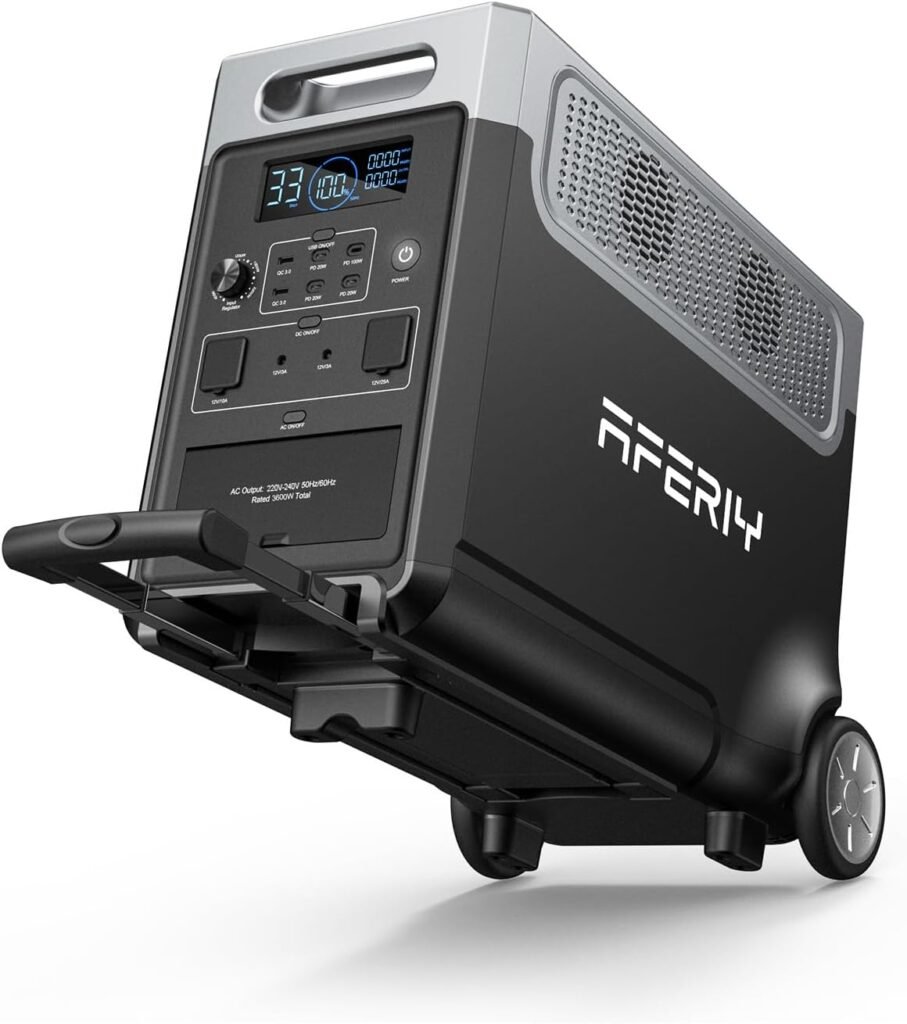
We find the AFERIY 3600W Portable Power Station 3840Wh LiFePO4 with UPS 3 x 230V AC Output 3600W (7200W Peak), 2200W Solar Generator, Fast Charging for Home, Camping, Motorhome and Travel to be a seriously capable solution for users who need large portable capacity with fast recharging and robust safety. It blends a long-lasting LiFePO4 battery chemistry with high inverter output and UPS functionality, which makes it suitable for both everyday portable use and mission-critical backup use.
Key specifications
We like to have a clear snapshot before getting into details, so here is a compact breakdown of the most important specs. These reflect the information provided by the manufacturer and are meant to help us compare at a glance.
| Specification | Detail |
|---|---|
| Battery chemistry | LiFePO4 (LFP) |
| Nominal capacity | 3840 Wh |
| Expandable capacity | Up to 11,520 Wh (connect two additional batteries) |
| Continuous inverter output | 3600 W |
| Peak inverter output | 7200 W |
| AC outputs | 3 x 230V AC |
| Simultaneous output capacity | Powers up to 13 devices |
| Fast charge time | 0–99% in 1.5 hours (with fast charging) |
| Solar input | Up to 2000 W (manufacturer info) |
| AC + solar combined charging | Supports simultaneous high-rate charging (manufacturer info) |
| UPS switch time | ~10 ms |
| Cycle life | >3500 cycles with >85% capacity retention (manufacturer claim) |
| Certifications | UL, CE, FCC, RoHS, TELEC |
| Included accessories | AC charging cable, solar cable, instruction manual, protective cover |
What we like
We appreciate several design choices that make this unit stand out. The LiFePO4 chemistry and the long cycle life mean we can expect many years of heavy use without dramatic capacity loss. Fast charging capability and UPS function add real-world convenience for both home backup and travel.
We also value the modular capacity expansion option. Being able to increase total energy to roughly 11.5 kWh by adding two extra batteries offers flexibility that few standalone power stations provide at this level.
What could be improved
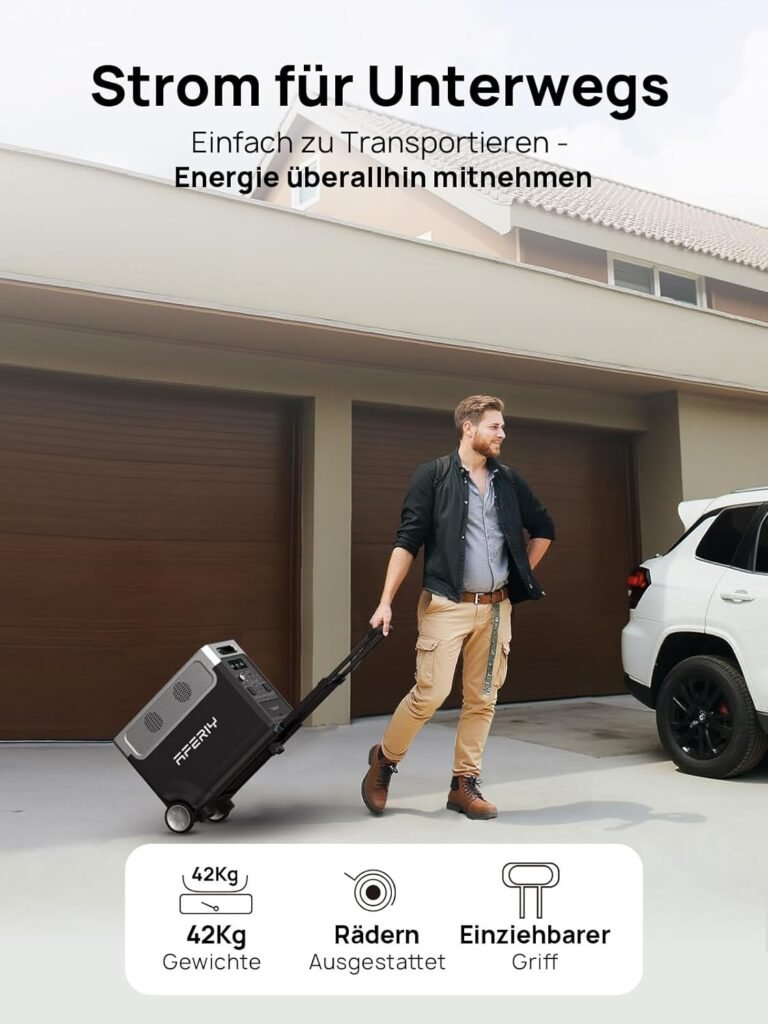
No product is perfect, and we think there are areas where buyers should keep expectations realistic. A power station with this capacity will be physically substantial; portability will be relative — ideal for motorhomes and basecamp-style camping rather than ultra-light backpacking.
We would also like clearer published details about exact weights, dimensions, and the mechanics of connecting the expansion batteries (cable types, connectors, and whether the extra batteries are sold separately or bundled). Those specifics matter when planning installation and transport.

Battery and chemistry: why LiFePO4 matters
We prefer LiFePO4 for larger, long-term energy storage because it offers superior thermal and chemical stability compared with other lithium chemistries. The product claims that the battery retains over 85% capacity after 3500 charge-discharge cycles and can last up to around 10 years in typical use.
We interpret those numbers as meaning this unit is aimed at users who expect to charge and discharge regularly without paying the replacement cost every few years. That makes the AFERIY model attractive to homeowners seeking a reliable emergency backup as well as frequent travelers who want durable hardware.
Capacity expansion: how it changes our use cases
The ability to extend capacity from 3840 Wh to 11,520 Wh by connecting two extra batteries is a key selling point. We can scale the system to fit longer off-grid stays, heavier appliance loads, or deeper redundancy in a home backup scenario.
We recommend confirming how the expansion batteries are connected (parallel or proprietary bus) and if they ship separately. We should also verify whether the added batteries are hot-swappable and whether the inverter settings need reconfiguration when capacity changes.
Expansion considerations
We should think about where we’ll store the extra batteries and how we’ll move them; each battery module will add significant weight and bulk. We should also make sure our charger or solar array can reasonably recharge the larger combined capacity in acceptable timeframes if we plan to rely on solar.
Inverter and output performance
The 3600W continuous inverter rating with 7200W peak gives us confidence that this unit will handle high-startup loads such as pumps, power tools, and some larger appliances. The availability of three 230V AC outlets allows multiple mains devices to run at once.
We should be mindful of continuous vs. peak ratings: heavy resistive loads or sustained motor loads close to 3600W will drain the battery quickly, and the system’s cooling will be taxed. For appliances with high startup draws (e.g., refrigerators, freezers, pumps), the 7200W peak is helpful to manage initial surges, but we should watch total runtime and cumulative draw across outlets.
Simultaneous outputs
The manufacturer states the unit can power up to 13 devices at once. That typically includes USB ports, DC outputs and AC outlets combined. We should plan our load distribution to avoid hitting the continuous inverter limit, and monitor device currents if we need full-time reliability.
Charging options and times
One of the most compelling features is the aggressive charging profile. The AFERIY unit claims a 0–99% recharge in just 1.5 hours using fast charging, and supports multiple charging modes: AC wall socket, solar panels, generator, and car cigarette lighter.
We particularly value the ability to combine AC and solar charging for faster replenishment and the manufacturer’s note that the unit can accept large solar inputs (up to about 2000 W). That gives us flexibility during longer outings or when we need to recover capacity quickly between uses.
Charging modes: practical guide
We summarize the common charging methods and what to expect:
| Charging mode | Typical input power (manufacturer info) | Notes |
|---|---|---|
| AC wall socket | Fast charging mode — part of the 1.5-hour claim | Requires standard AC cable included; no adapter needed |
| Solar panel | Up to ~2000 W (manufacturer info) | Useful off-grid; actual rate depends on panel array and sunlight |
| Generator | Varies by generator rating | Good for remote situations when AC power is not available |
| Car cigarette lighter | Lower-power option | Useful for slow trickle charging while driving |
We should note that the fastest recharge will use AC or a combination of AC plus solar if the unit supports simultaneous inputs at high power. Actual real-world charging times depend on available input power and environmental conditions.
UPS and reliability for critical loads
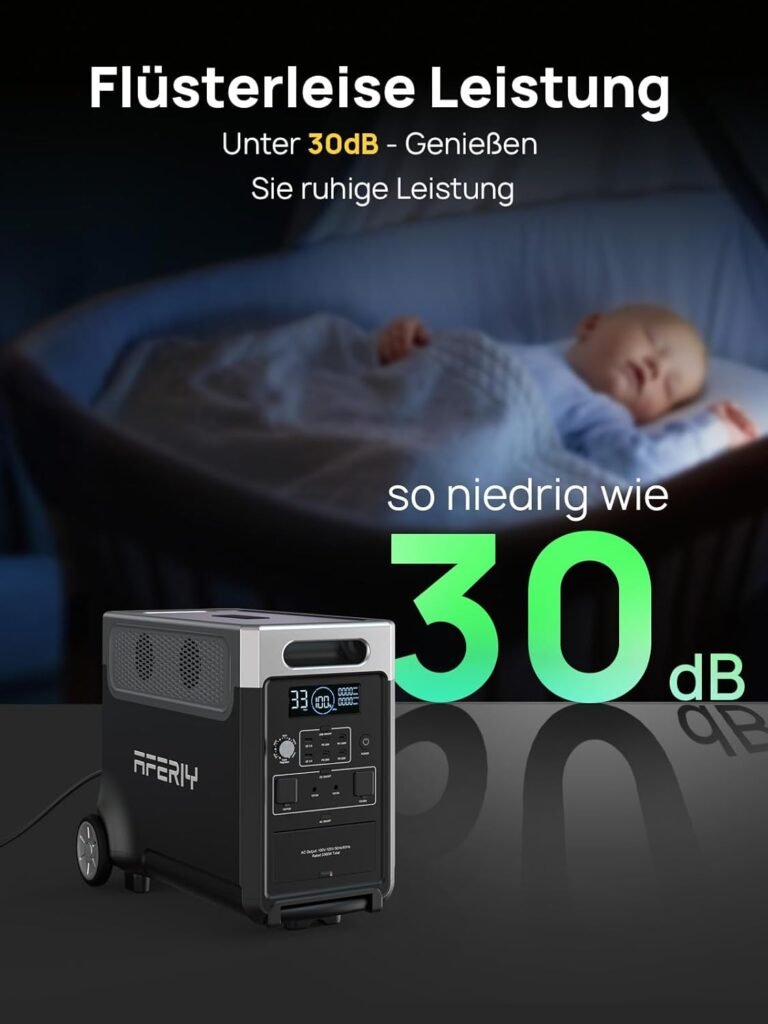
An important advantage for home use is the UPS capability. The product claims automatic switching into UPS mode within 10 ms upon sudden power failure or voltage issues, which is fast enough to keep most computers and routers running without interruption.
We like that this function protects data and prevents abrupt shutdowns of sensitive electronics. For anyone running a small server, home office setup, or medical device, this rapid switchover can be critical. We should still consider a full redundancy plan for mission-critical systems, but this unit adds strong protection at the device level.
Safety systems and certifications
Safety is a top priority for us when evaluating high-capacity batteries. The AFERIY station uses LiFePO4 cells, which are known for higher thermal stability, and it includes a Battery Management System (BMS) that monitors and protects against overheating, low temperatures, overloads and short circuits.
We also appreciate that the product lists multiple certifications (UL, CE, FCC, RoHS, TELEC), which indicates that the manufacturer has pursued recognized safety and compliance pathways. That gives us greater confidence deploying the unit in home and vehicle environments.
Portability and build quality
While marketed as portable, a 3840 Wh LiFePO4 unit is naturally heavier and larger than smaller consumer power stations. We see this as a trade-off: much more usable energy for greater weight and bulk.
We like that a protective cover is included (dustproof, waterproof and UV-resistant), which helps when storing the unit in motorhomes or outdoor setups. We recommend planning transport with suitable lifting assistance or a wheeled trolley if we intend to move the unit regularly.
In the field: practical runtimes for common appliances
We find it helpful to look at estimated runtimes for common devices so we can plan usage. The following table uses the nominal 3840 Wh capacity. To be conservative, we account for inverter and real-world losses by using an approximate usable capacity of 90% of nominal (around 3456 Wh). These are estimates, and actual runtimes will vary by appliance efficiency and startup loads.
| Appliance | Typical power draw (W) | Estimated runtime on 3840 Wh (approx.) |
|---|---|---|
| LED laptop charger (50 W) | 50 | ~69 hours |
| Smartphone (10 W) | 10 | ~345 hours |
| Wi-Fi router (10–20 W) | 15 | ~230 hours (~9.5 days) |
| LED lighting (10 bulbs × 10 W) | 100 | ~34.5 hours |
| Mini fridge (average) | 100–150 (compressor cycles) | 23–34 hours (duty cycle dependent) |
| Microwave (800 W) | 800 | ~4.3 hours (intermittent use) |
| Electric kettle (1500–2000 W) | 1500 | ~2.3 hours |
| Hair dryer (1800–2000 W) | 1800 | ~1.9 hours |
| Portable heater (1000 W) | 1000 | ~3.4 hours |
| Coffee maker (900 W) | 900 | ~3.8 hours |
| Electric saw / power tool (1200 W) | 1200 | ~2.9 hours |
| Sump pump (1000–1500 W start surge) | Depends on duty cycle | Short runs; start surge handled by peak rating |
We should emphasize that motor-driven devices and compressors often have high startup currents. The 7200 W peak capacity helps with those initial surges, but sustained operation near the continuous limit will reduce runtime quickly.
Solar charging and off-grid use
For extended off-grid stays, pairing this power station with a sizable solar array lets us maintain usable energy without relying on shore power or a generator. The unit’s stated solar input support up to about 2000 W is generous and allows faster daytime replenishment.
We recommend sizing solar arrays to match usage patterns. For instance, if we consume 2000 Wh per day, a 1000–1500 W solar setup in good sunlight could comfortably replace that energy over the day. If we expect heavy usage, a larger array and energy storage (via expansion batteries) will give us more resilience.
MPPT and charge management
The product details don’t explicitly state the MPPT controller type, but modern units of this class typically include MPPT for efficient solar charging. We advise confirming the exact solar input characteristics and whether external panels require special connectors or an adapter.
Setup, first use and practical tips
We recommend the following steps when we first receive the AFERIY unit:
- Read the instruction manual for model-specific safety and connection instructions. Even if we’re familiar with power stations, manufacturer guidance is important.
- Fully charge the unit using AC before first use if we can. That helps balance the cells and verifies charging functionality.
- If we intend to add expansion batteries, confirm the correct order and cable connections and test the combined setup in a controlled environment.
- For UPS use, test with a non-critical device first to verify switching behavior in our environment and to measure true switchover times and behavior with our equipment.
- Label fuses, breakers or important cables if we plan to integrate the unit into a vehicle or home circuit.
We also suggest keeping the included protective cover and storing the unit in a dry, ventilated location away from direct heat sources.
Maintenance and long-term care
To maximize lifespan we plan to:
- Avoid exposing the battery to extreme temperatures for extended periods.
- Store the unit partially charged (manufacturer guidance often suggests ~50–70% for long-term storage) and top up periodically if not used.
- Use proper solar panel cabling and avoid loose connections.
- Keep vents and cooling areas clear of debris to preserve inverter cooling performance.
- Monitor firmware updates or manufacturer notices if the unit supports firmware upgrades.
Regularly cycling the battery is fine—LiFePO4 is built for it—but we still avoid sitting at 0% for long periods whenever possible.
Accessories and what’s in the box
We appreciate that the manufacturer includes a number of useful accessories to start using the product immediately. The package includes:
- Portable charging station (main unit)
- AC charging cable
- Solar cable
- Instruction manual
- Protective cover (dustproof, waterproof and UV-resistant)
We should verify whether expansion batteries are sold separately and whether additional cables or connectors are needed for specific solar panel models or vehicle setups.
Comparison to other approaches
When comparing this large LiFePO4 power station to alternatives, we focus on three factors: usable capacity per weight, cycle life, and recharge speed. Compared to smaller consumer units, this model provides far more usable energy and much longer cycle life thanks to LiFePO4. Compared to fixed home ESS (energy storage systems), it offers portability and faster deployment but may lack deep integration features such as whole-home automatic transfer switches without additional hardware.
We like that the unit bridges the gap for people who want near-home-backup reliability without committing to permanent installation.
Who should consider this unit
We think this power station suits several user profiles:
- Homeowners who want a portable, long-life backup that can keep critical devices running during outages.
- Overlanders, motorhome owners and large-camp users who need high capacity and strong inverter output.
- Professionals who need reliable UPS capability for small server systems, audio/video rigs or field-based workshops.
- People who want to scale storage over time via additional batteries rather than replace the entire unit.
We do not recommend this for ultralight backpackers or anyone who needs a power station they will carry long distances on foot.
Pros and cons (at-a-glance)
We like to summarize strengths and trade-offs so we can make quick decisions.
Pros:
- Large usable capacity (3840 Wh) with option to expand to ~11.5 kWh.
- LiFePO4 chemistry for long cycle life and thermal stability.
- High continuous inverter power (3600 W) and high peak capability (7200 W).
- Fast charging capability (manufacturer claims 0–99% in 1.5 hours).
- UPS function with ~10 ms switchover for protecting sensitive devices.
- Multiple charging modes including high solar input support.
- Several safety certifications and a protective cover included.
Cons:
- Likely heavy and bulky relative to smaller portable units (not ideal for long-distance carrying).
- Expansion batteries and some connectivity details may be sold separately; planning required.
- Manufacturer-provided charging claims depend on input sources and conditions; real-world performance varies.
- Some mechanical and installation specifics are not clearly stated in the basic product blurb.
Final recommendation
We conclude that the AFERIY 3600W Portable Power Station 3840Wh LiFePO4 with UPS is a compelling choice for anyone needing high-capacity, long-lived portable energy with fast recharge and UPS capabilities. It suits our needs if we prioritize durable battery chemistry, high inverter power and capacity scalability. Before we buy, we recommend confirming the weight/dimensions, expansion battery purchase options, and exact solar input connector requirements to ensure the system fits our intended use.
Frequently asked questions (FAQs)
Q: How long will the battery last before it needs replacement? A: The manufacturer claims more than 3500 cycles with over 85% capacity retention, which translates into multiple years of regular use—often up to around 10 years depending on duty cycle and maintenance.
Q: Can we connect solar panels directly to the unit? A: Yes, the product supports solar charging and includes a solar cable. The manufacturer mentions support up to about 2000 W of solar input. We should verify connector compatibility and whether an MPPT controller is internally managed.
Q: Will it run a refrigerator or a sump pump? A: Yes — the 7200 W peak helps with startup surges and the 3600 W continuous output handles steady operation. Runtime depends on the appliance’s duty cycle; refrigerators and pumps often run intermittently, extending runtime beyond continuous running calculations.
Q: Is the UPS function reliable for protecting computers? A: The UPS switches to battery power within approximately 10 ms, which is typically fast enough for most computers, routers and hard drives to avoid downtime or data loss. We recommend testing with our own equipment to confirm behavior.
Q: Are the expansion batteries included? A: The base unit provides 3840 Wh. The option to expand to about 11,520 Wh is noted, but expansion batteries are typically additional purchases. Confirm with the retailer or manufacturer whether expansion packs are included or sold separately.
Q: Is the unit safe for indoor use? A: The LiFePO4 chemistry and BMS contribute to safety, and the unit holds multiple certifications (UL, CE, FCC, RoHS, TELEC). We still advise using it in a ventilated space and following manufacturer safety guidelines.
Q: Can we charge from a car while driving? A: The product lists a car cigarette lighter charging mode, which will be slower than AC or large solar arrays but useful for trickle charging while driving. For fast charging, AC or a large solar array is preferable.
Q: Does the product need regular firmware updates? A: The product information does not indicate firmware update procedures. If firmware updates exist, the manufacturer manual or support portal should provide instructions.
We hope this review helps us decide if the AFERIY 3600W Portable Power Station 3840Wh LiFePO4 with UPS 3 x 230V AC Output 3600W (7200W Peak), 2200W Solar Generator, Fast Charging for Home, Camping, Motorhome and Travel is the right fit for our needs. If we plan to use it for a specific application, we can walk through that scenario together and calculate more precise runtimes and solar sizing.