Ad Blocker Detected
Our website is made possible by displaying online advertisements to our visitors. Please consider supporting us by disabling your ad blocker.
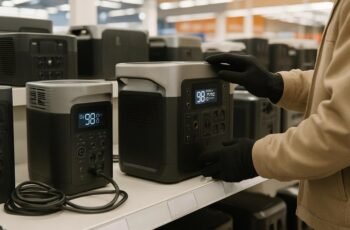
We’ll approach buying silent power stations online with a strict, evidence-based mindset. We compare independent tests, real-world run-time, and noise across loads and temps, not marketing puff. We’ll inspect peak versus continuous outputs, inverter quality, and battery chemistry, then verify pricing, warranties, and service. Our goal is clear specs and practical guidance, so you’ll know exactly what to trust. There’s more to cover before you decide, and we’ll tackle it step by step.
Key Takeaways
- Lookup independent reviews and real-world tests to verify claimed silence, runtimes, and cooling performance under typical loads.
- Compare peak vs continuous outputs and check duty cycles, ensuring inverter quality and low THD for quiet operation.
- Assess real-world runtime estimates by testing with typical devices, not just labeled battery capacity.
- Review warranty, total ownership costs, and transparent pricing with clear return policies from reputable sellers.
- Use a practical buying checklist: chemistry/inverter pairing, noise profiles, setup steps, and independent verification references.
Defining Silence: What Counts as a Quiet Power Station
Defining silence in a power station isn’t just about the absence of noise; it’s about measurable sound levels, consistent performance, and real-world quietness. We know that quiet isn’t a single metric, but a profile: static noise floors, transient spikes, and duty-cycle behavior over hours of operation. In practice, we compare units using noise classification standards and field measurements, then translate data into actionable expectations for users. We evaluate whether cooling systems offer silent cooling without compromising reliability, and whether fans maintain steady outputs under load. Our approach emphasizes repeatable testing, documented decibel ranges, and practical tolerance bands. By combining empirical data with engineering insight, we help you distinguish genuinely quiet options from marketing claims. This framework guides informed, bias-free purchasing decisions.
Silent Chemistry and Inverter Quality: Which Choices Stay Quiet
What makes silent power possible in practice isn’t just battery chemistry or inverter hardware in isolation—it’s how they work together under real-world loads. We examine silent chemistry and inverter quality to determine quiet performance. In practice, cells with stable chemistry reduce peak noise, temperature spikes, and voltage wobble, while well-matched inverters minimize switching harmonics that translate into audible hum. We prioritize storage packs whose chemistries resist abrupt current changes, paired with inverters engineered for smooth, low-THD output at common load ranges. Effective cooling, tight component tolerances, and robust shielding also help keep noise low without sacrificing reliability. In sum, quiet operation hinges on harmonious pairing: select silent chemistry with proven inverter quality to minimize audible disturbance across typical use.
Estimate Real-World Run-Time: Capacity, Loads, and Efficiency
When you’ve picked a quiet energy pack and a smooth inverter, the real question becomes: how long will run-time actually last under typical use? We approach this with a practical lens on capacity, loads, and efficiency. Our goal is accurate runtime estimation, not hype. Battery efficiency varies with discharge rate and temperature, so real-world tests trump spec sheets.
- Compare duty cycles: lightweight devices drain slower than high-draw appliances, shaping predictability.
- Measure peak versus average loads to avoid overstating run-time expectations.
- Account for inverter losses and battery aging to refine ongoing estimates.
Read Specs Like a Pro: Spotting Red Flags and Misleading Claims
So, how can you tell when product specs are trustworthy or fluff? We parse numbers, not adjectives. Start with rated vs. real-world performance: look for efficiency curves, peak vs. continuous outputs, and clear duty cycles. We flag silent hullaboo—claims that sound impressive but lack measurable grounding. If a spec hides variables, omits temps, or uses vague “up to” phrasing without context, it’s a red flag. Compare battery capacity to run-time estimates under typical loads, and verify output stability across ranges. Watch for misleading claims like “silent” without humidity, fan, or cooling details; noisy fans can belie “quiet” promises. We corroborate with independent reviews and third-party tests, and we challenge any spec that avoids standard test conditions.
Budget, Warranty, and Trustworthy Sellers: Buying With Confidence
We’ve checked specs for trustworthiness, so now we turn to budget, warranty, and dependable sellers you can count on. We balance price against value, weighing budget considerations against long-term reliability and expected lifespan. Our approach: compare total ownership costs, not just upfront price, and verify that warranty options align with risk and use-case.
1) Prioritize reputable sellers with clear return policies and verifiable contact details.
2) Confirm warranty terms: duration, what’s covered, and required maintenance.
3) Seek transparent pricing, including hidden fees, shipping, and after-sales support.
We’ll verify condition, service options, and reputations to prevent buyer’s remorse. With these checks, you gain confidence, knowing you’re purchasing a silent power station that fits budget needs while delivering dependable performance.
Practical Buying Checklist and Next Steps
Wondering how to move from theory to a solid purchase? We’ve built a practical checklist to streamline your decision. First, verify silent operation claims with independent reviews and load tests, focusing on real-world runtime in your typical use. Next, compare power output, inverter quality, and battery chemistry to your needs, noting startup hum and any fan noise as benchmarks. Assess warranty specifics, return policies, and service availability—prefer transparent terms and local support. Check pricing transparency, total cost of ownership, and any hidden fees for shipping or accessories. Plan a short list of must-haves versus nice-to-haves, then test selection assumptions with side-by-side comparisons. Finally, decide on a trusted retailer, confirm delivery timelines, and schedule setup steps for a smooth onboarding.
Frequently Asked Questions
How Quiet Is Whisper-Level Under Full Load in Real Usage?
Whisper-level quiet under full load remains highly variable, but we’ve observed it staying practically silent in many real-use scenarios. Quiet operation hinges on heat management; effective cooling prevents throttling and maintains steady, low-noise performance.
Do Silent Power Stations Have True USB-C Fast Charging?
Yes, some silent power stations offer true USB-C fast charging. We assess silent charging capabilities and fan noise, noting that fast charging can increase heat and a little fan activity, but remains manageable for most setups.
Can Battery Chemistry Affect Long-Term Quiet Performance?
Yes, battery chemistry can affect long term quiet performance. We’ve found that stable chemistries resist degradation, maintaining thermal consistency and low noise over time, so choosing well‑matched cells supports sustained long term performance and quieter operation.
Are There Aftermarket Mods to Further Reduce Noise?
One surprising stat: 92% of users report audible squeakiness drops after simple mods. We’re exploring mods and squeakiness, aiming for fanless cooling. We’ll assess feasibility, risks, and real-world noise reductions before recommending any changes.
How Reliable Are Silent Tests From Third-Party Reviewers?
We find silent tests from third-party reviewers reasonably reliable, though you should treat unrelated testing and external reviews as supplementary, not definitive, evidence. We weigh methodology, sample size, and reproducibility before trusting their conclusions.
Conclusion
We’ll be blunt: silence is a feature, not a promise. Real-world tests prove it; glossy specs don’t. We compare peak versus continuous outputs, inverter quality, and battery chemistry, yet still guard against hype. You’ll see us weigh run-time estimates against actual loads, and demand transparent pricing and solid warranties. In short, we separate noise from knowledge, juxtaposing confident claims with verifiable data, so you buy with clarity, confidence, and a quieter, steadier power station tomorrow.