Ad Blocker Detected
Our website is made possible by displaying online advertisements to our visitors. Please consider supporting us by disabling your ad blocker.
Disclosure: As an Amazon Associate, I earn from qualifying purchases.
? Are we ready to see whether the OSCAL PowerMax 3600 Portable Solar Electric Generator 3600W is the backup power solution we need?

Overview of the OSCAL PowerMax 3600 Portable Solar Electric Generator 3600W, Expandable up to 57.6 kWh
We’ll summarize what this unit brings to the table so we can quickly orient ourselves. This portable power station is a heavy-duty LiFePO4-based system with 3600Wh capacity, 3600W continuous output (7200W surge), multiple ports, UPS capability, and app control — aimed at home emergency use, outdoor activities, and on-site work.
Who this unit is for
We think this is aimed at households that want robust emergency backup without relying entirely on a fixed generator, tech-savvy campers who need reliable off-grid power, and professionals wanting dependable portable energy for tools and devices. It’s a middle ground between lightweight power stations and full home backup systems.
Key specifications
We’ll lay out the headline specs in a compact table to make everything easy to scan. This helps us compare features and plan for real-world needs.
| Specification | Detail |
|---|---|
| Battery Capacity | 3600 Wh (LiFePO4) |
| Continuous AC Output | 3600 W |
| Peak/Surge Output | 7200 W |
| AC Outputs | 4 AC sockets (3600W combined) |
| Total Sockets Listed | 14 sockets (mix of AC, USB, DC, etc.) |
| Fast AC Input / Bi-directional Inverter | 2200 W |
| Max Solar Input | 1600 W |
| Combined Fast Charging (AC + Solar) | 0–100% in ~1.44 hours (manufacturer) |
| AC-only Fast Charging | 0–100% in ~1.96 hours (manufacturer) |
| Battery Type | LiFePO4 (LFP) with advanced BMS |
| Cycle Life | Up to 3500 cycles to significant capacity, service life quoted up to ~25 years |
| UPS Transfer Time | 5–8 ms |
| App Control | OSCAL app (monitoring & remote control) |
| Safety Protections | Overload, over-discharge, over-voltage, over-current, short circuit, temperature protection |
| Warranty | 2 years |
| In the box | Power station, AC charging cable, car charging cable, solar charging cable, user manual, warranty card |
We’ll keep referring back to these specs while discussing performance and use cases.
Design and build quality
We’ll describe the physical feel and construction so we can judge durability and ergonomics. The PowerMax 3600 presents itself as a substantial portable station with a robust enclosure, likely aimed at balancing durability and transportability.
User interface and controls
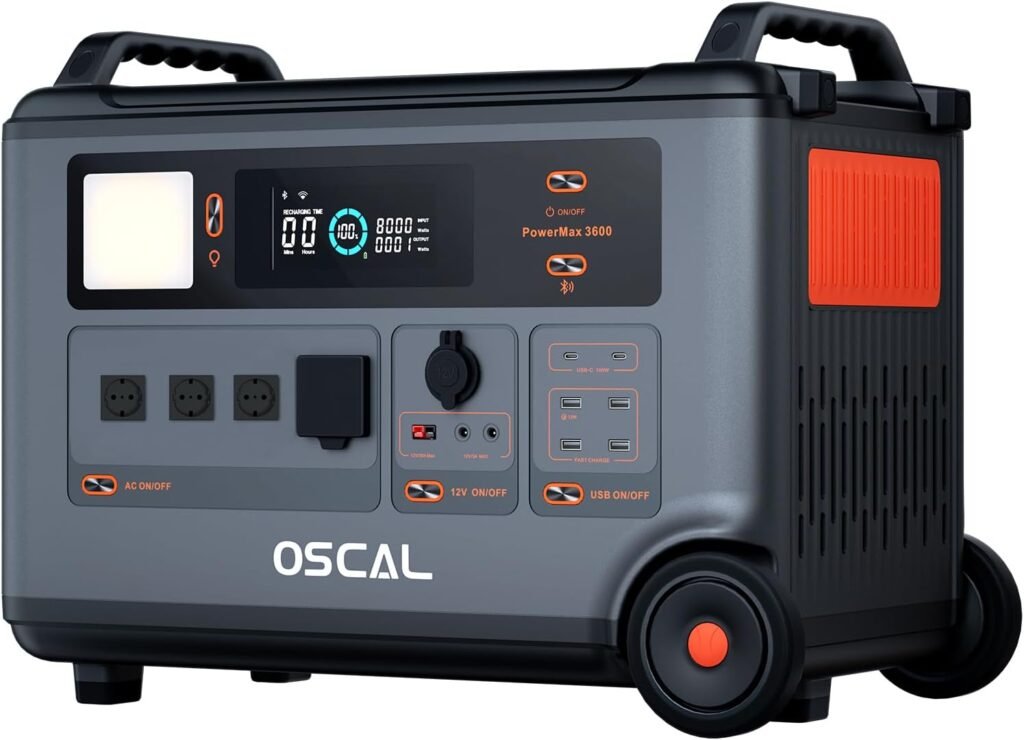
We like that there’s a digital display and tactile buttons for mode switching, which makes it straightforward to check status at a glance. The OSCAL app provides a secondary, remote-friendly control interface for monitoring wattage, battery percentage, and changing settings.
Port layout and accessibility
We find the arrangement of AC sockets, USB ports, and DC inputs well thought out so multiple devices can be plugged in simultaneously without blocking each other. The presence of four AC sockets is particularly useful for home use, while the additional USB/12V outputs account for smaller electronics.

Battery chemistry, management, and longevity
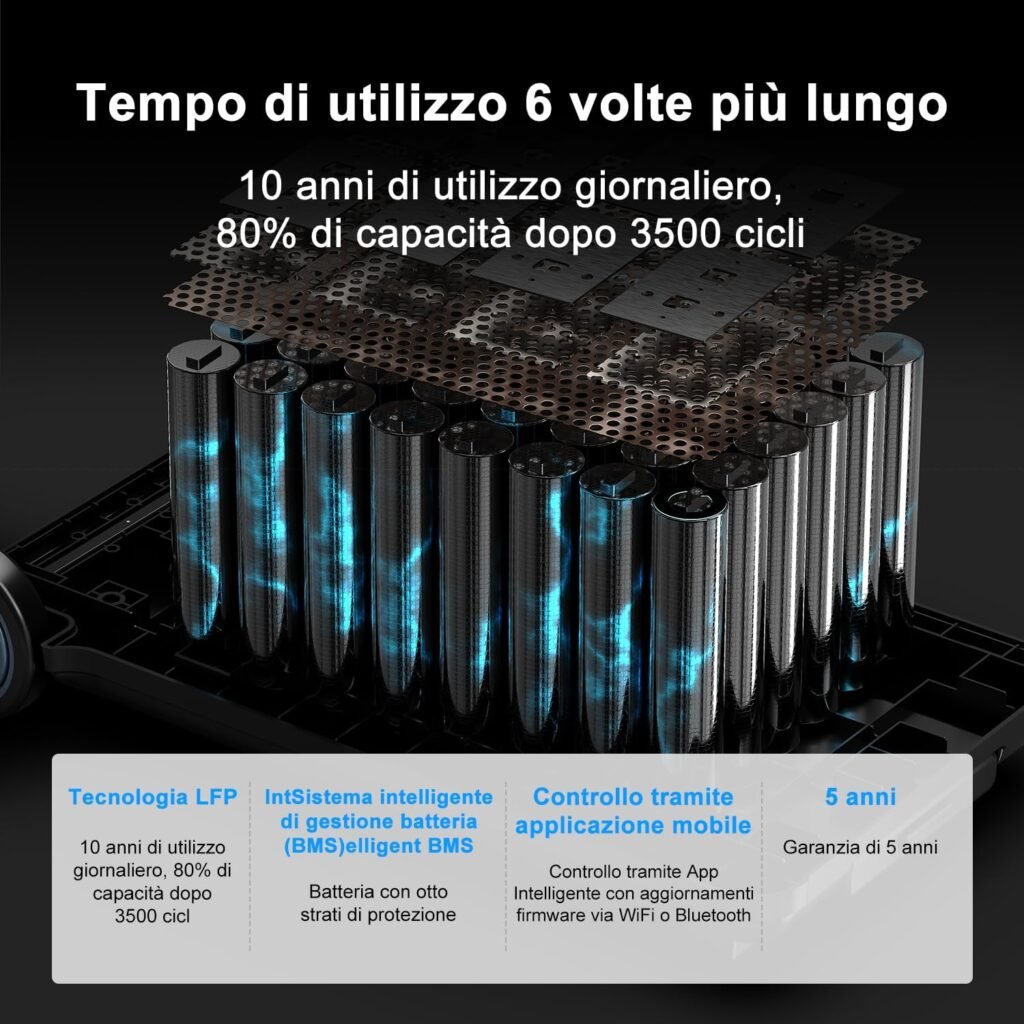
We’ll explain the LiFePO4 chemistry benefits and how the integrated BMS matters for long-term ownership. LiFePO4 is the preferred chemistry for long life, thermal stability, and cycle durability, making it a strong choice for a device like this.
Cycle life and long-term expectations
Manufacturer claims up to 3500 charge/discharge cycles and a potential service life up to 25 years. We interpret this as meaning that with regular but not daily deep cycling, the unit can last many years — several orders of magnitude longer than typical lithium-ion (NMC) based units.
Battery management system (BMS)
We appreciate the multi-level protection built into the BMS: overload, over-discharge, over-voltage, over-current, short-circuit, and temperature safeguards. This combination reduces risk during heavy loads, variable solar input, or when using the unit in extreme environments.
Charging performance and methods
We’ll cover how fast the unit charges, the inputs you can use, and what to expect in mixed charging scenarios. Fast charging is one of the PowerMax 3600’s headline features.
AC charging and bi-directional inverter
Using the 2200W AC input (via the bi-directional inverter), the manufacturer says you can fully charge the unit from 0% to 100% in roughly 1.96 hours. That’s exceptionally fast for a 3600Wh battery and useful when we want quick top-ups after an outage or during daytime in a short window.
Solar charging and combined input
Solar input maxes at 1600W. The manufacturer cites a combined AC + solar charge time of about 1.44 hours when using a 2200W AC input plus 1600W solar input. If we can reliably achieve those solar numbers, the charging rate becomes impressive and makes sustained off-grid cycles more feasible.
Car charging
A car charging cable is included, which gives us a slower but convenient option for charging while driving or when grid power isn’t available. We’d expect car charging to be much slower than wall or solar inputs, but useful for topping up.
Power output, inverter, and UPS functionality
We’ll outline the inverter capabilities and what the UPS function provides during sudden outages. The 3600W bidirectional inverter is a core strength for handling medium-to-high power draws.
Continuous and surge performance
Continuous output of 3600W covers a broad range of household appliances — from microwaves and small window AC units to power tools. The 7200W surge capacity allows for motor startup surges (fridge, pumps, etc.). We should still check startup requirements for specific appliances before relying on the unit for long periods.
UPS fast switching
The UPS (uninterruptible power supply) capability offers automatic switchover within 5–8 milliseconds when grid or input power is lost. That’s fast enough to keep routers, modems, and many electronics running without restarting — ideal for home office equipment, home automation devices, and some critical small loads.
Ports and sockets: what we can plug in
We’ll describe the typical array of outputs so we can visualize simultaneous usage. The product lists 14 sockets total and 4 AC sockets; the rest are likely USB-A, USB-C, DC ports, and input ports.
Typical port mix (what to expect)
We can expect:
- 4x AC outlets (pure sine wave output)
- Multiple USB-A ports for phones/tablets
- One or more USB-C ports (often PD-capable)
- DC output (car/12V)
- Input ports for solar and car charging
This mix allows us to run a combination of high-power AC loads and many small devices simultaneously.
Portability, weight, and practical handling
We’ll consider how easy it is to move the PowerMax 3600 and where it best fits. Units at this capacity often prioritize durability over ultralight portability, so we’ll plan accordingly.
Carrying and transport
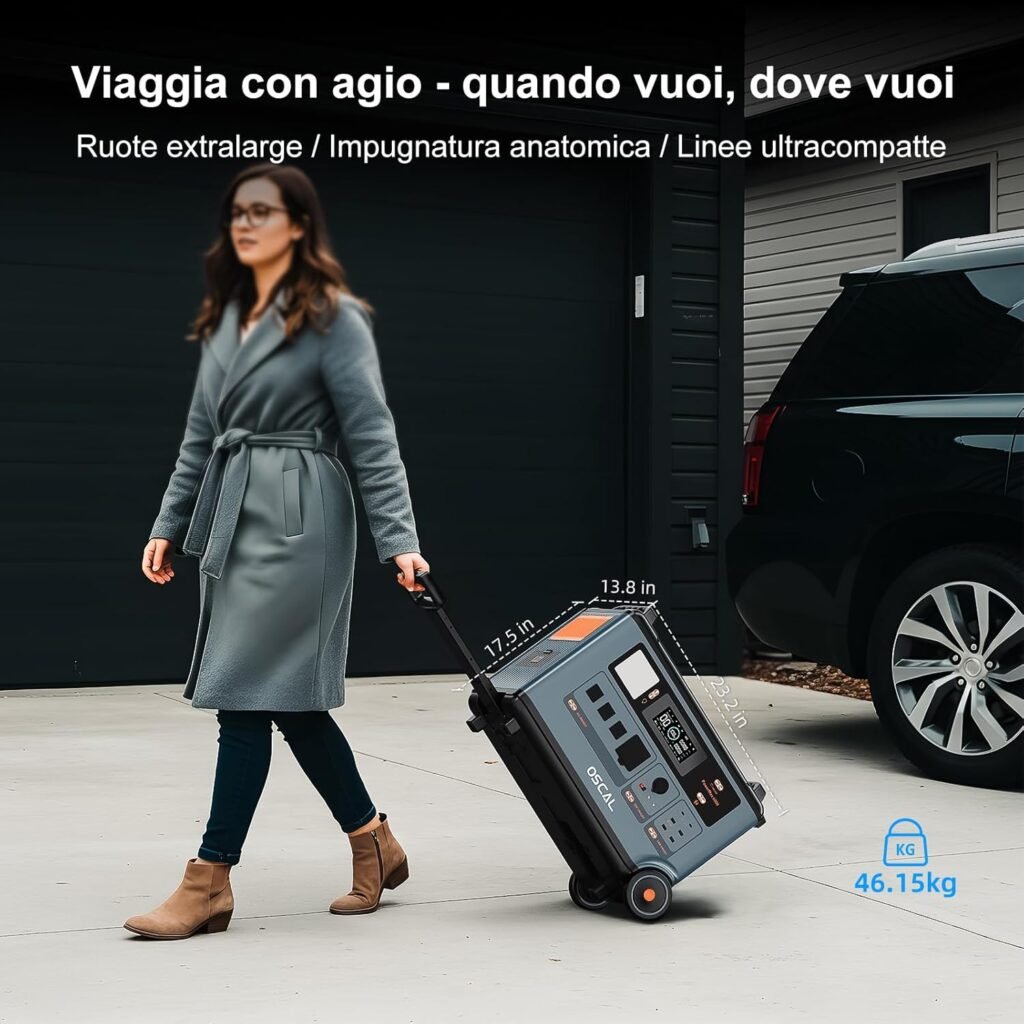
While we don’t have an exact published weight here, similar 3600Wh LiFePO4 units can be heavy (typically 40–90 lb depending on enclosure and battery weight). We recommend using two-person lifts for moving and storing it at a convenient, ventilated location for operation and charging.
Outdoor suitability and placement
We should place it on a stable, dry surface with adequate ventilation. Avoid exposing it to direct rain or prolonged sunlight unless the manufacturer confirms weatherproofing. For camping and outdoor jobs, keeping it in shade and well-ventilated will maintain performance and longevity.
Real-world performance and estimated runtimes
We’ll translate the 3600Wh rating into realistic runtimes for common appliances so we can plan. Inverter inefficiencies and real usage patterns affect runtime, so we’ll use conservative estimates.
Assumptions we’ll use:
- Usable energy after inverter losses ≈ 90% of rated capacity (3600 Wh × 0.9 = 3240 Wh usable for AC loads)
- Motor-driven appliances have startup surges but lower average draw when cycling
Estimated runtimes (approximate)
| Appliance | Typical Power Draw | Estimated Runtime (hours) |
|---|---|---|
| LED lights (10 W total) | 10 W | ~324 hours (13.5 days) |
| Laptop (50 W) | 50 W | ~64.8 hours (2.7 days) |
| Smartphone charging (10 W) | 10 W | ~324 hours |
| Small refrigerator (100–150 W average, cycling) | 125 W avg | ~25.9 hours continuous (real fridge cycles may extend runtime across days) |
| Microwave (1000 W while running) | 1000 W | ~3.24 hours of active run time (practical use is intermittent) |
| Electric kettle (1500 W) | 1500 W | ~2.16 hours of active run time |
| Window AC (900–1500 W typical) | 1200 W avg | ~2.7 hours continuous |
| Power drill (variable, 500–1000 W) | 750 W avg | ~4.3 hours |
We’ll note that these numbers are best-case continuous approximations; actual runtimes will vary due to cycling (fridges, compressors), inverter efficiency under partial vs. full load, and ambient temperature.
Solar expandability and off-grid use
We’ll assess how the unit can scale with additional solar and battery expansion up to 57.6 kWh as advertised. Expansion is a strong point for people planning longer off-grid operations.
Solar charging practicality
With 1600W solar input, daily harvest depends on available sun and panel efficiency. Under ideal conditions, 1600W for 5 peak sun hours yields ~8000 Wh (8 kWh) — more than two full charges from the sun in a single bright day if panels and conditions allow. Real-world yields will often be lower due to angle, shading, and weather.
Battery expansion up to 57.6 kWh
The device claims expandability up to 57.6 kWh. That likely means compatibility with external battery modules to scale storage. For longer-term off-grid setups or more resilient home backup, scaling allows us to pair the PowerMax 3600 as a central inverter/charger while adding battery capacity to handle multi-day outages.
App control and smart features
We’ll overview the OSCAL app and how it adds convenience. Remote monitoring and control can make power management easier, especially when we’re away or operating the unit from a distance.
What the app lets us do
The app typically permits:
- Monitor battery percentage and real-time power usage
- Turn ports on/off remotely
- Check charging source (AC, solar, car)
- Update firmware (if supported) This remote access helps us stagger loads, program charging behavior, and confirm system health.
Safety features and certifications
We’ll review the protections included and why they matter for home and outdoor use. Effective safety systems reduce fire and equipment damage risk.
Protections implemented by the BMS
The BMS handles:
- Overload protection: prevents damage from excessive draw
- Over-discharge protection: avoids deep discharge that shortens battery life
- Over-voltage and over-current protection: protects electronics during input anomalies
- Short-circuit protection: rapid shut-off to prevent damage
- Temperature monitoring: thermal management under heavy use and charging
We think these protections are adequate for robust, everyday usage and the 5–8 ms UPS switching ensures continuity for critical loads.
Setup and operation tips
We’ll give practical advice for getting started and optimizing performance. Proper setup reduces wear and improves reliability.
Initial setup checklist
We recommend:
- Read the included manual and register the product for warranty
- Charge the unit fully before first extended use
- Install the OSCAL app and pair the device over Bluetooth/Wi-Fi
- Test UPS switching with non-critical loads first to confirm transfer behavior
Best practices for battery health
To preserve battery life:
- Avoid deep discharging as a routine (even though LiFePO4 handles deep cycles well)
- Store the unit at ~40–60% charge for long-term storage and check charge every few months
- Keep it in a cool, dry place and avoid extreme temperatures during charging or discharge
Maintenance and servicing
We’ll cover what upkeep looks like so we can plan for ownership. LiFePO4 batteries require little active maintenance compared to fuel generators.
Routine checks
We’ll periodically:
- Inspect cables and ports for wear or corrosion
- Update firmware via the app if updates become available
- Clean the unit’s vents and fans to prevent overheating
- Test the UPS switch and a sample load every few months to ensure reliability
End-of-life considerations
With 3500 cycles, the battery may still have substantial capacity after years of use. If the unit ever requires repair beyond the 2-year warranty, consult OSCAL support for module-level replacement or service options. Plan disposal of LiFePO4 cells through proper recycling channels.
Comparisons with similar products
We’ll position the PowerMax 3600 among peers to see where it stands. Our focus is on capacity, output, and expandability.
How it compares to mid-range power stations
Compared to mid-range 1000–2000Wh stations, the PowerMax 3600 offers:
- Significantly more capacity (3600Wh)
- Much higher continuous output (3600W vs typical 1000–2000W)
- Better battery chemistry (LiFePO4) leading to longer cycle life
- Faster charging capability
We think that makes it a more future-proof option for serious home backup and heavy-duty outdoor work.
How it compares to whole-home backup systems
Against fixed whole-home systems, the PowerMax 3600 is:
- Portable and mobile vs stationary whole-home inverters
- Easier and less costly to deploy initially
- Less integrated with home wiring unless you use transfer switches and professional installation
For those wanting mobile backup or incremental expansion, this unit strikes a practical balance.
Pros and cons
We’ll list strengths and trade-offs to help us decide if this unit fits our needs. Everything has pros and cons; transparency helps decision-making.
Pros
- Large 3600Wh capacity with LiFePO4 longevity (3500 cycles, up to 25-year service life claim)
- High continuous output (3600W) and substantial surge (7200W)
- Fast charging via 2200W AC input and up to 1600W solar input, with combined rapid charge times
- UPS with 5–8 ms transfer for uninterrupted power to critical electronics
- App control for remote monitoring and adjustments
- Expandable storage up to 57.6 kWh for longer off-grid capability
- Comprehensive BMS protections and 2-year warranty
Cons
- Potentially heavy and less convenient for frequent carrying (typical for this category)
- Real-world solar input may be lower than the maximum 1600W depending on panel setup and conditions
- Full expandability (battery modules) may add complexity and cost
- Manufacturer-provided charge times assume ideal conditions; single-source charging may be slower
Typical use cases and scenarios
We’ll paint scenarios where the PowerMax 3600 really shines so we can visualize real deployments.
Home emergency backup
For power outages, we can run lights, refrigeration, communication equipment, and moderate loads like microwaves or window AC for hours to days depending on consumption and expanded battery capacity. The UPS feature keeps network and security systems online during transfer events.
RV and overland travel
For extended trips where we need to run appliances and charge multiple devices, the unit’s capacity and charging speed provide comfort. With solar panels, we can minimize generator usage and enjoy longer stays off-grid.
Job sites and professional tools
We can power tools for job sites that lack grid, using the 3600W continuous output to operate saws, compressors, and other equipment for hours. Surge capacity helps with power tool startups.
Events and mobile services
Catering, mobile offices, and outdoor events benefit from multiple AC sockets and fast recharge rates between sessions.
Frequently asked questions (FAQ)
We’ll answer the common questions we expect to see when evaluating this product.
How long will the battery last with daily use?
With LiFePO4 and rated 3500 cycles, if we cycle the unit once per day, the battery could still retain significant capacity after several years (e.g., nearly a decade or more). Typical daily use patterns will determine exact calendar life; lighter cycling extends the service life toward the quoted 25 years.
Can we run a whole house on this unit?
Not without expanding battery capacity and integrating a transfer switch with home wiring. The PowerMax 3600 can run many household loads, but full whole-house coverage, especially for high-demand devices, will require either multiple units or the expandability up to many kWh and professional integration.
Is the unit safe indoors?
Yes, LiFePO4 batteries are safer and more thermally stable than many other chemistries, and the BMS adds protective layers. However, we should still operate in a ventilated, dry area and follow manufacturer guidelines.
How many solar panels do we need to reach 1600W input?
That depends on panel wattage. For example, 4 × 400W panels in series/parallel (depending on charge controller and input specs) would reach 1600W. Panel arrangement must match the unit’s solar input voltage and MPPT requirements.
Final thoughts and recommendation
We’ll summarize our position and advise who will most benefit from this purchase. The OSCAL PowerMax 3600 Portable Solar Electric Generator 3600W, Expandable up to 57.6 kWh, 3600 Wh Solar Power Station with 4 AC Sockets 3600W, Emergency with APP Control for Home is a compelling option for users needing a powerful, long-lived, and expandable portable power solution.
We appreciate the balance between high continuous output, LiFePO4 durability, UPS capability, and fast charging. For households wanting reliable emergency backup, professionals needing portable power for tools, and users intending to scale storage with extra battery modules, the PowerMax 3600 is a strong candidate. If we prioritize lightweight portability above all else or need built-in whole-home integration immediately, we might consider alternative solutions or plan for additional modules and professional installation.
If we decide to move forward, we’ll pair it with appropriate solar panels sized to our location and use patterns, register it for warranty, and keep firmware and app updates current to maximize the unit’s longevity and reliability.