Ad Blocker Detected
Our website is made possible by displaying online advertisements to our visitors. Please consider supporting us by disabling your ad blocker.
Disclosure: As an Amazon Associate, I earn from qualifying purchases.
Have we ever wished we could keep our phones, lights, and essential gadgets running even when we are far from any power outlet or stuck in a blackout?

What Is the Outdoor Charger Generators 500W Multifunctional Hand Generator?
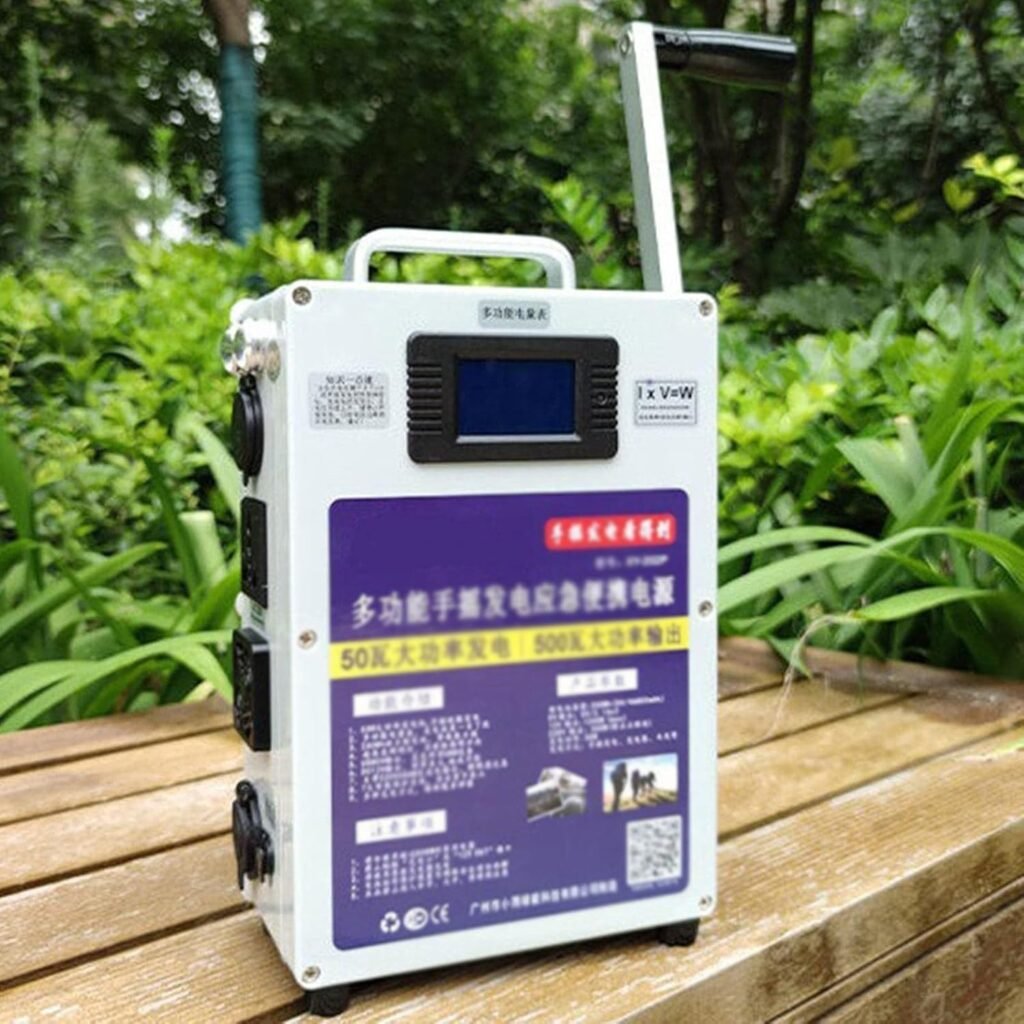
This product is a portable power station that combines a built-in battery, multiple output ports, and a unique Hand Crank Generator in one compact unit. We can think of it as a hybrid between a power bank, a small generator, and an emergency preparedness tool.
The official name is a mouthful: “Outdoor Charger Generators 500W Multifunctional Hand Generator, 200Wh 46800mAh Hand Crank Generator, Portable Power Station With Socket, 220V AC/DC/USB Mobile Power Generators”. In practice, we are getting a 200Wh battery, up to 500W AC output, several DC and USB ports, plus four different charging methods—including hand cranking for true off‑grid use.
Key Features at a Glance
When we look at this unit, we see a device built around reliability and flexibility. It is not just another power bank; it is more of an all‑round emergency power station.
Here is a quick overview of the headline specs and functions:
| Feature | Specification / Description |
|---|---|
| Battery Capacity | 200Wh (approx. 46800mAh at lower voltage) |
| Hand‑Crank Power Generation | Rated at 50W power generation |
| AC Output | 220V, up to 500W (suitable for many small appliances) |
| DC Output | 12V output, up to 240W total |
| USB Output | 5V USB ports, up to 4.5A total current |
| Charging Methods | Hand crank, solar panel (not included), 12.6V charger, car charging |
| Display Screen | Shows voltage, current, and remaining battery power in real time |
| Weight | About 3.25 kg (portable but with some heft) |
| Use Cases | Camping, field work, emergency rescue, power outages, disaster preparedness, travel, etc. |
This kind of overview makes it easier for us to compare it with other portable power stations. Right away, we can see that the unique point is the hand crank combined with a large 200Wh internal battery.

Design and Build Quality
Design and build matter a lot when we are relying on a device during an emergency. We want something that can live in our car, garage, or camping gear without falling apart after a few knocks.
The compact and portable design means we can carry it with one hand, even though it weighs about 3.25 kg. That is heavier than a simple power bank, but quite reasonable for something that houses a 200Wh lithium battery and mechanical crank system. The form factor is typically box‑like with integrated handle, so it fits nicely in a trunk or under a desk.
Durability and Materials
The housing appears to be made from robust plastic designed to withstand normal outdoor usage. We are not talking about military‑grade waterproofing here, but it looks like it can handle being moved around during camping trips or being kept in a workshop or vehicle.
We should still treat it as electronic equipment: avoid dropping it from height, keep it away from standing water, and do not leave it baking in direct sunlight for hours. As long as we use common sense, the build quality feels more than adequate for everyday and emergency use.
Port Layout and Accessibility
We appreciate when ports are intuitive and reachable. This unit has:
- AC 220V socket(s) for standard household‑style plugs
- 12V DC output for compatible devices
- 5V USB outputs for phones, tablets, and small gadgets
- Input ports for charger, car, or solar connection
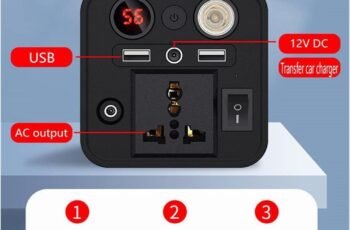
Everything is grouped in a way that makes sense: AC outlets for higher‑power gear, USB for personal electronics, DC for 12V accessories. The ports are clearly labeled, so even under stress—like during a power outage—we can quickly figure out what to plug in where.
Power Capacity and Performance
The heart of this device is the 200Wh (46800mAh) lithium battery. That capacity tells us how long it can run different devices, and what sort of loads we can realistically power.
This power station is not a house‑sized generator, but it is more than a simple smartphone charger. Let us break down what that actually means in practice.
Understanding the 200Wh / 46800mAh Rating
Battery capacity is given in watt‑hours (Wh) and milliamp‑hours (mAh). Here, we have:
- 200Wh total energy
- 46800mAh at its nominal internal voltage
In simple terms, 200Wh means we can theoretically run a 20W device for about 10 hours (20W × 10h = 200Wh), before losses. Real‑world performance will be a bit lower due to conversion efficiency, but this gives us a good starting point.
Real‑World Usage Examples
To make this more concrete, let us consider some common devices we might use:
| Device / Appliance | Approx. Power Draw | Estimated Runtime from 200Wh* |
|---|---|---|
| Smartphone (charging) | 5–10W | 15–25 full charges (depending on phone size) |
| Tablet | 10–15W | Around 10–15 charges |
| LED camping light (small) | 3–5W | 30–50 hours |
| Laptop (charging/usage) | 40–60W | About 3–4 hours of use or 3–5 full charges |
| Small fan | 20–40W | Around 4–8 hours |
| Portable mini‑fridge (efficient) | 40–60W (variable) | A few hours to part of a day, depending on usage |
| Emergency radio | 3–6W | Tens of hours |
*These numbers are estimates and can vary depending on efficiency, device, and how we use the power station.
We would not expect to run heavy‑draw items like heaters, large power tools, or electric kettles for meaningful periods, especially near the 500W limit. But for lights, communications gear, laptops, and small electronics, 200Wh is quite practical.
AC Output: 220V Up to 500W
The big selling point here is the 500W AC output at 220V. This turns the unit into a mini household power source. We plug devices into it just like we would into a wall socket (as long as the plug type and voltage are compatible with our region).
Having up to 500W means we can run:
- Laptops and chargers
- Small desktop monitors
- Low‑power tools or electronics test gear
- CPAP machines (depending on power draw and manufacturer guidelines)
- LED TVs or media devices with modest power needs
We should always confirm the wattage of our device before plugging it in. Running devices near or at the 500W limit continuously is not recommended, as it can stress the inverter and drain the battery rapidly.
DC and USB Outputs
On top of the AC socket, we get DC 12V and USB 5V outputs. These are essential for high efficiency, because converting battery power directly to the needed voltage is often more efficient than going through AC.
- DC 12V (up to 240W): Suitable for 12V devices such as some car refrigerators, air pumps, LED strips, or specialized equipment. Using DC directly can help us stretch our 200Wh further.
- USB 5V (up to 4.5A total): Ideal for charging phones, tablets, cameras, Bluetooth speakers, power banks, GPS units, and more. With up to 4.5A total, we can charge multiple small devices at once.
For us, the combination of AC, DC, and USB makes this unit feel like a small power hub that can serve a group on a camping trip or a family during a blackout.
The Hand Crank Generator: True Off‑Grid Power
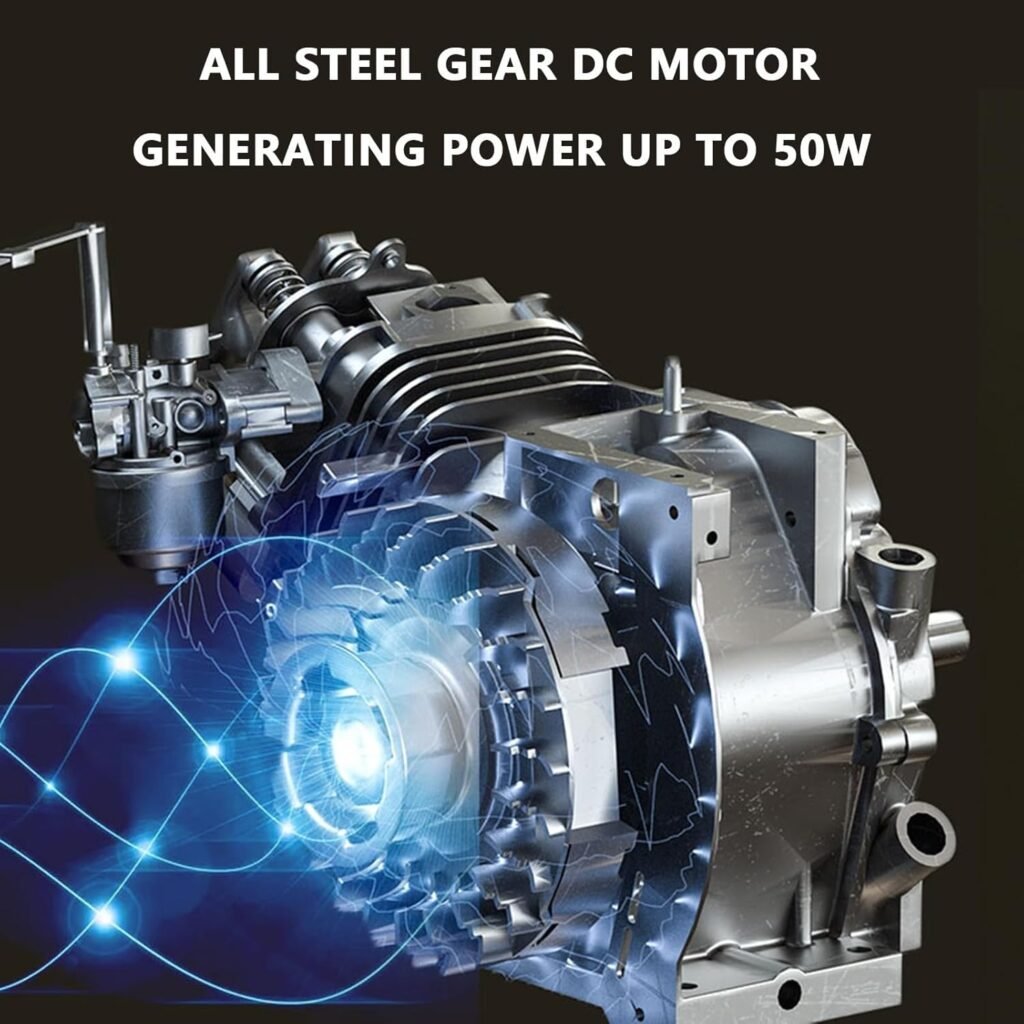
The most distinctive feature is the hand crank generator, rated at 50W power generation. This is what sets it apart from many competing portable power stations that rely solely on wall or solar charging.
We will be honest: hand cranking any generator takes work. We are turning our physical effort into electricity, so expectations need to be realistic. But the benefit is clear: as long as we can physically crank, we are not totally dependent on the grid or sun.
How the Hand Crank Works
We attach and rotate the crank, which spins an internal generator. The generator then charges the built‑in 200Wh battery. At its rated 50W, we can say:
- Cranking at 50W for 1 hour theoretically produces 50Wh of energy.
- We would need about 4 hours of steady cranking at 50W to fully charge a 200Wh battery from empty (not accounting for conversion losses).
In reality, maintaining 50W by hand for long periods is challenging. So we would more likely use the crank to:
- Top up the battery when it is low
- Get enough power for a few phone charges or essential lights
- Maintain power for communications tools in a survival or rescue scenario
It is not about leisurely charging; it is about having a last‑resort power source when nothing else is available.
When the Hand Crank Really Matters
Where the crank shines is in true emergencies:
- Natural disasters where power and fuel are unavailable
- Remote field work with no grid connection and poor solar conditions
- Long‑term outages when our stored batteries are depleted
- Survival training and preparedness kits where redundancy is key
Knowing that we can still generate some power even on a cloudy, stormy day—without needing gasoline or an external solar panel—is tremendously reassuring.

Four Charging Methods: Flexibility in All Conditions
Another major strength of this generator is its four different charging methods. This gives us flexibility whether we are at home, on the road, or fully off‑grid.
We can recharge the built‑in 200Wh battery using:
- Hand crank charging
- Solar panel charging (solar panel not included)
- 12.6V charger charging (standard wall charger)
- Car charging via a suitable adapter
Hand Crank Charging
We have already talked about the hand crank, but as a charging method, it is the most independent. No wall outlet, no car, no sun required—just us and our ability to crank.
We would not rely on this for everyday recharging, but in a pinch, it is invaluable. Even 10–30 minutes of cranking can provide enough power for several phone calls, text messages, and some light.
Solar Panel Charging (Not Included)
When we are off‑grid for extended periods, solar charging becomes critical. While this product does not include a panel, it is solar‑ready. We simply connect a compatible panel (ensure it matches the specified input voltage and current) and let the sun recharge the battery.
This method is:
- Silent
- Fuel‑free
- Ideal for camping, cabin stays, or fieldwork
By combining solar and hand crank, we can create a robust off‑grid power system that works in varying weather conditions.
12.6V Charger and Car Charging
For routine use and preparedness, the more convenient options are:
- 12.6V wall charger: We plug it in at home to charge the unit in advance of a trip or storm. This is the fastest and easiest way to fully top up the battery.
- Car charging: While traveling, we can recharge the unit from our vehicle. This is perfect for road trips, overlanding, or mobile work, where the car alternator is already generating power.
In daily life, we might keep it topped up with wall charging, then rely on car or solar charging as needed when we are away from home.
Real‑Time Display and Monitoring
A small but very useful feature is the screen that displays voltage, current, and remaining battery power. When managing limited energy, information is everything.
We can see:
- How much power is being generated (for example, while cranking or charging via solar)
- How much energy devices are drawing (useful for estimating runtime)
- Approximate remaining battery level so we know when to conserve or recharge
This helps us avoid surprises. Instead of guessing when we will run out of power, we can plan our usage and charging cycles intelligently.
Practical Use Cases
The manufacturer lists a range of applications, and we agree that they are realistic and meaningful. This is more than a camping gadget; it is a tool built for multiple contexts.
The stated scope of application includes:
- Emergency power supply
- Field operations and field surveys
- Rescue operations
- Natural disaster response
- Survival training
- Emergency communications
- Long‑term power shortages
- Tourism and camping
- General backup and emergency power
At Home During Power Outages
In urban or suburban settings, this power station becomes incredibly handy during blackouts. We can:
- Keep phones charged to contact family, emergency services, or check updates
- Run small LED lamps to safely move around the house
- Power a modem/router (if our internet provider still has network power)
- Keep a laptop going for work or entertainment
- Run a small fan in hot climates (short‑term)
We are not replacing the grid, but we are keeping our essential electronics alive and reducing stress during an outage.
Camping and Outdoor Adventures
For camping, hiking base camps, or RV/van life, this unit offers:
- Charging hub for everyone’s phones, cameras, and GPS devices
- Power for LED string lights or lanterns around camp
- Capacity for a small portable fridge or cooler (for a limited time)
- Support for laptops or tablets in off‑grid cabins or tents
The combination of solar input and hand crank means that even in remote areas, we have multiple ways to keep our gear running.
Professional and Field Work
In field surveys, research expeditions, or construction and inspection jobs in remote areas, we often need power for:
- Communication radios and satellite phones
- Surveying equipment
- Laptops, tablets, and measurement devices
- Portable lighting and small tools
This power station can serve as a central hub on-site, reducing downtime and dependence on larger, noisier fuel generators.
Emergency and Rescue Operations
For rescue teams and emergency planners, the ability to generate power without fuel can be crucial. These scenarios may include:
- Medical triage points needing light and device charging
- Communication nodes for radios and portable repeaters
- Support for navigation and mapping devices in the field
Having a hand crank as a last resort ensures that even when fuel and logistics are disrupted, we still have some power available.
Advantages of the Outdoor Charger Generators 500W Unit
To get a clear feel for what we gain with this product, it helps to summarize its main strengths. These are the aspects that stand out for us.
True Off‑Grid Capability
Many portable power stations rely entirely on mains charging and, maybe, solar. Here we get:
- Built‑in hand crank generation for absolute last‑resort use
- Support for solar panels
- Car charging and wall charging for everyday use
This combination covers us in almost all scenarios, from comfortable camping trips to serious emergencies.
Balanced Capacity and Portability
At 200Wh, the battery is large enough to be meaningful for short‑term backup and weekend trips, yet the unit remains reasonably portable at 3.25 kg.
We can carry it around the house, move it from car to campsite, or keep it in a go‑bag or emergency kit without too much trouble. It finds a good middle ground between size and practicality.
Multiple Output Options
With AC, DC, and USB outputs, we avoid carrying multiple adapters or converters. We can plug in:
- Household electronics (within the 500W limit)
- Car‑style 12V devices
- USB‑powered gadgets
The more types of ports we have, the more flexibility we have in choosing what devices to bring and what we can keep powered.
Monitoring and Control
The real‑time screen is not just a cosmetic extra; it helps us:
- Understand which devices are energy hogs
- Plan how long we can keep something running
- Know when to start charging again
For those of us who appreciate managing power usage intelligently, this feedback is invaluable.
Limitations and Considerations
No product is perfect for every situation. We should also consider what this unit is not designed to do or where it might fall short for specific users.
Not a Whole‑House Solution
At 200Wh and 500W output, this power station cannot:
- Run large appliances like refrigerators, microwaves, or heaters for long
- Support an entire home’s needs during prolonged blackouts
- Provide enough power for high‑draw tools (like big saws, heavy pumps, etc.)
If we need to run large loads for many hours or days, we would need a higher‑capacity solar generator or traditional fuel generator.
Hand Crank Effort
While the hand crank is a standout feature, we should be realistic:
- Producing 50W by hand for extended periods is physically demanding
- Completely recharging from empty purely by hand will take significant time and effort
- In practice, the crank is best for topping up, not full daily charging
We should think of the crank as an emergency option, not our primary everyday charging method.
Solar Panel Not Included
Even though the unit supports solar charging, we need to purchase a compatible solar panel separately. That means:
- Extra cost if we want a full off‑grid solar setup
- Need to match panel specifications to the charging input properly
On the positive side, this gives us flexibility to choose the size and type of panel that fits our own needs and budget.
Safety Considerations
Whenever we work with portable power and generators, safety is a priority. While the product details do not list every safety feature, we can assume certain standard protections typical for lithium power stations.
We should still use it responsibly:
- Avoid overloading the 500W AC output
- Do not expose the device to rain, immersion, or extreme humidity
- Keep it away from open flames, heat sources, or direct intense sunlight for long periods
- Do not attempt to open or modify the unit, especially the battery
- Use only compatible chargers, cables, and solar panels
If we follow the recommended operating instructions and basic electrical safety guidelines, the unit should function reliably and safely for its intended lifespan.
Who Is This Product Best For?
With all the features and limitations in mind, this generator fits best into certain lifestyle and preparedness categories. It is helpful to see whether we fit into one or more of these groups.
Outdoor Enthusiasts and Campers
If we enjoy:
- Camping in tents
- Staycations in off‑grid cabins
- Fishing or hunting trips
- Van life or road trips
then this unit offers an excellent mix of capacity, portability, and flexibility. We bring our usual electronics, plug them in, and top up via car or solar. The crank is our very last safety net.
Emergency Preparedness Planners
Households that want a serious emergency kit will appreciate:
- Enough power to keep communications and lighting going
- A hand crank as a backup to wall and car charging
- The ability to work with solar later if we choose to add it
We can store it charged and ready, knowing that even if we forget to top it up before a storm, we can still generate power by hand in a true emergency.
Field Workers, Researchers, and Rescue Teams
Professionals working in the field often need a reliable power source that is more flexible than a simple power bank, but less bulky than a large fuel generator. For them, this product offers:
- AC, DC, and USB outputs for diverse equipment
- Hand crank and solar compatibility for remote sites
- A portable form factor that can be carried easily during operations
For rescue operations, this device works best as a support unit—powering radios, lights, and small devices alongside other gear.
Everyday Users Wanting Backup Power
Even if we do not camp or work in the field, we may live in an area prone to storms, grid failures, or rolling blackouts. For everyday users, this unit:
- Acts as a peace‑of‑mind backup
- Provides multi‑device charging and small appliance support
- Keeps us connected and informed when the grid goes down
If we are not ready to invest in a big solar or fuel generator system, this can be an accessible starting point.
Tips for Getting the Most Out of This Generator
To maximize the value of our investment, a few habits and strategies can go a long way. We can treat this less as a gadget and more as part of our resilience toolkit.
Keep It Charged and Test It Periodically
We recommend:
- Fully charging it when we first receive it
- Topping it up every few months if stored long‑term
- Running a small test during calm times: plug in devices, practice hand cranking for a few minutes, and see how it performs
That way, if a true emergency hits, we already know how to operate it and what it can handle.
Pair It with Efficient Devices
To stretch our 200Wh capacity further, we should use low‑power, energy‑efficient devices:
- LED lights instead of incandescent bulbs
- Efficient laptops instead of power‑hungry desktop rigs
- 12V DC appliances that match the DC outputs
- Devices with power‑saving modes turned on
Lower power draw means longer runtimes and fewer recharges, especially when relying on solar or hand cranking.
Consider a Solar Panel Upgrade
If we plan to use this generator regularly off‑grid, investing in a compatible solar panel is a smart move. A reasonable panel can:
- Refill the battery over the course of a sunny day
- Provide continuous trickle charging during camping trips or in remote cabins
- Reduce or eliminate the need to run a car engine solely for charging
Combining solar for the bulk of energy and hand crank for emergencies gives us a robust, renewable setup.
Understand Power Priorities
During emergencies, we can prioritize devices that:
- Keep us safe (lights, radios, phones)
- Keep us informed and connected (internet devices, charging phones)
- Provide comfort (fans, small appliances, entertainment devices)
By ranking our needs this way, we can decide what to plug in first and what to leave for later, making the smartest use of the 200Wh battery.
Final Thoughts: Is This Generator Worth It for Us?
When we look at the Outdoor Charger Generators 500W Multifunctional Hand Generator, we see a thoughtfully designed tool that addresses a wide range of real‑world needs:
- A 200Wh battery providing meaningful backup power
- 500W AC, 240W DC, and 4.5A USB outputs covering most small device needs
- Four charging methods, including hand crank and solar readiness, granting true off‑grid capability
- A portable, compact design that weighs about 3.25 kg
- An information‑rich display for real‑time insight into power usage and remaining energy
It is not a full household generator and it will not power heavy appliances for long, but it is not trying to be that. Instead, it positions itself as a versatile, emergency‑ready, and outdoor‑friendly power station.
If we want something that keeps our essential devices running during outages, supports camping and field work, and gives us real peace of mind with a mechanical hand crank backup, this product makes a strong case for itself. For households, outdoor enthusiasts, and professionals who value reliability and flexibility over sheer size, it is a compelling option to have in our kit.