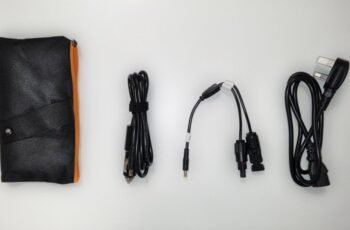
Ad Blocker Detected
Our website is made possible by displaying online advertisements to our visitors. Please consider supporting us by disabling your ad blocker.
Disclosure: As an Amazon Associate, I earn from qualifying purchases.
Have we ever wished we could bring reliable, quiet power with us wherever we go—without dealing with fuel, fumes, or noise?

What Is the Jackery Solar Generator 500?
When we talk about the Jackery Solar Generator 500, we are really talking about a bundle: the Jackery Explorer 500 portable power station paired with the Jackery SolarSaga 100W solar panel. Together, they form a compact, solar-powered system that lets us charge and run our essential devices off-grid.
This kit is designed for those of us who enjoy short camping trips, RV weekends, and outdoor adventures, or who want a dependable backup during power cuts. It gives us a way to capture sunlight, store it in a 518Wh lithium battery, and then use that stored energy when and where we need it.
Key Specifications at a Glance
Before we get into our hands-on impressions, it helps to see the core specs laid out clearly. These numbers give us a sense of what we can realistically expect from the Jackery Solar Generator 500 in everyday situations.
| Feature | Specification / Detail |
|---|---|
| Battery Capacity | 518Wh (watt-hours) lithium-ion battery |
| AC Output | 1 × AC outlet (230V, 500W rated, 1000W peak) |
| DC Outputs | 2 × DC outputs (commonly 12V), 1 × car port |
| USB Outputs | 3 × USB-A ports |
| Solar Input | 1 × DC input (compatible with SolarSaga 100W, MPPT controller built-in) |
| Solar Panel (included) | SolarSaga 100W, foldable, portable panel |
| Use Cases | RV trips, car camping, overlanding, outdoor adventure, emergency backup |
| Power Station Weight/Size | Portable form factor with carrying handle (compact and easy to move) |
| Included in the Box | Explorer 500, SolarSaga 100W, AC adapter, car charger cable, user manual |
| Typical Devices Supported | CPAP, mini-cooler, camera, drone, phones, tablets, small laptops, and other gadgets |
Looking at these specs, we can see that this is very much a mid-range portable power solution. It is not meant to run an entire house, but it is perfectly suited for off-grid weekends and emergency essentials.
Design and Build Quality
The design of the Jackery Solar Generator 500 reflects a focus on portability and simplicity. The power station itself has a sturdy plastic housing, rounded edges, and a solid carry handle that lets us grab it with one hand and move it around our campsite, RV, or home with ease.
The SolarSaga 100W panel folds into a compact, suitcase-like shape with an integrated handle, making it easy to carry and store. The materials feel durable enough for frequent outdoor use, as long as we treat them with normal care and do not leave them permanently exposed to harsh conditions.
Portability and Ease of Carry
Portability is one of the key reasons many of us look at this particular kit. The combination of a manageable battery size and a foldable solar panel means we can feasibly throw this into the car trunk for a spontaneous weekend away.
We can carry the power station in one hand and the folded solar panel in the other. This matters when we are moving between the RV and the campsite, repositioning the panel for better sun, or storing things quickly before the weather changes.
User-Friendly Layout and Display
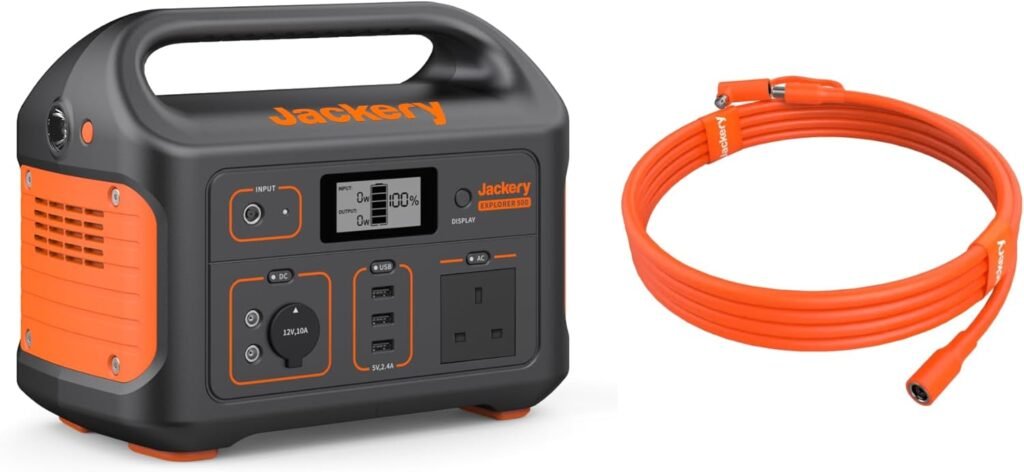
All controls and ports on the Explorer 500 are grouped logically on the front panel: AC outlets, DC ports, and USB ports are clearly marked. There is an LCD display that shows us battery level, input wattage, and output wattage, which makes it far easier to manage our usage.
This layout means we do not have to hunt for the right port or guess how much power we have left. For those of us new to portable power stations, this reduces the learning curve and helps prevent overloading or unexpected shutdowns.
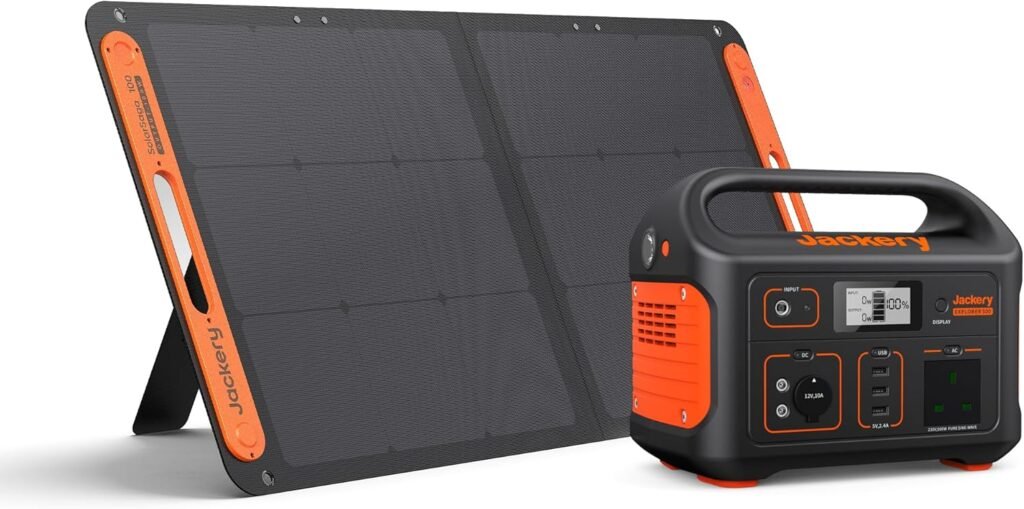

SolarSaga 100W Panel: Design and Function
The SolarSaga 100W is a central part of this kit, since it turns the Explorer 500 into a true solar generator rather than just a portable battery. The panel is sleek, light, and folds in half, which makes it quite travel-friendly.
Built-in kickstands on the back let us prop the panel at a good angle toward the sun. We can set it up on the ground, a picnic table, or even lean it against our RV. The cable that connects to the power station is straightforward to use: we just plug it into the DC input and the system starts charging automatically.
Durability and Outdoor Readiness
While the SolarSaga is designed for outdoor use, it is not a heavy, industrial panel. It is meant for portability and convenience, so we should treat it as a piece of gear rather than something we can leave out in the elements indefinitely.
We can use it in sun, light wind, and normal outdoor conditions, but we should avoid leaving it in pouring rain or extreme environments for long stretches. If we care for it properly—folding it when not in use and storing it in a dry place—it should serve us well across many trips.
Power Capacity: What 518Wh Actually Means for Us
The 518Wh capacity of the Explorer 500 can sound abstract at first. In simple terms, watt-hours tell us how much energy the battery can store. To estimate how long it can run a device, we divide the battery capacity by the device’s power draw in watts (and then factor in some efficiency loss).
In real life, it is helpful to look at typical devices we might bring along on a trip or need during emergencies. With 518Wh, we are sitting comfortably in the zone of powering small and medium devices, but not large appliances.
Realistic Run Times for Common Devices
To give us a practical picture, here are some approximate run times or charges we can expect from the Jackery Explorer 500, assuming typical usage and some efficiency loss:
- Smartphones (10–12Wh per full charge): roughly 30–40 charges
- Tablets: roughly 15–20 charges
- Laptops (50–60W while in use): about 7–9 hours of use
- CPAP machine (40W average, overnight): roughly 10–12 hours (one full night, maybe more depending on settings)
- Mini-cooler or small 12V fridge (40–60W average): about 8–12 hours, depending on insulation and compressor cycles
- LED lights (5W each): several full evenings of lighting
- Camera batteries, drone batteries, and other small electronics: multiple charging cycles during a weekend trip
These numbers will vary depending on how efficient our devices are and how intensively we use them. Still, they show that the Explorer 500 works well for short camping trips, overnight RV stays, and emergency backup for essentials like communications and basic medical devices.
Power Output and Port Variety
The Jackery Explorer 500 is not just a battery; it is a hub of different ports and outputs that let us run a variety of devices. The included AC outlet, DC ports, car port, and USB ports give us flexibility that a simple power bank cannot match.
AC Output Performance
The single AC outlet (230V, 500W rated, 1000W peak) is the main workhorse for many household-style devices. The “500W rated” figure means it can continuously power devices that draw up to about 500 watts, while the “1000W peak” allows for short bursts when devices first turn on (such as motors and compressors).
We should be aware of these limits. For example:
- Suitable: CPAP machines, small TVs, low-wattage kettles, small fans, some laptops, chargers, and small cooking devices under 500W.
- Not suitable: hair dryers, high-power kettles, microwave ovens, space heaters, or large power tools, which typically exceed 1000W peak or 500W continuous.
Having these numbers in mind helps us avoid tripping the overload protection and ensures the system runs smoothly.
DC Ports and Car Port
The two DC outputs and the car port are particularly helpful for running 12V appliances, which are common in camping and RV setups. We can plug in 12V coolers, air pumps, or fans without needing to use the AC outlet and inverter, which is often more power efficient.
Since many car-based devices come with a cigarette lighter-style plug, the car port acts as a familiar and convenient interface. This is a big plus when we want to power our existing gear without needing extra adapters.
USB-A Ports for Everyday Gadgets
The three USB-A ports make it easy to charge multiple phones, tablets, cameras, or Bluetooth speakers at the same time. For a family trip, this can be a major convenience, since everyone tends to arrive with at least one device that needs charging.
We can keep communications, navigation, and entertainment running while still having room on the AC and DC outputs for other key equipment.
Solar Charging and MPPT Technology
The true strength of this kit lies in its ability to recharge from the sun. The SolarSaga 100W panel paired with the Explorer 500’s built-in MPPT (Maximum Power Point Tracking) controller means we are not just trickle-charging; we are using a smarter, more efficient solar charging process.
How the Solar Charging Works for Us
When we plug the solar panel into the DC input of the power station, the MPPT controller automatically adjusts the electrical operating point to maximize the power harvested from the panel. Under good sun conditions, this can significantly reduce charging time compared to basic charge controllers.
In bright, direct sunlight, a 100W panel might deliver around 60–80 watts in real-world conditions (depending on angle, temperature, and cloud cover). With a 518Wh battery, that means:
- Roughly 7–9 hours for a full charge in strong sun
- Longer on overcast days or with partial shade
We can improve our results by:
- Repositioning the panel every few hours to face the sun more directly
- Avoiding shade from trees, tents, or vehicles
- Keeping the panel surface clean and free of dust or dirt
This kind of “unlimited” solar refilling means we can stay off-grid longer, especially if we manage our usage carefully.
Solar vs. Grid Charging Flexibility
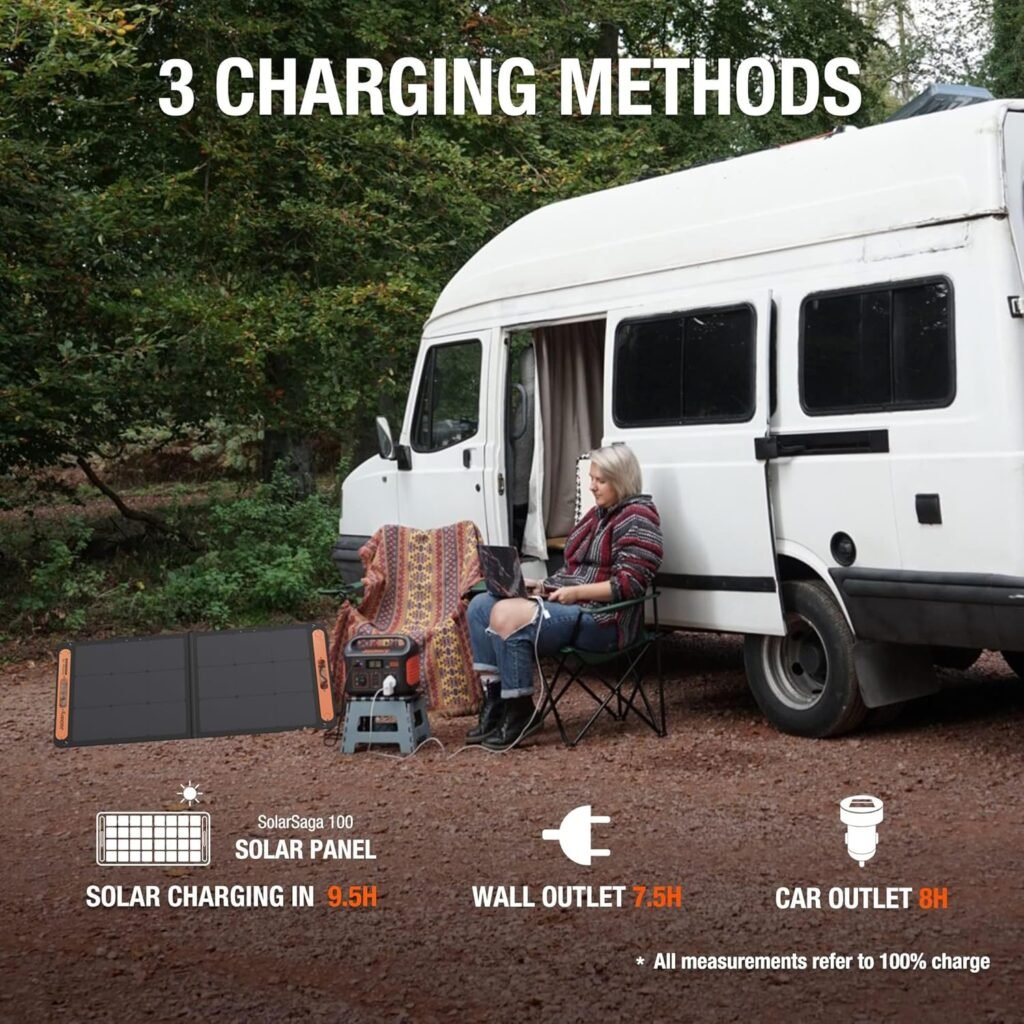
One of the benefits of this kit is that we can recharge the Explorer 500 not only with the SolarSaga panel but also from a wall outlet or our car’s 12V socket. Solar is great when we are off-grid, but when we are at home or on a powered campsite, plugging into the grid may be quicker and more predictable.
This flexibility lets us top up at home before a trip, then maintain or extend our power using the solar panel once we are on the road.
Everyday Use Cases
The Jackery Solar Generator 500 is clearly tailored toward certain activities and situations. Rather than thinking of it as just a “gadget,” it helps to picture real scenarios where it fits smoothly into our routines.
Short RV Trips and Van Adventures
For RV owners or van lifers who are not full-time but enjoy weekend trips, this kit is a straightforward way to add power without rewiring the whole vehicle. We can:
- Run a CPAP machine overnight
- Keep a small 12V fridge or mini-cooler going
- Charge laptops, phones, and cameras
- Power a small fan for extra comfort
Because it has a built-in handle and plug-and-play connections, it also works well as a secondary or backup system to a main RV electrical setup.
Car Camping and Tent Camping
For car camping, the Explorer 500 gives us a serious upgrade from tiny USB power banks. We can set up a more comfortable, functional base camp:
- Lighting around the tent or picnic area
- Charging drones and cameras for outdoor photography
- Keeping phones charged for maps, emergency calls, and entertainment
- Running a portable projector or small TV for an occasional movie night outdoors
The SolarSaga panel can sit nearby, topping up the battery during daytime while we go on hikes or relax at the campsite.
Outdoor Work and Creative Projects
We do not have to be camping to benefit from a portable power station. Photographers, videographers, or remote workers can use this kit to keep gear powered in locations far away from outlets:
- Charging camera batteries and drones on location
- Powering a laptop and portable monitor
- Running small LED light panels for shoots
If we work remotely from parks, beaches, or rural areas, the Explorer 500 can act as our personal mini power grid.
Emergency Preparedness and Power Outages
In emergencies, reliability matters more than ever. With this solar generator, we have:
- A quiet, emission-free alternative to gas generators
- Enough capacity to power a CPAP machine for critical breathing support
- The ability to keep phones, radios, and small lights running
- A way to slowly refill our power with solar even when the grid is down
For families who live in areas prone to storms, grid instability, or natural disasters, this kind of setup can provide peace of mind without the noise and fumes of a traditional generator.
Environmental Benefits and Quiet Operation
One of the biggest draws of solar generators is how gentle they are on our surroundings. The Jackery Solar Generator 500 replaces the need to burn fuel in many scenarios where we would otherwise rely on a small gas generator.
Clean Energy and Reduced Carbon Footprint
By converting sunlight into usable electricity, the SolarSaga panel plus Explorer 500 setup lets us:
- Avoid emissions from burning fuel
- Reduce our dependence on disposable batteries
- Cut down on noise pollution in campsites and natural areas
While it will not offset all our household energy use, it is a tangible step toward more sustainable outdoor living and emergency preparedness.
Quiet and Fume-Free Comfort
Because the Explorer 500 is battery based, it operates silently except for an occasional small cooling fan when under heavier loads. This makes a huge difference in comfort:
- No engine noise while we are trying to sleep in a tent or RV
- No exhaust fumes around children, pets, or fellow campers
- No worries about fuel storage, spills, or refueling at odd hours
Many campsites also impose quiet hours, and some do not allow gas generators at all. In those situations, a solar generator shines as a courteous and compliant option.
Ease of Use: Setup and Daily Operation
We might expect a system like this to be complicated, but one of the strongest points of this kit is how approachable it feels right from the start.
Initial Setup and Learning Curve
Out of the box, the process is straightforward:
- Plug the Explorer 500 into a wall outlet or car charger to fully top it up the first time.
- Unfold the SolarSaga 100W panel and connect it to the DC input for solar charging.
- Turn on the power station and plug our devices into the appropriate ports.
The front-panel display clearly shows charging and discharging wattage. This feedback helps us quickly understand which devices draw the most power and how fast we are draining or replenishing the battery.
Daily Management and Power Awareness
Once we start using it regularly, we naturally become more aware of our energy usage:
- We see how much power our mini-fridge actually uses.
- We learn how sunlight conditions change our recharge times.
- We get a mental sense of how long the battery will last in various scenarios.
This awareness can encourage more mindful use of devices and better planning for extended off-grid stays.
Strengths of the Jackery Solar Generator 500
Every product has its highlights, and this kit is no exception. Several strengths stand out clearly when we use it in real-world conditions.
Well-Balanced Capacity for Short Adventures
The 518Wh capacity hits a sweet spot for many weekend and short-trip users. It is big enough to:
- Keep core devices running
- Handle overnight CPAP use
- Support a mini-cooler for a day
Yet it is small enough to remain highly portable and fast enough to recharge fully in a reasonable solar window.
Excellent Portability and Simplicity
With its built-in handle, foldable solar panel, and clearly labeled ports, the whole kit feels approachable. We do not need a background in electrical systems to understand it; we just plug it in, watch the display, and adjust as needed.
For users who want something practical and not overly complex, this simplicity is a major selling point.
Quiet, Clean, and Family-Friendly
The lack of fumes, low noise, and easy connectivity make this an attractive option for families with children, elderly members, or anyone sensitive to generator noise. It fits naturally into family camping trips, backyard gatherings, and emergency plans.
Versatile Power Output Options
The mix of AC, DC, car port, and USB means we can handle a broad range of devices using their existing cables and chargers. Whether we are powering a CPAP, charging drone batteries, or lighting a campsite, we rarely find ourselves wishing for an additional kind of port.
Limitations We Should Keep in Mind
No product is perfect, and the Jackery Solar Generator 500 has some clear limitations that we should understand before deciding if it fits our needs.
Not Intended for High-Power Appliances
We cannot run heavy-duty appliances like:
- Large microwaves
- Space heaters
- High-powered hair dryers or irons
- Full-size refrigerators
If our primary goal is to power those kinds of devices, we would need a larger-capacity system with higher wattage output. The Explorer 500 is best suited for small and medium power needs.
Moderate Solar Recharging Speed
A single 100W panel can only recharge a 518Wh battery so fast, especially under real-world conditions. If we are using power heavily every day, we may find that we are not fully recharging between uses, especially during short winter days or cloudy spells.
We can work around this by:
- Reducing unnecessary loads
- Taking advantage of grid or car charging when available
- Planning our usage around the strongest sun hours
Still, it is important to recognize that solar is powerful but not instantaneous, and our daily habits need to align with that.
Limited Number of AC Outlets
The Explorer 500 includes one AC outlet. While this is enough for many situations, it can be a constraint if we are trying to run multiple AC devices simultaneously. We can use a small power strip, but we still need to ensure the total draw stays under 500W continuous.
If we plan on running several AC loads at once, we should think carefully about how to share or stagger their use.
Who Is This Solar Generator Best For?
To decide if the Jackery Solar Generator 500 is right for us, we need to match its strengths and limits with our real needs and habits.
Ideal Users and Scenarios
We are likely to be a great fit for this kit if:
- We enjoy weekend RV or car camping and want reliable, quiet power.
- We need a portable way to run a CPAP machine during trips or power outages.
- We use small 12V coolers or fridges for short adventures.
- We regularly charge cameras, drones, laptops, and phones away from the grid.
- We want a practical, user-friendly backup option for blackouts.
In all these scenarios, the balance of capacity, portability, and solar integration makes a lot of sense.
Less Ideal Use Cases
We might want to look at a larger system if:
- We regularly need to run high-wattage appliances.
- We want to power multiple large devices simultaneously for extended periods.
- We are planning very long off-grid stays where daily consumption significantly exceeds what can be replenished by a 100W panel.
In those cases, stepping up to a higher-capacity power station and perhaps additional solar input would be more appropriate.
Using the Jackery Solar Generator 500 Efficiently
To get the most value from this system, it helps to develop a few practical habits around how we use and charge it.
Managing Loads and Priorities
When we are off-grid, not all devices are equally important. We can:
- Prioritize medical devices, communication gear, and lighting.
- Use high-draw devices sparingly or only when necessary.
- Avoid leaving chargers or appliances plugged in when not in use.
By consciously managing what we power, we can significantly extend the time between charges and reduce the risk of draining the battery unexpectedly.
Optimizing Solar Charging Routine
We can improve our solar harvesting by:
- Setting the panel up as early in the day as possible.
- Adjusting its angle every few hours to follow the sun’s path.
- Keeping the panel surface clean and ensuring no shadows fall across it.
These small actions can add up to a meaningful difference in how much energy we collect, especially on marginal days.
What We Get in the Box and How It All Fits Together
The Jackery Solar Generator 500 kit is nicely self-contained. Everything we need to start using it comes in the box, so we are not scrambling for extra accessories on day one.
We receive:
- 1 × Jackery Explorer 500 Portable Power Station
- 1 × SolarSaga 100W Solar Panel
- 1 × AC adapter (for wall charging)
- 1 × Car charger cable (for charging via vehicle)
- 1 × User manual
All these components work together seamlessly. The user manual provides guidance, but much of the system really is plug-and-play, which reduces frustration and setup time.
Long-Term Ownership Considerations
Beyond first impressions, we want to think about how this kit will hold up for us over months and years.
Battery Life and Care
Lithium-ion batteries have a finite cycle life. To extend the lifetime of the battery inside the Explorer 500, we can:
- Avoid leaving it fully discharged for long periods.
- Store it in a cool, dry place when not in use.
- Occasionally top it up if we are not using it for months.
Treating it well helps ensure that it remains reliable during emergencies and ready for last-minute trips.
Maintenance of the Solar Panel
For the SolarSaga 100W panel, basic care includes:
- Wiping off dust, dirt, or bird droppings that can block sunlight.
- Folding and storing it safely when not in use.
- Avoiding drops, impacts, or prolonged exposure to severe weather.
A little attention here and there will keep the panel working efficiently for a long time.
How This Kit Compares in Its Category
Within the mid-range portable power world, the Jackery Solar Generator 500 occupies a popular space. Many other systems offer similar capacities, but certain aspects of this kit stand out.
We can summarize its position like this:
- It emphasizes user-friendliness over complexity.
- It pairs a well-matched solar panel and power station from the same brand, reducing compatibility headaches.
- It targets short trips and moderate off-grid needs rather than heavy-duty, long-term off-grid living.
For many users, these trade-offs feel sensible, especially if we value simplicity and portability.
Final Thoughts: Is the Jackery Solar Generator 500 Right for Us?
If we are looking for a portable, quiet, and easy-to-use power solution for family RV trips, car camping, outdoor adventures, or emergency backup, the Jackery Solar Generator 500 is a strong contender. Its 518Wh capacity, 500W AC output, and versatile set of ports provide enough power for core essentials without overwhelming us with complexity or weight.
The included SolarSaga 100W panel turns it into a genuine solar generator, letting us collect clean energy and stay off-grid longer. We gain independence from wall outlets and gas, while benefiting from a system that is intuitive to operate and friendly to live with.
We do need to respect its limits: it is not a full home backup system or a power source for large appliances. Instead, it is best seen as a reliable, portable power companion for everyday off-grid needs and emergencies.
For those of us who want a simple, dependable way to bring electricity wherever we go—and do it quietly and cleanly—the Jackery Solar Generator 500 offers a well-balanced, practical solution that fits remarkably well into modern outdoor life and household readiness.