Ad Blocker Detected
Our website is made possible by displaying online advertisements to our visitors. Please consider supporting us by disabling your ad blocker.
Disclosure: As an Amazon Associate, I earn from qualifying purchases.
Have we ever wished our gadgets, camping gear, and home essentials could stay powered no matter where we are—or what the grid is doing?

Why We Chose the AFERIY Portable Power Station 800W, 512Wh
When we started looking for a portable power solution, we wanted something that felt more like a compact home backup hub than a simple power bank. The AFERIY Portable Power Station 800W, 512Wh immediately stood out because it blends fast charging, long battery life, and real-world practicality into one small unit.
We are not just talking about topping up a phone. We are talking about running laptops, mini-fridges, routers, CPAP machines, cameras, and more, whether we are camping, traveling in an RV, or dealing with a sudden power cut at home.
Key Features at a Glance
Before we get into how it performs in day-to-day use, it helps to see the main specs and functions laid out. This gives us a quick sense of where this power station fits in the market and how it might match our needs.
| Feature | Specification / Description |
|---|---|
| Battery Type | LiFePO4 (Lithium Iron Phosphate) |
| Battery Capacity | 512Wh |
| Inverter Output | 800W rated, supports 800–1500W load intelligently |
| Output Waveform | Pure sine wave |
| AC Output Voltage | 220V–240V |
| Weight | Approx. 6.25 kg |
| Fast Charging | AC + solar: ~1 hour full; AC only: ~1.5 hours full |
| Charge Cycles | 3500+ cycles |
| Inputs | AC outlet, solar panel (with MPPT), car cigarette lighter |
| Outputs | 8 output ports total (AC, DC, USB, etc.) |
| UPS Function | Switchover within 0.1 seconds |
| Lighting | Built-in LED: Lighting, SOS, Flashing modes |
| Battery Management | Advanced BMS with multiple protections |
| Use Cases | Outdoor camping, RV trips, home backup, emergency power, off-grid work |
We see right away that this is not a tiny pocket device. It is a compact power station designed for serious use, with specs that suggest a good balance between portability and capability.
Design and Build Quality
The first thing we notice when we unbox the AFERIY unit is how solid and portable it feels. At around 6.25 kg and 20% lighter than many comparable models, it does not feel like a burden to lift, yet it still has the reassuring heft of a well-built battery system.
The integrated top handle makes carrying easy with one hand, and the compact footprint means we can tuck it in a car trunk, under a desk, or in an RV cabinet without reorganizing our entire setup.
Materials and Durability
The outer casing is made from sturdy plastic that feels robust, not flimsy. While it is not marketed as waterproof or fully shockproof, it seems well-suited for normal outdoor use—things like camping trips, road trips, and backyard gatherings.
We would still treat it like an electronic device and avoid leaving it out in heavy rain or dropping it from significant heights. That said, the lifepo4 battery chemistry inside already gives us a durability and safety edge over many traditional lithium-ion systems.
Layout and Usability
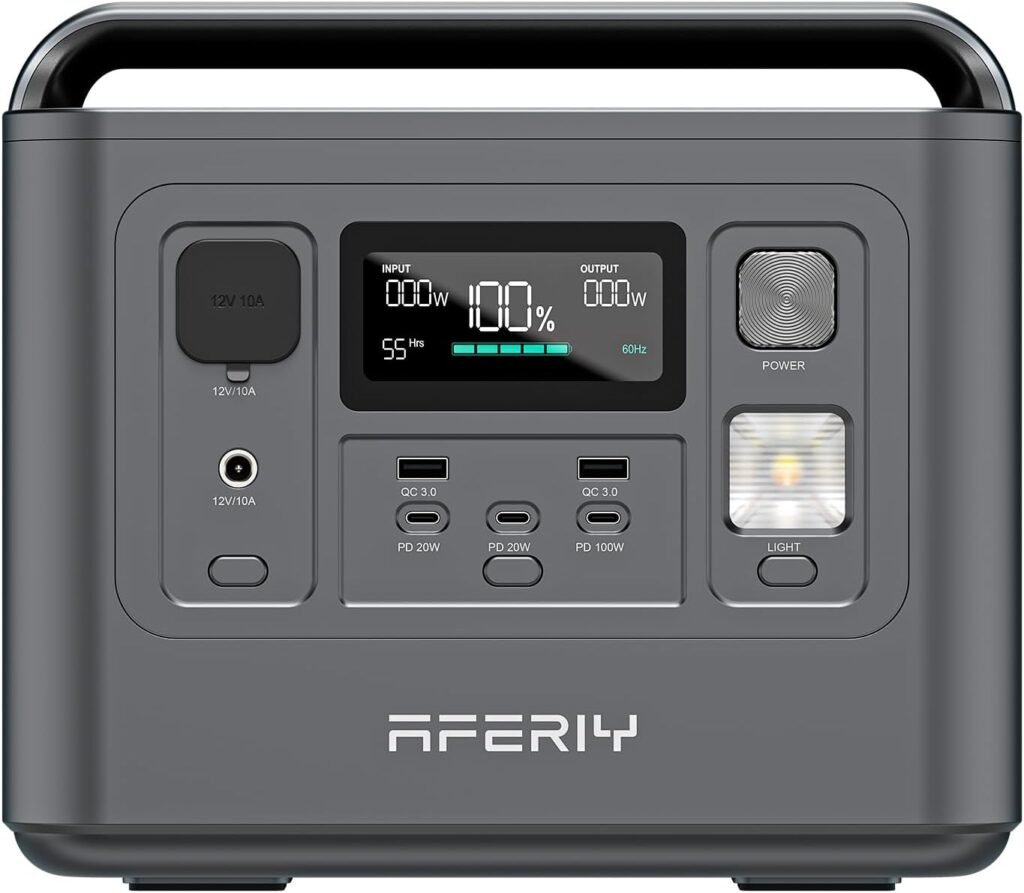
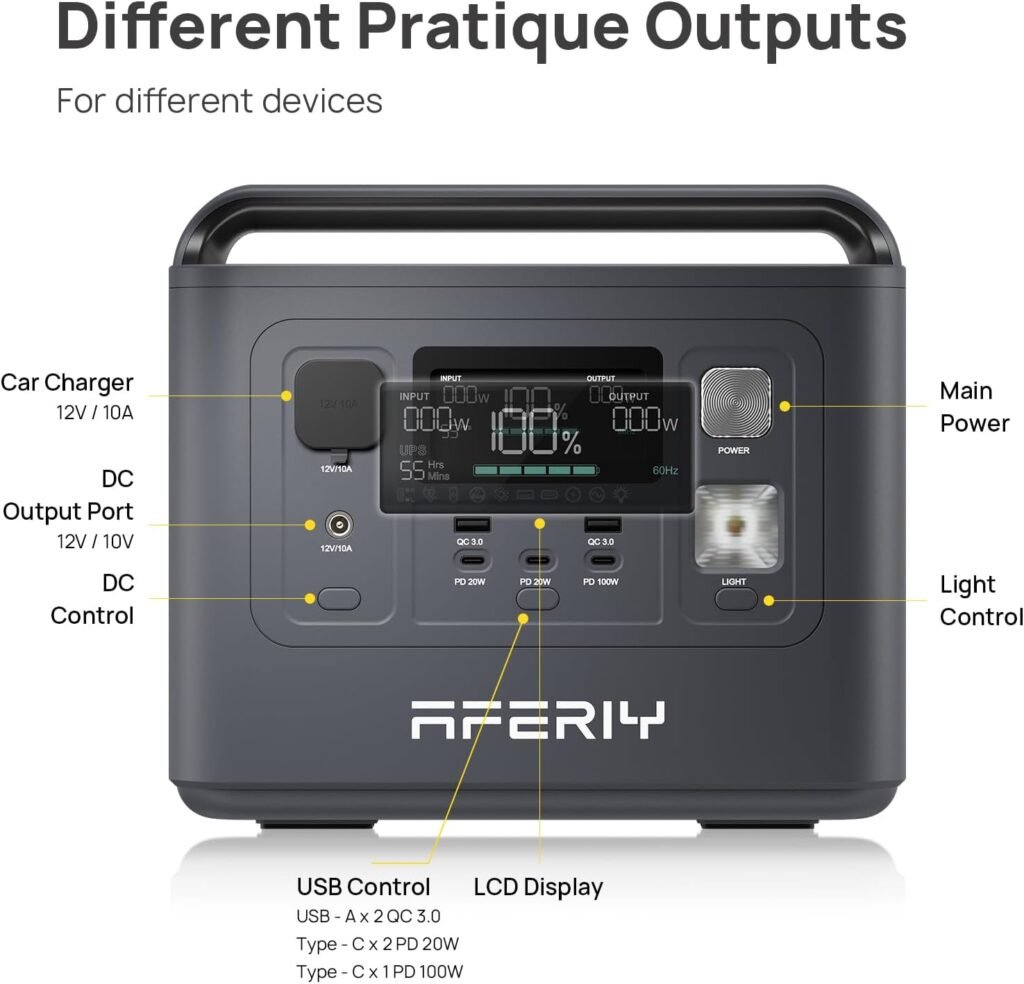
All the outputs, inputs, and the LCD screen are grouped logically on the front panel, which makes setup straightforward. We do not have to guess where anything is; every port is clearly labeled, and the display is easy to read at a glance.
The LED light is positioned so we can use the unit as a mini lantern when needed. It is a small detail, but it adds convenience for late-night use, especially in tents, campers, or during blackouts.

Battery Technology: Why LiFePO4 Matters
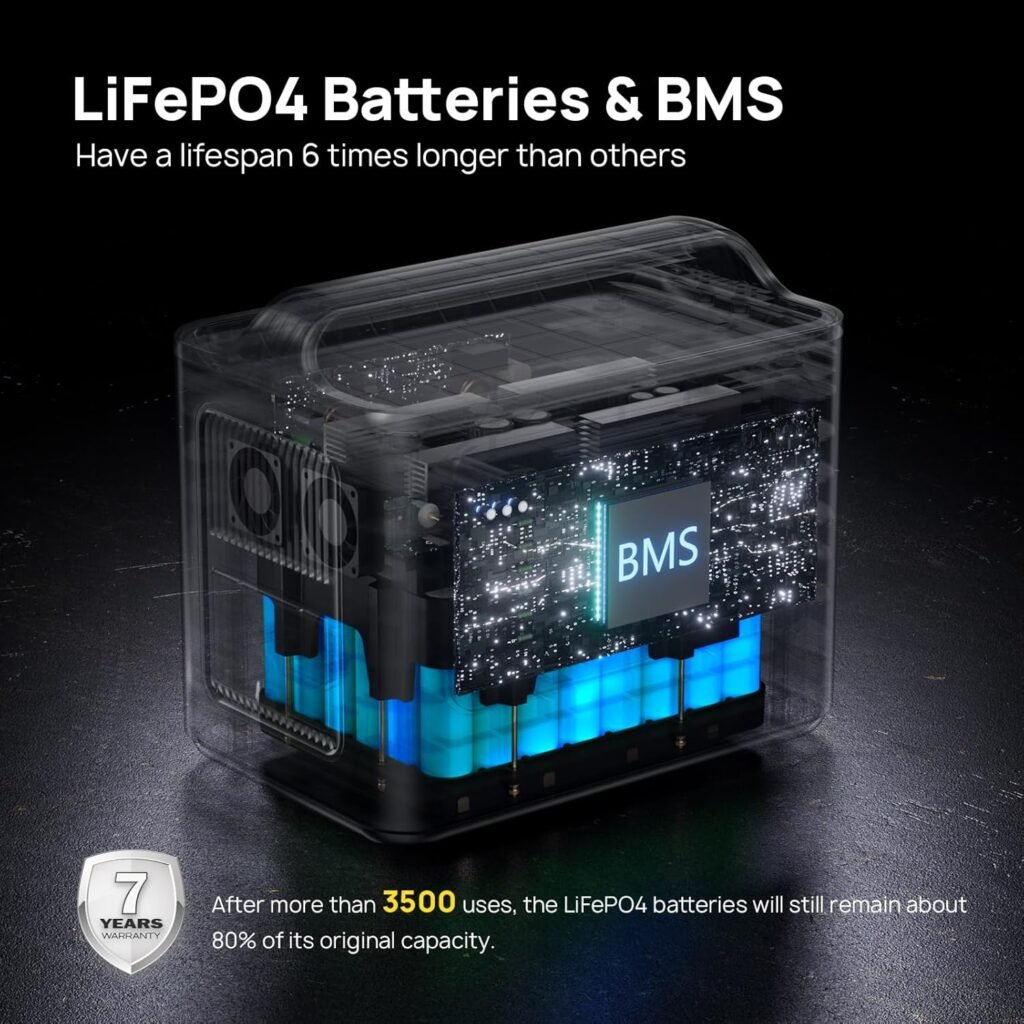
One of the standout selling points for us is that this power station uses a LiFePO4 (Lithium Iron Phosphate) battery. This is a big deal, especially if we care about safety, longevity, and the long-term value of our purchase.
LiFePO4 batteries are known for:
- Higher thermal stability
- Less risk of overheating or catching fire
- Much longer cycle life compared with standard lithium-ion cells
3500+ Charge Cycles
AFERIY claims 3500+ charge cycles. In practical terms, this means that if we were to fully charge and discharge this unit once a day, it could easily last many years before we notice a significant drop in capacity.
Many cheaper power stations offer perhaps 500–800 cycles with traditional lithium-ion. Having more than 3500 cycles means we get around six times the durability of many ordinary batteries. That translates into less worry about the battery aging quickly.
Safety and Battery Management
On top of the chemistry itself, AFERIY includes a Battery Management System (BMS) with multiple protections. These typically include:
- Overcharge protection
- Over-discharge protection
- Short circuit protection
- Overcurrent protection
- Over-temperature protection
In everyday terms, this means we can plug in our devices and charge the unit without constantly worrying about damaging the battery or causing electrical issues. The BMS does the careful monitoring work for us.
Capacity and Power: What 512Wh and 800W Really Mean
We often see watt-hours and watts listed on power stations, but it is not always obvious what those numbers mean for real-world use. This model offers 512Wh of capacity and an 800W pure sine wave inverter, with intelligent support up to 1500W surge or managed load.
Understanding 512Wh Capacity
Watt-hours (Wh) tell us how much energy the battery can store. With 512Wh, we can make some rough estimates about how long certain devices might run. Real runtime will vary, because no system is 100% efficient, but we can still get a reasonable idea.
Some examples (approximate):
- Smartphone (10Wh per full charge): Around 35–45 charges
- Laptop (50–60Wh per charge): Around 7–8 charges
- 60W laptop running continuously: About 6–7 hours
- 40W CPAP (without heated humidifier): Around 10–12 hours
- 50W mini-fridge or cooler: Around 8–9 hours of actual runtime
- LED light bulbs (10W each): Several bulbs for many hours
The key takeaway is that this is a mid-sized power station. It will not run a whole house for days, but it will keep essential devices powered through an evening, a night, or a short outage, and it is very effective for camping weekends or RV travel.
800W Pure Sine Wave Inverter
The 800W inverter is what turns the stored DC battery power into usable AC power at 220–240V. Pure sine wave output is crucial for safely running sensitive electronics like:
- Laptops
- Monitors and TVs
- Routers and modems
- Medical devices such as CPAP machines
- Camera equipment and chargers
Modified sine wave inverters can cause noise, malfunction, or even damage over time in some devices. Pure sine wave output closely mimics household grid power, so our devices are happier and safer.
Intelligent 800–1500W Load Support
AFERIY mentions an exclusive chip that intelligently supports 800–1500W loads. This suggests the unit can handle brief peak loads or adjust for certain appliances that draw more power on startup (like fridges, pumps, or devices with motors or compressors).
But we should still be mindful:
- Continuous loads above 800W are not recommended.
- We should check the wattage of devices and avoid running too many high-power appliances simultaneously.
As long as we stay within reasonable limits, this intelligent management helps prevent overloads while still giving us flexibility with short spikes.
Ports and Connectivity: Powering 8 Devices at Once
One of the strengths of this power station is the ability to run up to 8 devices simultaneously. For group camping trips, work setups, or family use during a blackout, that can make a huge difference in comfort and productivity.
While the exact port layout can vary by region or specific batch, we generally have:
- AC outlets (220–240V)
- DC outputs (such as 12V cigarette lighter and barrel ports)
- USB ports (often including fast-charging options)
Why Multiple Ports Matter
We might not appreciate multiple ports until we actually need them. Imagine a power outage where we want to:
- Keep a router and modem powered to stay online
- Run a laptop for work
- Charge two phones
- Power a small light
- Maybe keep a mini-fridge going
With 8 outputs, we do not need to take turns or constantly juggle cables. We can set up a small command center and keep our environment functional and comfortable.
Avoiding Overload
Even though we can plug many devices in, we still need to watch total power draw. The key is to balance what is truly essential. In a blackout, we might skip high-wattage items like hair dryers or kettles and focus on lower-wattage essentials like communication devices, lights, and medical or work equipment.
Fast Charging: From Empty to Full in About an Hour
Charging speed is where the AFERIY Portable Power Station really stands out. The ability to recharge the unit quickly can be a game-changer, especially when we have limited time or unstable power availability.
AFERIY highlights four main input configurations:
- AC outlet + solar panel: About 1 hour to fully charge
- AC outlet only: About 1.5 hours to fully charge
- Cigarette lighter only: Slower, but useful on the road
- Solar panel only: Speed depends on panel wattage and sun conditions
Using AC for Rapid Charging
Being able to recharge from a wall outlet in around 1.5 hours is very impressive for a 512Wh battery. That means if we have a narrow window of grid power during an outage, or we are in a campground with limited access, we can top up quickly and get back to off-grid living.
This also helps if we are using the power station daily for work or travel. We can plug it in while we shower and prepare for the day, and get a nearly or fully recharged unit before we head out.
Combining AC and Solar
When we add a 200W solar panel alongside AC input, we can push the charge time down to around 1 hour. This hybrid input approach is particularly useful when we:
- Have unpredictable grid power
- Want to maximize solar harvesting while we still have AC
- Need the unit back to full capacity as fast as possible
We just need to remember that the offer for this power station does not include a solar panel or car charging cable. We would have to purchase those separately from AFERIY or other compatible brands.
MPPT for Better Solar Efficiency
The built-in MPPT (Maximum Power Point Tracking) controller helps the power station extract as much energy as possible from our solar panels. MPPT is especially important when:
- The sunlight intensity changes (clouds, time of day)
- Panels are not at a perfect angle
- Temperatures vary
Without MPPT, we can lose a surprising amount of potential solar energy. With it, we get better charging performance, which is crucial if we are relying heavily on solar in remote locations.
Portability: Light Enough to Go Anywhere
At around 6.25 kg, this power station hits a sweet spot between capacity and portability. It is not pocket-sized, but for a 512Wh LiFePO4 unit, it feels manageable and well-balanced.
We can carry it with one hand, load it into the car without strain, and move it around a campsite or home as needed. Compared with many competing models that are bulkier or heavier, being 20% lighter makes a real difference for frequent use.
Ideal Scenarios for Portability
We find the AFERIY particularly suitable for:
- Weekend camping trips where we want comfort (lights, fan, phones, small fridge)
- Road trips and van life, where space and weight matter
- Outdoor events, barbecues, or workdays in the garden
- Emergency grab-and-go use during storms or planned power cuts
We do not feel like we are dragging around heavy industrial equipment. Instead, it feels like carrying a mid-sized toolbox.
Using It as a Home Backup: The UPS Function
One of the top reasons we might choose this model for home use is the built-in UPS (Uninterruptible Power Supply) feature. In the event of a power interruption, the unit can switch over within 0.1 seconds.
What the 0.1-Second Switchover Means
This quick transition is especially important for:
- Desktop computers
- Routers and modems
- Small servers or network-attached storage (NAS)
- CPAP machines and other medical devices
Many electronics can tolerate a very short gap, but longer interruptions can cause resets, data loss, or discomfort. A 0.1-second switchover is fast enough that many devices will keep running without noticeable interruption.
How We Might Set It Up
We can use the power station as a UPS by:
- Plugging it into a wall outlet so it stays charged.
- Plugging our essential devices into its AC outputs.
- Letting it monitor the mains power.
If the grid cuts out, the power station takes over smoothly. When mains power returns, it can recharge itself and keep devices powered as usual. We do not have to rush around plugging things in during a blackout.
Outdoor and Camping Use
For outdoor use, the AFERIY Portable Power Station gives us a kind of portable comfort zone. We do not have to choose between being off-grid and staying connected, and we can run more than just phones and flashlights.
Practical Camping Examples
Some ways we might use it on a camping or RV trip:
- Powering a portable fridge or cooler to keep food and drinks fresh
- Charging phones, tablets, cameras, drones, and GPS devices
- Running LED lanterns and string lights for a cozy campsite
- Powering a small fan in hot weather
- Charging laptops for remote work or entertainment
With 512Wh, we can usually cover a full day and night of moderate use. If we pair it with solar panels, we can stretch its usefulness across multiple days, as long as we manage our loads smartly and have some sun.
RV and Van Life
In an RV or camper van, this unit can work as:
- A standalone power hub for smaller setups
- A backup system to complement existing batteries and inverters
- A portable station we can bring outside when we want power away from the vehicle
We like that we can transport it easily if we shift between vehicles or want to loan it out to friends or family.
Indoor Use and Everyday Convenience
Even when we are not traveling or dealing with emergencies, a power station like this can serve everyday roles around the house.
Working From Home or in the Garden
For remote working, we can:
- Power a laptop, monitor, and router during short outages
- Set up a workstation in parts of the house or garden that do not have convenient outlets
- Reduce reliance on long extension cords for temporary setups
Having a silent, fume-free power source is a lot more pleasant than running a gas generator, especially indoors.
As a Quiet Backup for Sensitive Gear
We can also use it to power:
- Routers and modems to keep internet running when mains goes down
- Small audio systems or mixers for events or rehearsals
- Photography lights and equipment on shoots where outlets are scarce
It is quiet, produces no exhaust, and can be run safely indoors, which makes it much more flexible than traditional gasoline generators.
LED Lighting: Small Feature, Big Help
The built-in LED lights may sound like a minor feature, but once we rely on this power station in the dark, they become surprisingly useful. The three modes—Lighting, SOS, and Flashing—cover the most common needs.
Lighting Mode
This is our standard white light, useful for:
- Setting up camp after sunset
- Navigating a dark room during a blackout
- General task lighting when we do not want to dig out separate lanterns
SOS and Flashing Modes
The SOS and Flashing modes have more specific uses:
- Signaling for help in emergencies
- Making our location visible at night (for safety near roads or trails)
- Providing attention-grabbing light when we need to get someone’s notice
It is reassuring to know that, even if every other light source fails, the power station itself can function as a beacon.
The LCD Display and Monitoring
The LCD panel is our window into what the power station is doing. Being able to see inputs, outputs, and battery status at a glance makes planning much easier.
Typically, we can see:
- Remaining battery percentage or estimated runtime
- Current power output (in watts)
- Charging status and input power
- Error indicators if anything goes wrong
Why Clear Information Matters
If we know how many watts our devices are consuming, we can make smarter choices. For example, seeing that our fridge spikes to 120W on start but settles at 55W helps us estimate runtime more realistically.
During solar charging, we can watch how panel orientation and cloud cover affect input. That feedback helps us adjust the panels for better efficiency.
Comparing AFERIY to Other Portable Power Options
We might be wondering how this unit stacks up against other options on the market. Without focusing on specific competitor brands, we can compare categories that matter most.
Versus Smaller Power Banks
Compared with pocket-sized power banks, the AFERIY offers:
- Far more capacity (hundreds of watt-hours vs. tens)
- AC outlets for regular household devices
- True backup capability for essential electronics
Of course, it is also heavier and larger, so it complements rather than replaces our tiny daily power banks.
Versus Larger Power Stations
Some models above 1000Wh offer more capacity but are:
- Heavier and bulkier
- Slower to charge in many cases
- Less convenient to move around
The 512Wh size hits a balanced middle ground. It is enough for many important tasks while still easy to carry and quick to recharge in about an hour or so from AC.
Versus Gas Generators
Compared with traditional gas generators, the AFERIY station:
- Is silent in operation
- Produces no fumes
- Is safe to use indoors
- Requires no fuel or oil changes
The trade-off is total capacity and sustained high-power output. For whole-house backup or running large appliances like air conditioners or electric stoves, a gas generator might still be needed. For smaller but essential loads, we find this power station far more convenient and user-friendly.
Who This Power Station Is Best For
Based on its strengths and limitations, we see several groups who would benefit most from this product.
Campers and Outdoor Enthusiasts
If we enjoy camping but also want modern comforts, this station is a great match. We can keep our devices charged, run lights, and even power small appliances without hauling a noisy generator.
RV Owners and Van Lifers
For those living or traveling in vehicles, this unit can act as:
- A primary power source for smaller rigs
- A supplementary system for charging and backup
- A portable station we can take outside the vehicle as needed
The fast charging is especially helpful when we stop at powered sites briefly.
Remote Workers and Creators
If we need reliable power for:
- Laptops
- Cameras
- Audio equipment
- Mobile offices
the AFERIY power station lets us set up a workspace almost anywhere and ride out grid fluctuations without losing work.
Home Users Seeking Simple Backup
For homes that experience occasional blackouts, this makes an excellent backup for:
- Routers and modems
- Laptops and small desktop computers
- CPAP machines
- LED lights and small fans
The UPS feature is especially handy for maintaining continuous operation without manual intervention.
Limitations and Things to Keep in Mind
No product is perfect for every situation, and the AFERIY Portable Power Station is no exception. It is important for us to understand where it may fall short so we can set realistic expectations.
Not for Very High-Power Appliances
Although it supports intelligent handling of 800–1500W loads, its continuous rating is 800W. That means it is not designed for extended use with:
- Large air conditioners
- Electric heaters
- Powerful hair dryers
- Large kettles or cooktops
We can sometimes run medium-wattage appliances briefly, but we should always check their rated power and consider the impact on battery life.
Accessories Not Included
The product description notes that:
- Solar panel is not included
- Car charging cable is not included
If we plan to rely heavily on solar charging or car charging, we will need to buy compatible accessories, either from AFERIY’s store or other brands that match the input specs.
Weather and Environment Considerations
While it is robust, it is not rated as fully waterproof or dustproof. For safe long-term performance, we should:
- Avoid exposing it directly to rain
- Keep it out of standing water
- Store it in a dry, cool place when not in use
Using it responsibly will help ensure those 3500+ cycles are actually achievable.
Tips for Getting the Most from Our AFERIY Power Station
To maximize this power station’s usefulness and lifespan, we can adopt a few practical habits.
Plan Our Loads
Before a trip or a storm, we can:
- List the devices we want to power
- Note their wattage and approximate runtime needs
- Prioritize the truly essential ones
This way, we avoid overloading the unit or draining it too quickly on non-essential gear.
Take Advantage of Fast Charging Windows
If we know we have limited access to AC power:
- Charge the unit fully whenever we get the chance
- Combine AC with solar if available for the fastest top-up
- Avoid waiting until the battery is very low if we can help it
Quick charging is one of this unit’s big strengths, and using that to our advantage keeps us prepared.
Store and Maintain Properly
For longer-term battery health:
- Store it partially charged (around 40–60%) if we will not use it for months
- Keep it in a moderate-temperature environment
- Avoid leaving it at 0% for extended periods
LiFePO4 chemistry is forgiving, but good habits still pay off over many years.
Our Overall Impression
After looking closely at the features, strengths, and trade-offs of the AFERIY Portable Power Station 800W, 512Wh, we see a thoughtfully designed power solution that balances portability, performance, and durability extremely well.
We particularly appreciate:
- The 1–1.5 hour fast charging capability
- The long-lasting LiFePO4 battery with 3500+ cycles
- The pure sine wave inverter for sensitive electronics
- The UPS function with 0.1-second switchover for home backup
- The ability to power up to 8 devices at once
- The manageable 6.25 kg weight and easy-carry handle
This is not a whole-house generator, and it is not meant to run very high-power appliances for long stretches. Instead, it excels as a reliable, safe, and flexible power hub for:
- Camping and RV trips
- Remote work and creative projects
- Everyday household backup during outages
If we are looking for a portable power station that feels robust enough for serious use, yet light and fast-charging enough to fit into our daily routines, the AFERIY Portable Power Station 800W, 512Wh offers a compelling balance of features that make it well worth considering.